Phone:
0086-757-8938 9313
Email:
Address:
Caochang Industrial Zone, Liguang Rd, Lishui, Nanhai, Foshan, Guangdong, China
Reply within 1 hour, 24x7

Phone:
0086-757-8938 9313
Email:
Address:
Caochang Industrial Zone, Liguang Rd, Lishui, Nanhai, Foshan, Guangdong, China
Reply within 1 hour, 24x7

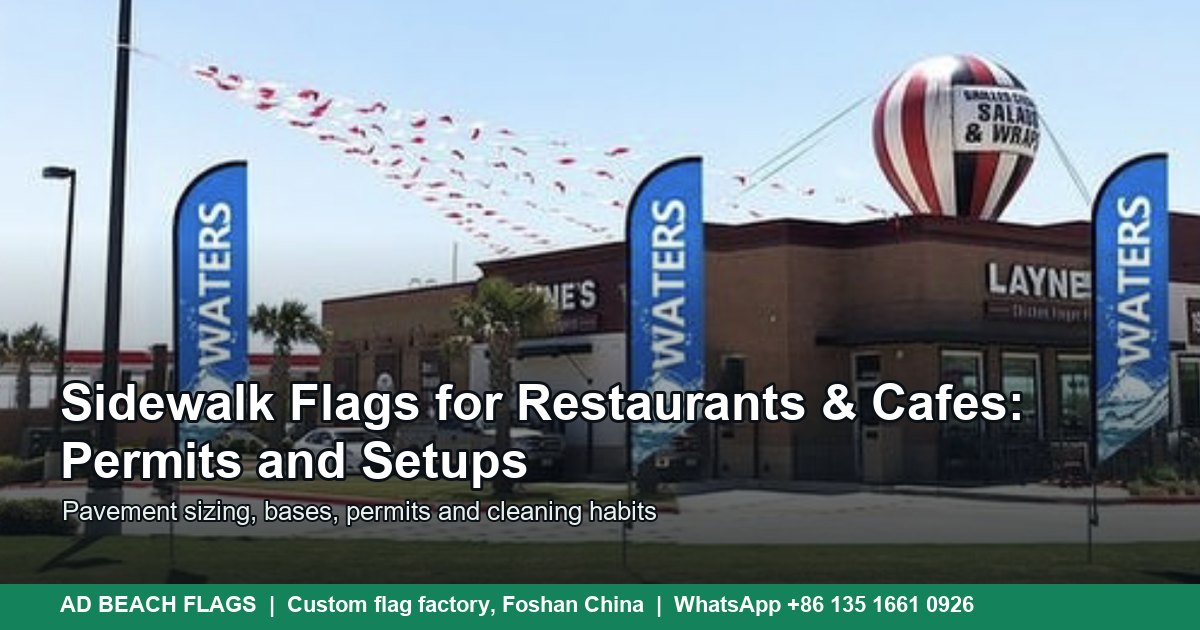
Hospitality flags live in the hardest real estate a business owns: the two metres of pavement outside the door. That strip has to sell, comply with local rules, survive being knocked by prams and delivery carts, and look inviting at the same time. It is a small space with a lot of requirements.
This guide is for owners and marketing managers in restaurants, cafés, bakeries and bars. It covers the sizes that work on real pavements, the bases that behave, the permit questions worth asking before you order, and the artwork rules that suit people walking past at three kilometres an hour.
1. They turn passing traffic into a decision. A menu board relies on someone already stopping to read; a flag carries a visual signal forty metres down the street.
2. They signal open. Two flags out front read as an operating business, which matters on a street of closed shutters.
3. They change with the day. Breakfast, lunch specials and evening events can each get a flag, and the printed skin is the cheapest part of the kit.
4. They are mobile. Seating reconfigurations, deliveries and seasonal weather mean the display has to move, and a flag moves in seconds.
| Setting | Recommended size | Why this one works |
|---|---|---|
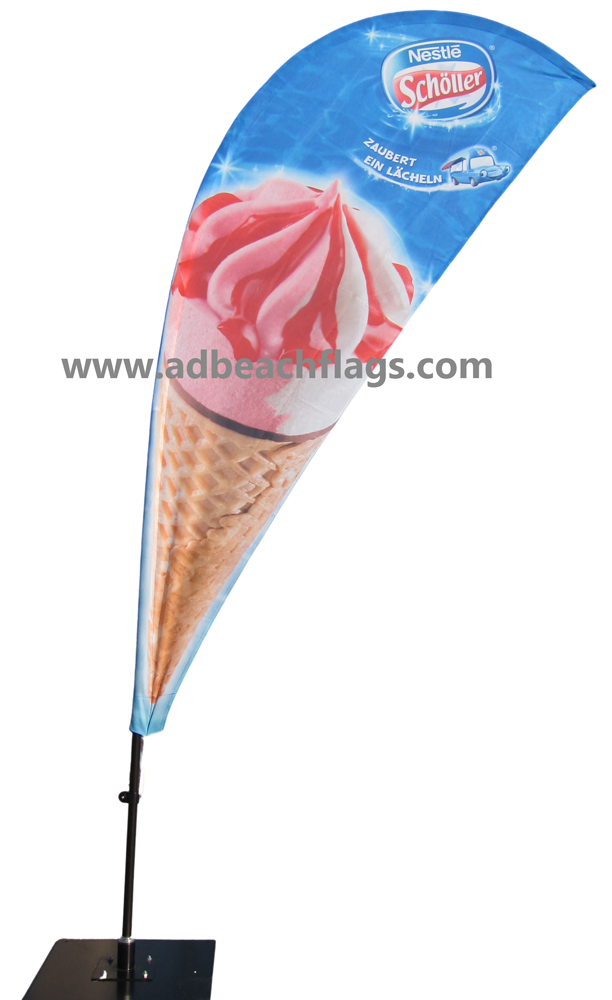
| Narrow pavement, shopfront seating | Teardrop 75×165 cm on a 280 cm pole | Print sits at head height, footprint stays small, walkers keep their path |
| Wide pavement, café terrace | Teardrop 85×190 cm on a 340 cm pole | Readable across the street without towering over the awning |
| Corner site, two approaches | Teardrop 95×230 cm double-sided on a 400 cm pole | Both faces read correctly, so neither approach sees a mirror image |
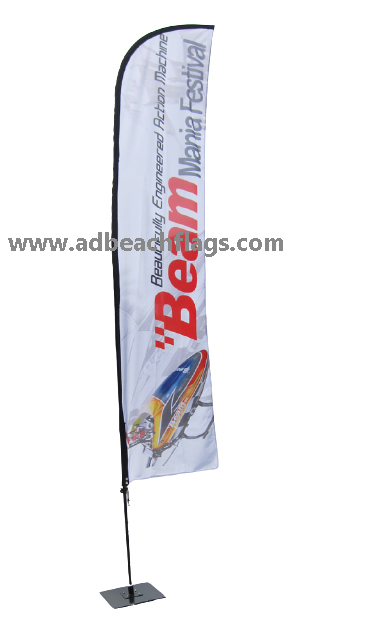
| Menu or daily special | Feather 60×200 cm on a 280 cm pole | Taller panel carries a few lines of text for people already looking |
The temptation is to buy one large flag for maximum impact. On a pavement that usually backfires: a large flag needs a large base, and the base is what pedestrians trip over. Two small flags generally outperform one big one in front of a restaurant, because each can carry a different message and the pair reads as a busy, open business.
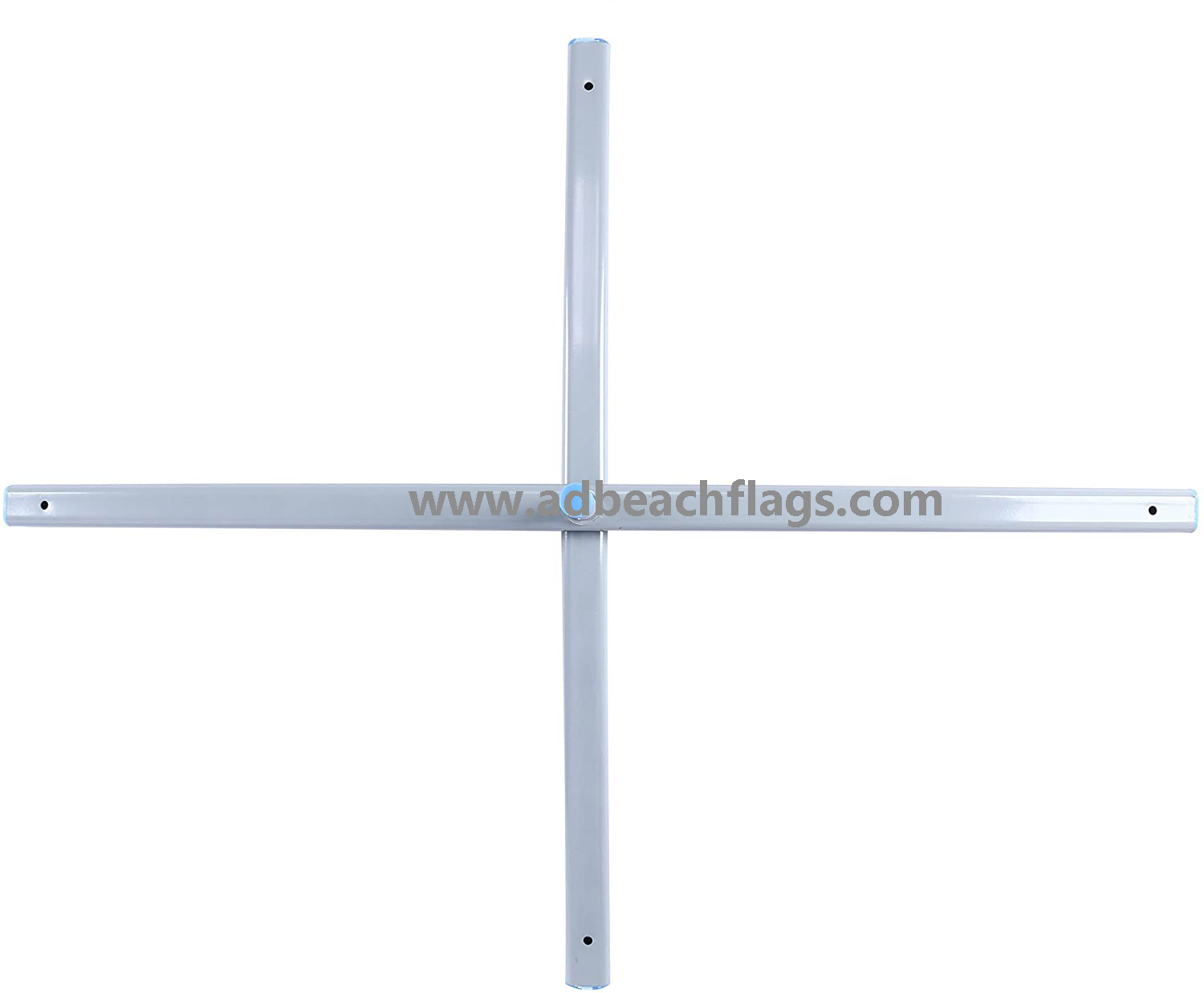
1. Cross base with a water bag. The standard hospitality setup. The base folds flat and stores behind the counter, and the bag adds about 10 to 12 litres of ballast when filled on site. Empty the bag before a hard freeze, or fill it with sand instead.
2. Metal plate base. Three to six kilograms of steel with a welded socket, and nothing to fill. It suits venues that display every day and do not want staff managing water. Put a mat underneath indoors or on delicate paving.
3. Heavy cross or small tank base. For exposed corners or sites where the pavement funnels wind, the heavier options hold where a light base leans.
Two rules cover most trouble. Keep about 1.2 m of clear radius so the flag can swing without catching diners or passers-by, and place the base tight to the kerb line rather than mid-pavement, where foot traffic naturally curves around it.
Hospitality buyers should check three things before ordering, because the answers change the specification.
1. Is pavement advertising allowed at all? Some councils and municipalities permit it with a licence, others restrict it near crossings, schools or heritage frontages.
2. Is there a height or footprint limit? Plenty of rules cap portable sign height and require a minimum clear walking width, which often decides between a 340 cm and a 400 cm pole.
3. Is insurance or a named licence holder required? Some authorities ask for public liability documentation with the application, and using the wrong supplier means waiting for paperwork you cannot supply.
A single phone call to the local authority before ordering saves a fine and a redesign. Where pavement rules are restrictive, the same flag works behind the window or on a terrace within the property line.
1. Two to four words. Coffee. Open. Lunch until 3. Fresh bread daily. The message has to be understood at a glance by someone who is not yet looking for a restaurant.
2. Colour that survives shade. Pavements sit in shadow for part of the day; high-contrast designs read in both sun and shade, pastels do not.
3. Consistency with the shopfront. The flag should look like it belongs to the business, so brand colours and typefaces should match the sign above the door.
4. Change the offer, keep the brand. Buy one design in brand colours and reorder skins with seasonal text, so the row stays recognisably yours.
Cafés sit in the path of cooking smells, road dust and rain splash, so hospitality flags need a cleaning habit rather than an occasional scrub.
1. Bring them in overnight where possible. It roughly doubles the useful life of the fabric and keeps them out of vandalism’s way.
2. Wash at 30 degrees with mild detergent, then air dry. Never tumble dry, iron, bleach or dry clean.
3. Dry fully before folding. A damp flag stored behind a counter grows mildew, and mildew stains do not come out.
4. Replace the tension cord before the flag. A stretched cord makes the print sag; a new cord restores the display in minutes for the price of a coffee.
1. Where the pavement must stay completely clear. If the locality forbids portable signage, respect it: an A-board inside the window or window graphics do the job legally.
2. Where the message changes hourly. Chalk boards change faster; flags are for the daily and weekly rhythm, not the specials board.
3. Where the flag would sit in a delivery lane. Any position a van must pass through is a damaged flag waiting to happen.
United States. Sidewalk flag is the search term, and rules vary street by street, so operators check the municipal code before ordering. Double-sided teardrops are common at corner sites.
United Kingdom and Ireland. Pavement licences are required in many areas, and cross bases with water bags are the expected setup because the flags must come in at night.
Germany, Austria and Switzerland. Gastronomy buyers order Werbefahnen in small sizes with plates rather than bags, because the flags stand on terraces rather than on the public footway.
Australia and New Zealand. Café strips in Melbourne and Sydney typically use small teardrops, and strong UV means an annual or six-monthly skin replacement is normal.
Brazil and Latin America. Bandeira pluma flags appear on calçadas outside bars and restaurants, usually single-sided for cost, with mesh where the street funnels evening breeze.
1. Flag one, on the approach side. A small teardrop at 75×165 cm on a 280 cm pole, placed where walking customers first see the shopfront, carrying the brand mark and two words.
2. Flag two, at the entrance. The same size, carrying the day’s offer, angled so it does not block the door or the pavement’s walking line.
3. Two cross bases with one water bag each. Filled on site, folded and stored inside at closing. About two minutes of staff time per day.
4. Three printed skins on rotation. A breakfast skin, a lunch skin and an evening skin on the same two frames, which spreads sun exposure and keeps the message current without buying more hardware.
This kit costs less than a single printed A-board and it works where an A-board cannot: it is visible from down the street, it does not need to be carried in from a doorway, and the message changes for the price of a skin rather than a whole new sign.
Hospitality flags fail for operational reasons more often than material ones, so the routine matters more than the specification.
Opening. Bases out, one water bag filled per base, flags fitted and tensioned. Two flags, about two minutes between them.
Weather watch. If the forecast shows a serious gust front, the flags come in before service rather than during it. Portable signage is not designed for storms, and a split seam mid-service is a repair you cannot do at the pass.
Closing. Flags off the poles, folded loosely, stored dry inside. Bags emptied if freezing weather is forecast, or left filled if the next morning is a normal service.
Weekly. A wipe along the lower half of the fabric, where splash and cooking air leave a film, restores the look in under a minute per flag.
Monthly. Check the tension cords and the base sockets. Both are consumable, both cost little, and both are the reason a flag looks tired when the fabric is still perfectly good.
Seasonally. Rotate the printed skins and inspect the artwork against what the kitchen is actually pushing. Changing a skin for a new menu costs a fraction of replacing the whole kit, and it is how a small café keeps a fresh pavement presence all year.
Q1. What size flag suits a restaurant pavement?
Small and medium teardrops, 75×165 cm on a 280 cm pole for narrow pavements and 85×190 cm on a 340 cm pole for wider terraces. Two small flags generally beat one large one.
Q2. Which base should a café use?
A cross base with a water bag of about 10 to 12 litres is the standard, because it folds flat for storage. Metal plates of 3 to 6 kg suit venues that display every day and prefer no ballast to manage.
Q3. Do I need permission for a pavement flag?
Often yes. Check whether pavement advertising is licensed in your area, whether there is a height or footprint limit, and whether the application needs insurance documents. One call to the council before ordering prevents a fine.
Q4. Can the same flag show different messages?
Yes. Keep the poles and bases and reorder printed skins, which is the cheapest way to change between breakfast, lunch and evening offers.
Q5. How do I clean a café flag?
Wash at 30 degrees with mild detergent and air dry completely before folding. Never tumble dry, iron or dry clean, and empty water bags before freezing weather.
Q6. How long do hospitality flags last?
About six months of daily outdoor use, longer if they come in overnight. Rotating two skins per pole keeps a pavement display looking new for a full season.
| Point | Detail |
|---|---|
| Manufacturer, not a reseller | Printed and sewn in our own Foshan workshop, with the sleeve and corners reinforced where outdoor flags fail first. |
| Colour you can hold us to | Pantone and RAL matching with a printed swatch approved before bulk, so a second branch matches the first. |
| Skins, not whole kits | Reorder printed skins for seasonal menus while keeping the poles and bases you already own. |
| Bases matched to pavement | Cross bases with water bags, plates and heavy cross bases, all on one fitting standard. |
| Low MOQ accepted | Start with two flags for one site; expand to a group once the format proves itself. |
| Customer 5stars Feedback | warmly welcomed in 150+ countries across Europe, the Americas, the Middle East, Africa and Oceania. |
Sidewalk flags work for hospitality when they respect the pavement: small enough to leave a walking path, heavy enough to stay standing, legal under local rules, and readable in two seconds and four words. Get those four right and the patch of pavement outside the door becomes the cheapest advertising the business owns.
Tell us the pavement width, the awning height and the messages you want to run, and we will reply within 1 hour, 24×7 with sizes, bases and a kit list for the site. Low MOQ accepted, and we will say plainly when a smaller flag leaves you a better pavement.
Tell us the flag size, the quantity, single or double-sided, and the surface the flags will stand on. Our export team replies within 1 hour, 24×7, with an artwork proof and a factory price. Low MOQ accepted.
Chat on WhatsApp (+86 135 1661 0926) Email Us Now
Prefer a form? Fill in the details below and we will come back with a proof and a price within 1 hour, 24×7.
Related reading: Beach Flag Size Guide | Flag Base Guide | Teardrop vs Feather Flags | Teardrop Flags | Cross Bases | Water Bags | Metal Plate Bases | Double-Sided Flags
| Item | Detail |
|---|---|
| Product | Custom sidewalk flags for restaurants, cafes, bakeries and bars |
| Manufacturer | Ad Beach Flags, Foshan, Guangdong, China |
| Sizes for pavements | Teardrop 75×165 cm on 280 cm pole; 85×190 cm on 340 cm pole; 95×230 cm double-sided on 400 cm pole |
| Bases | Cross base with water bag (about 10 to 12 litres), metal plate 3 to 6 kg, heavy cross base |
| Fabric | 110gsm knitted polyester standard; 115gsm for hard sun |
| Printing | Dye sublimation with Pantone and RAL matching; double-sided builds available |
| Cleaning | Machine wash at 30 degrees, air dry fully, never tumble dry, iron or dry clean |
| Expected life | About six months of daily outdoor use; bringing flags in overnight extends it |
| Extra item | Free artwork template and one round of layout adjustments included |
| Contact | WhatsApp +86 135 1661 0926, [email protected], reply within 1 hour 24×7 |