Phone:
0086-757-8938 9313
Email:
Address:
Caochang Industrial Zone, Liguang Rd, Lishui, Nanhai, Foshan, Guangdong, China
Reply within 1 hour, 24x7

Phone:
0086-757-8938 9313
Email:
Address:
Caochang Industrial Zone, Liguang Rd, Lishui, Nanhai, Foshan, Guangdong, China
Reply within 1 hour, 24x7

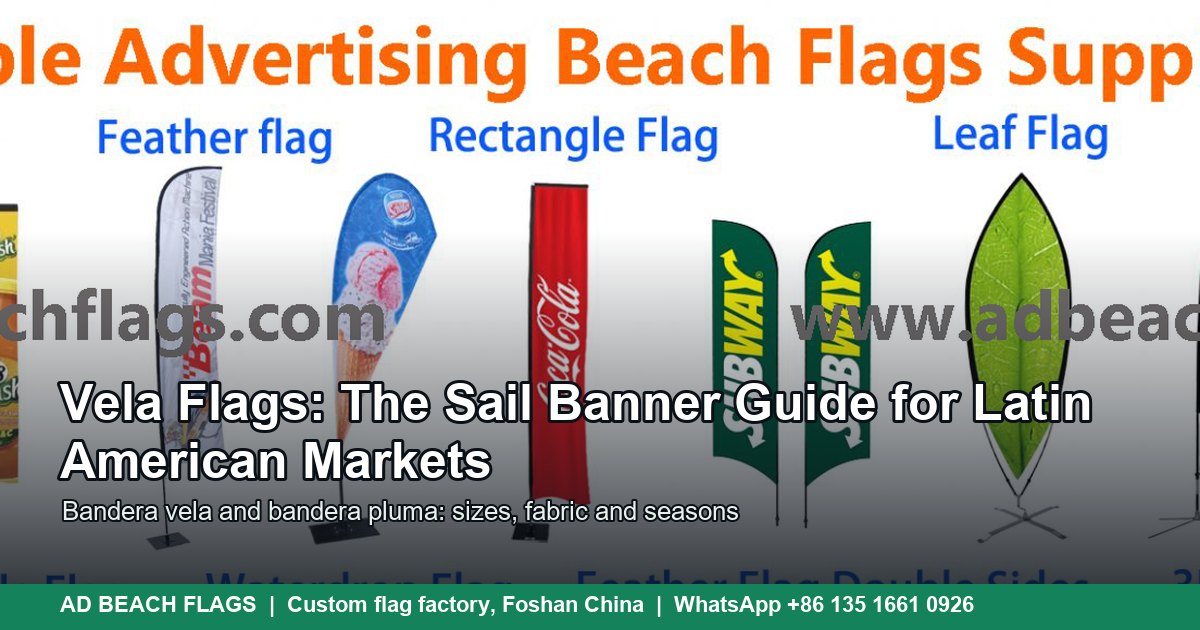
Ask for a “teardrop flag” in Santiago or Valencia and you may get a polite shrug. Ask for a bandera vela and the conversation moves immediately, because that is what the market calls this product: a sail-shaped advertising banner on a flexible pole.
This guide is for buyers supplying Spanish and Portuguese speaking markets, and for the importers who serve them. It explains the product in the terms those markets use, and the specification choices that survive their coasts and their seasons.
The same flag travels under different names depending on the market. Getting the name right is the first step in quoting correctly, because each market’s buyers search differently. A supplier who answers a bandera vela enquiry with an English catalogue page loses the conversation before the price is mentioned.
| Market | What buyers ask for | Notes |
|---|---|---|
| Spain | bandera vela, bandera publicitaria | Hotel terraces, beach clubs, summer season orders |
| Chile, Argentina | bandera pluma, bandera vela | Coastal resorts, event rentals, November to March peak |
| Mexico, Caribbean | bandera pluma, bandera de playa | Year-round resort trade, mesh for constant breeze |
| Brazil | bandeira pluma, bandeira publicitária | Volume orders, coastal cities, strong UV |
| France, Belgium | oriflamme publicitaire, drapeau publicitaire | Event and retail buyers, documentation requests heavier |
In practice, orders from these markets often arrive as a photograph rather than a product code. A phone shot of a flag outside a hotel, with a rough height, is enough to work from: we confirm the shape, the pole and the print area, then quote.
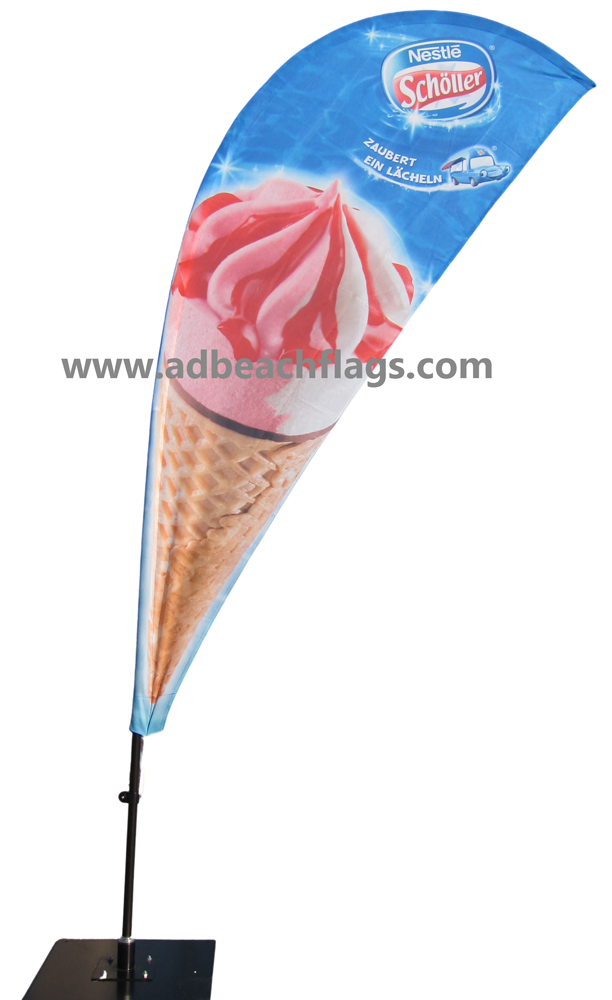
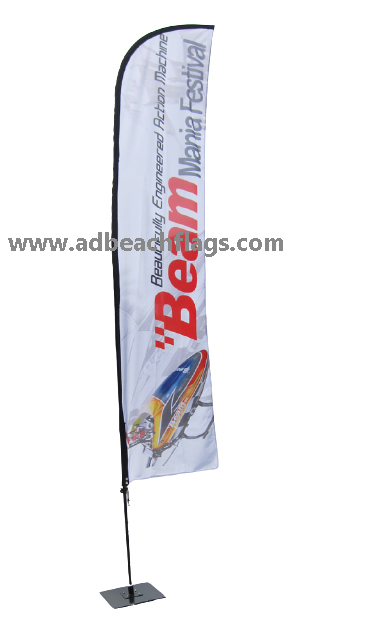
Vela orders usually resolve to one of two shapes. The 1. teardrop holds the fabric under tension, so the design stays readable in calm air and in gusty afternoons alike. The 2. feather carries more printable area, which suits price lists and schedules.
| Size | Flag (W x H) | Pole |
|---|---|---|
| XS | 75 x 165 cm | 280 cm |
| S | 85 x 190 cm | 340 cm |
| M | 95 x 230 cm | 400 cm |
| L | 110 x 260 cm | 460 cm |
| XL | 110 x 300 cm | 500 cm |
| XXL | 130 x 330 cm | 560 cm |
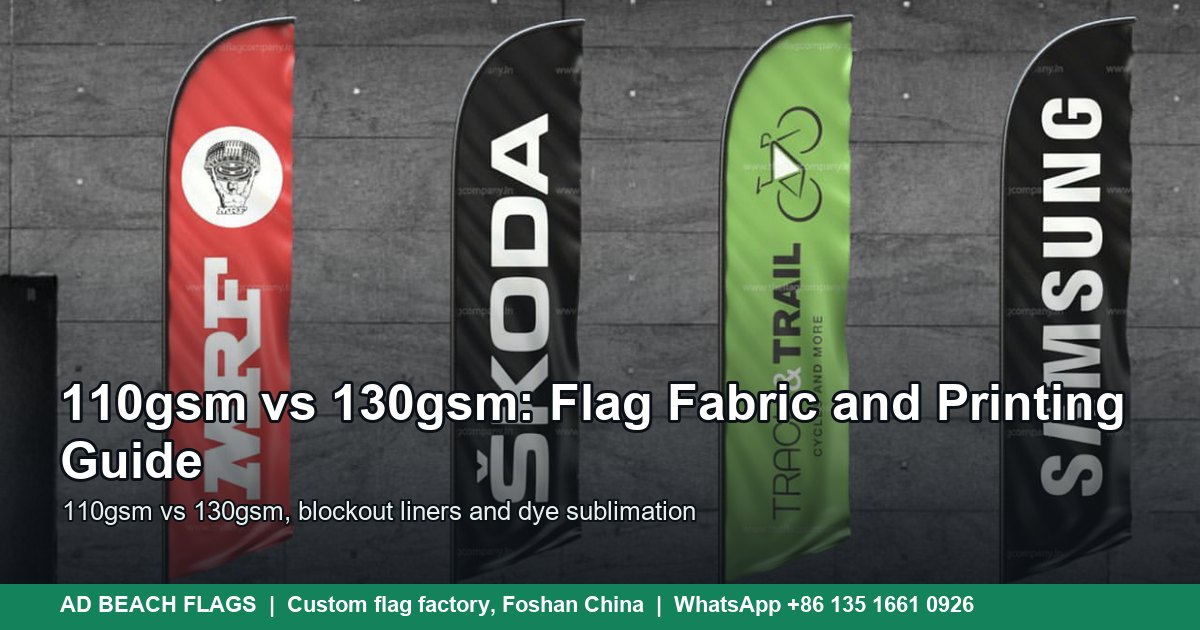
Standard production uses 110gsm knitted polyester with dye sublimation printing, which puts the colour inside the fibre rather than on top of it. Two upgrades matter in these markets:
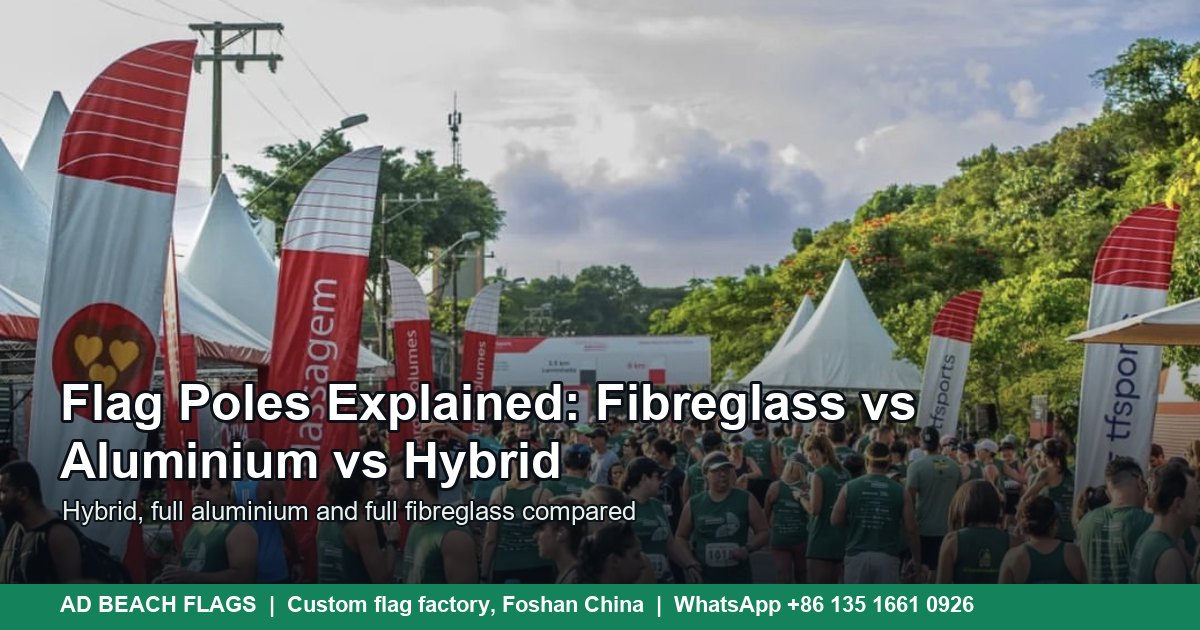
1. 115gsm for hard UV. Coasts from Chile to northeastern Brazil punish colour. A heavier knit holds its tone longer, and the extra cost per flag is small against the cost of replacing a faded set mid season.
2. Mesh for constant wind. Resorts on exposed shorelines commonly choose mesh, because the open weave lets air through and reduces the load the flag places on its anchor. Print contrast stays strong; fine photographic detail softens.
| Surface | Base | Practical notes |
|---|---|---|
| Sand | Spiral anchor | Straight spikes pull out of loose sand; spiral blades hold |
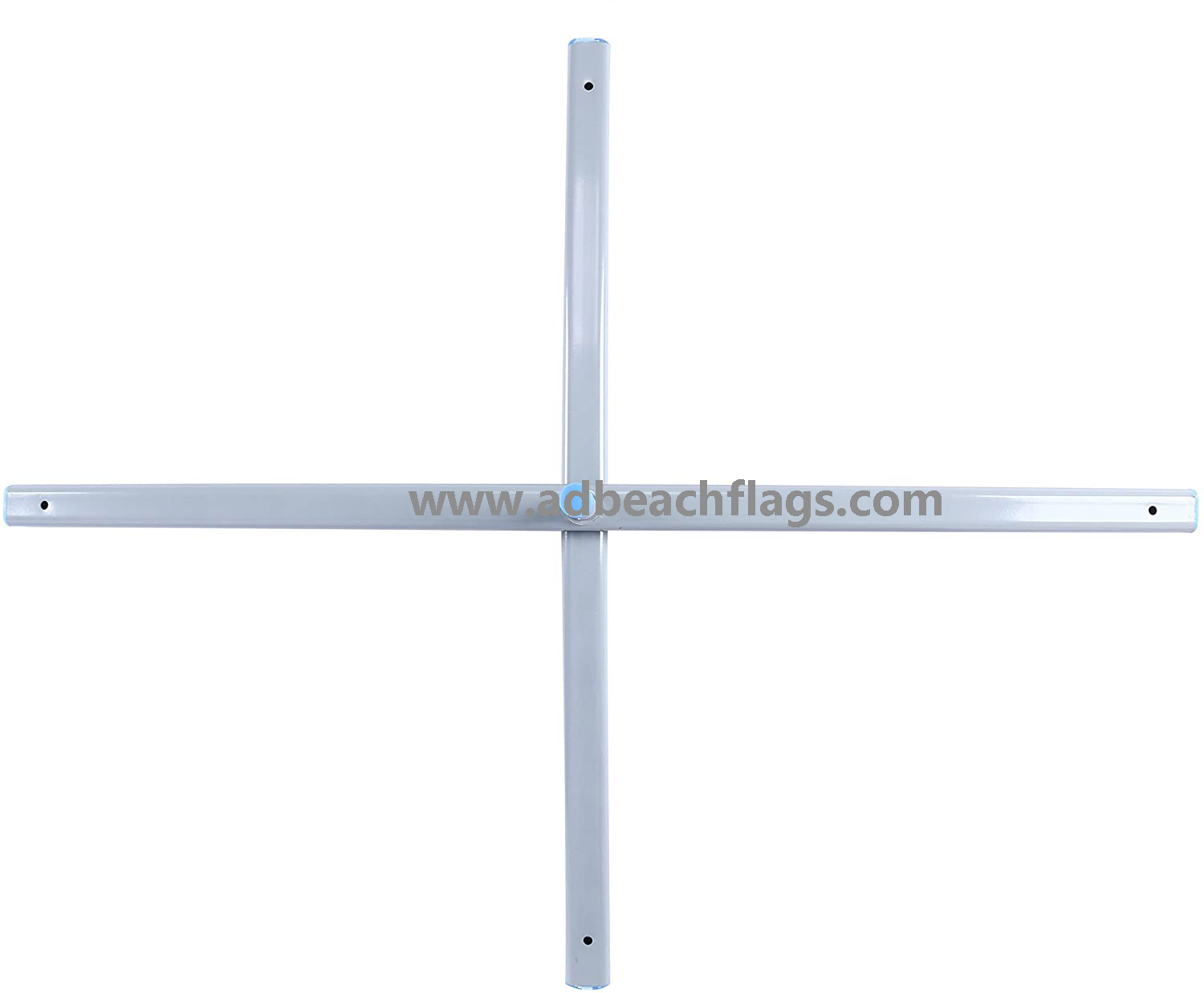
| Hotel terrace or pavement | Cross base with water bag | Folds flat, travels between venues |
| Long-season outdoor display | Water tank base, 12 to 32 litres | Ships empty, fills on site; use sand where it freezes |
| Resort forecourt | Car base | Uses vehicle weight; moves in minutes |
1. Southern hemisphere peak runs November to March. Orders for Chile, Argentina and Uruguay need to clear production and freight before December, which means artwork approval by late October in a normal year.
2. Northern hemisphere resort trade peaks June to September. Spanish and Portuguese buyers order in spring; late orders pay express freight and lose the first weeks of the season.
3. Caribbean and Mexican resorts buy year round but still cluster before high season and before major events.
A practical rule from the factory floor: the buyers who order two months early get their first-choice fabric, their preferred pole colour and sea freight. The buyers who order two weeks early get air freight and a compromise. Buyers who order after the season has started get an apology and a promise for next year.
1. Documents. Commercial invoice, packing list and the HS code 6307.90 for printed textile flags. These travel with the shipment and keep customs conversations short.
2. Packing that survives sea freight. Flags pack flat, poles and bases ship in separate cartons, and we photograph the pallets before loading so the importer can confirm the carton count in advance.
3. Reorders. Keep your artwork and colour references on file with us and a repeat order skips the design stage entirely, which is the difference between a two-week and a one-week turnaround.
1. Permanent hotel signage. A flag is portable by design. If the hotel needs fixed branding at the entrance, that is a fabricated structure, not a flag.
2. Sites with no storage. Flags last longer when they come in at night and before storms. A property with nowhere to store them will replace them twice as often.
3. Where a message must be read from a moving car on a highway. A flag at 5 metres is not a billboard. If the audience is driving at 90 km/h, buy a larger format designed for that reading distance.
Volume buyers in these markets share a set of habits that a supplier either supports or fights. Supporting them shortens every order after the first.
1. Mixed containers. An importer rarely buys one product. A container from Chile or Brazil often carries teardrop flags, feather flags, poles, bases and carry bags from a single purchase order, packed so that cartons arrive in venue-sized groups rather than one giant single-product block. Mixed loading inside one container saves freight and simplifies the importer’s warehouse work.
2. Colour consistency across a season. Retail buyers photograph the same product on shelves across a country. If flag colours drift between production batches, the importer hears about it from every reseller. Keeping the Pantone reference and the approved swatch on file is the mechanism that prevents the drift, and it costs nothing after the first order.
3. Neutral packing for resellers. Many importers resell under their own label. Neutral cartons, no factory branding, and a shipping mark that matches their instructions are simple details that decide whether the next container comes back to you.
4. Predictable lead times through the peak. Southern Hemisphere buyers live with a compressed calendar: artwork by late October, goods on the water in November, display in December. A supplier who communicates delays honestly, with photographs and revised dates, keeps the relationship even when a shipment slips. A supplier who goes quiet does not.
5. Samples that survive the trip. Importers use samples to sell into retail chains and hotel groups. A well-packed sample kit, flags and pole and base in one bag with a printed spec sheet, closes meetings that a loose flag does not.
If you resell into these markets, three questions decide the quote, and asking them early avoids the returned-containers conversation that nobody enjoys.
1. Which surface will it stand on? Sand, pavement and grass each point at a different anchor. Quoting a spike for beachfront property sounds cheap and ends in a complaint.
2. What is the honest delivery window? Build the quote around production plus freight plus a customs buffer, then commit to the date furthest out. Buyers remember a met deadline and forget a comfortable estimate.
3. Who prints the artwork, and who owns it? Some resellers own the design; others pass client files straight through. Either way, keep the approved proof with the order, because it is the only document that settles a colour argument later.
These come up often enough in this trade lane to be worth writing down before an order rather than after one.
1. Ordering a spike for a beachfront property. It is the cheapest anchor in the catalogue and the worst one for sand. The flag leans by the second day and the property manager blames the flag rather than the base. Match the anchor to the surface first, then argue about price.
2. Treating pole height as flag height. A customer asks for a “five metre flag” and receives a five metre pole with a 3.3 metre banner on it. The numbers are both correct and the customer is still unhappy. Quote the assembled height as well, and the misunderstanding disappears.
3. Ignoring the peak season calendar. Southern Hemisphere buyers who order in December are asking a factory to compress production, freight and customs into weeks that do not exist. Order in October and the same goods arrive by sea at a lower cost.
4. Forgetting that colour is a document, not a feeling. Without a Pantone reference and an approved swatch, every batch is a negotiation. With them, a reorder two years later matches the first shipment.
5. Shipping without a packing plan. Flags flat, poles bundled by length, bases in their own cartons with counts printed on the outside. Importers who insist on this unpack in an hour; those who accept loose packing unpack for a day and find damage at the bottom.
The Spanish and Portuguese speaking markets are the centre of gravity for vela flags, but the surrounding picture matters when a reseller quotes across borders.
United States. Spanish speaking buyers in Florida, Texas and California order under the same bandera pluma terms, and often pair the order with English feather flags for the same campaign, which means one production run can serve two language markets.
Germany and Austria. German language buyers order the same shape as a Werbefahne or Beachflag and ask for fabric weight and flammability paperwork early. A reseller quoting both markets benefits from one product page that covers both vocabularies.
Australia and New Zealand. Not a Spanish speaking market, but a useful benchmark: these buyers pay a premium for UV resistance, and their specifications are a good signal of what a harsh-sun market will eventually demand everywhere.
France and Belgium. Oriflamme publicitaire searches arrive from event and retail buyers who want documentation in French and often insist on a named contact at the factory. Both are cheap to provide and expensive to omit.
Q1. What is a vela flag called in English?
Vela is the Spanish and Portuguese term for the sail-shaped advertising flag, which English-speaking markets call a teardrop flag, sail flag or sail banner.
Q2. Can you match a flag from a photograph?
Yes. Send the photo with a rough height and where it stands. We confirm the shape, the pole and the print area, then quote against a template.
Q3. Which fabric suits a Caribbean resort?
Mesh where the breeze is constant, with 115gsm polyester for sheltered terraces where sun is the bigger threat.
Q4. How early should a Southern Hemisphere buyer order?
Approve artwork by late October for a December start. That window covers production at 5 to 10 days plus sea freight, which is far cheaper than air.
Q5. Do you provide documents for import?
Yes, including the commercial invoice, packing list and HS code 6307.90 for the printed flags.
Q6. What is the minimum order?
Low MOQ accepted for trial orders, with wholesale pricing from small quantities per design. Reorders are simpler because the specification is already on file.
If you are quoting a client in these markets, send us the photograph you received and the market you are selling into. We reply within 1 hour, 24×7, with the shape, size, fabric and base that fit that market, plus a landed-cost-friendly packing plan. Low MOQ accepted, and we will tell you plainly when a cheaper fabric does the job. Resellers who quote in the customer’s own vocabulary, bandera vela here and Werbefahne two borders away, win the order before the price is even discussed. And if this is your first container into the region, ask for the packing plan and the documents checklist together, so the shipment clears customs without a week of emails.
Tell us the flag size, the quantity, single or double-sided, and the surface the flags will stand on. Our export team replies within 1 hour, 24×7, with an artwork proof and a factory price. Low MOQ accepted.
Chat on WhatsApp (+86 135 1661 0926) Email Us Now
Prefer a form? Fill in the details below and we will come back with a proof and a price within 1 hour, 24×7.
Related reading: Surf Flags for Coastal Campaigns | Beach Flag Size Guide | Flag Base Guide | Teardrop Flags | Feather Flags | Spike Base Stands | OEM / ODM Vela Flags
| Item | Detail |
|---|---|
| Product | Custom printed vela flags (bandera vela, bandera pluma) on flexible poles |
| Manufacturer | Ad Beach Flags, Foshan, Guangdong, China |
| Market names | bandera vela and bandera pluma in Spanish; bandeira pluma in Portuguese; oriflamme publicitaire in French |
| Fabric | 110gsm knitted polyester standard; 115gsm and mesh for coastal programmes |
| Printing | Dye sublimation with Pantone and RAL colour matching |
| Sizes | Teardrop 75×165 cm to 130×330 cm; poles 280 cm to 560 cm |
| Bases | Spiral anchor for sand, cross base with water bag, water tank base, car base |
| Season window | Southern hemisphere peak November to March; artwork approved by late October |
| MOQ and lead time | Low MOQ accepted; samples 2-3 days, bulk 5-10 days after artwork approval |
| Contact | WhatsApp +86 135 1661 0926, [email protected], reply within 1 hour 24×7 |
| Point | Detail |
|---|---|
| Manufacturer, not a reseller | Printed and sewn in our own Foshan workshop, so specification questions reach the people who make the goods. |
| Colour you can hold us to | Pantone and RAL matching with a printed swatch approved before the bulk run; about 5% is the accepted tolerance for CMYK sublimation. |
| One kit, one supplier | Flag, pole, base and carry bag ship from one factory with one fitting standard, so nothing is missing on install day. |
| Fast sampling | Digital printing needs no screens: samples in 2 to 3 days and bulk in 5 to 10 days after artwork approval. |
| Low MOQ accepted | Trial orders do not need a container, with wholesale pricing from small quantities per design. |
| Customer 5stars Feedback | warmly welcomed in 150+ countries across Europe, the Americas, the Middle East, Africa and Oceania. |