Phone: 0086-757-8938 9313
WhatsApp: +86 135 1661 0926
Email: [email protected]
Address: Caochang Industrial Zone, Lishui, Nanhai, Foshan, Guangdong, China
24/7 Online Services
Phone: 0086-757-8938 9313
WhatsApp: +86 135 1661 0926
Email: [email protected]
Address: Caochang Industrial Zone, Lishui, Nanhai, Foshan, Guangdong, China
24/7 Online Services

When an advertising flag gets someone fined, the citation almost never describes the flag. It describes the ground: the sidewalk, the verge, the median – public right-of-way. That single fact reorganises the whole compliance question. Buyers who ask “are flags legal?” get a debate; buyers who ask “where can this flag legally stand?” get an answer their local office can give in one phone call.
This page is that phone call in written form. It explains the rule categories that repeat across jurisdictions, the placement patterns that trigger enforcement, the event-site exception that most buyers miss, and a pre-order checklist that keeps a flag kit – and the campaign on it – alive all season. Codes differ by city and county, and nothing here replaces your local office; what this page does is tell you exactly which questions to ask them.
Public right-of-way is the strip of land a city holds for movement and sight lines: footways, verges, medians, corners. Codes protect those functions, so a display standing in the right-of-way without permission is a violation regardless of what the display says or how nicely it is built. The flag is not the offence; the address is.
The second enforcement driver is complaints. Code officers respond to what residents report, and a bright new flag at a kerb is an easy spot from a window. Displays inside the property line rarely generate the call in the first place – which is why the compliant pattern and the quiet pattern are usually the same pattern.
The third driver is hardware misuse: stakes in pavement, unweighted bases rolling into traffic, signs stapled to utility poles. Each of those is both a rule breach and a genuine hazard, which is why they get enforced fast. The hardware choices in a well-specced kit prevent this category entirely.
Location. Private property inside your boundary is the default safe zone. Right-of-way placement needs a permit where permits exist and is restricted where they do not. Medians and corner sight triangles sit in the strictest tier nearly everywhere, for road-safety reasons that are not negotiable.
Quantity. Temporary sign caps per premises are common – one or two displays is a typical pattern. The cap counts displays on the site, so a flag at every elevation of one building can already breach it.
Height and size. Residential-adjacent zones and historic districts often cap display height. The 4.5 metre assembly that reads over a commercial lot may be over the line two streets away; a 2.5-3 metre build usually fits where a tall one cannot.
Duration. Temporary permits run days to weeks. A display that lives outside continuously can drift into permanent-sign rules with different requirements – either renew on schedule or rotate the display as the code allows.
| Placement | Typical status | What decides it |
|---|---|---|
| Own forecourt, inside the line | Ordinary case; quantity and height caps may apply | Local sign code, zone, boundary |
| Footway or verge outside the shop | Right-of-way – permit or restriction | City code; some cities sell seasonal permits |
| Median, sight triangle | Restricted or banned – safety zone | Traffic-safety rules, enforced hardest |
| Event grounds and markets | Organiser’s permit covers the site | Vendor rules: stakes, weights, hardware |
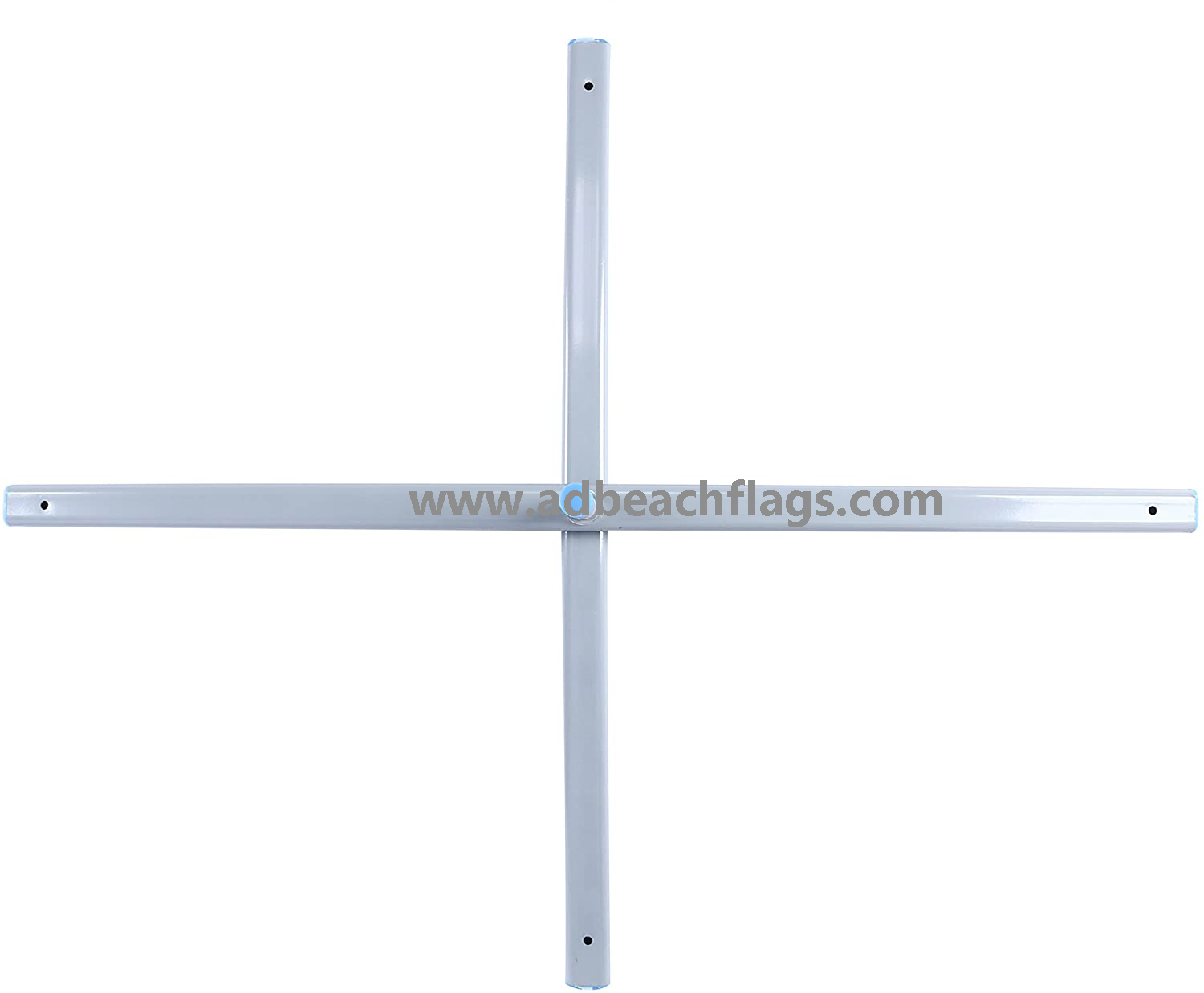
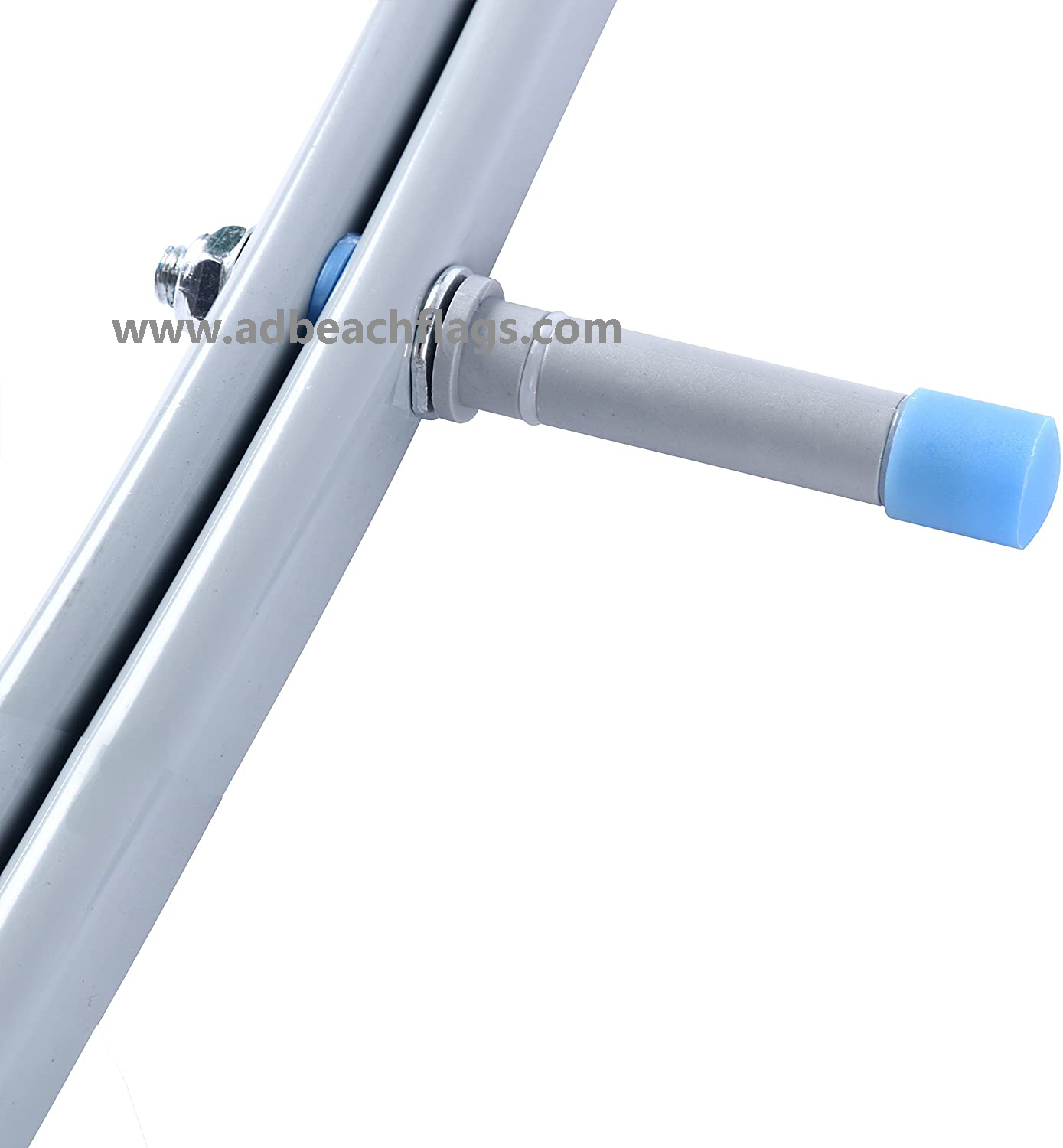
The event row deserves emphasis. Markets, festivals and fairs run on the organiser’s permit, which means buyers usually need no city-level approval at all – but the organiser’s own vendor rules bind harder than city code in practice, because their insurance depends on them. Stake bans and weight minimums are the two that catch flag kits. A kit with a spikeless option – cross base plus ballast, or a water bag – never gets turned away at the gate, and the cross base range covers the spikeless cases.
Run these five lines before artwork goes to print. Each one costs minutes now and saves a confiscation later.
1. Draw the boundary. Confirm where your property line sits, and plan placements inside it. One photo to the local office settles disputes about that strip of grass forever.
2. Ask the two questions. “How many temporary signs per premises?” and “What height and duration rules apply?” Ask together, write down the answer with the officer’s name.
3. Check the community layer. Homeowner associations, estate managements and business districts add their own rules on top of the city code. One read per site, not once per career.
4. Pick hardware that matches the answers. Height caps in the code become pole-length choices; stake bans become cross bases with ballast. Our flag buying mistakes guide lists the full error set this checklist prevents.
5. File the spec sheet. A written kit specification – dimensions, hardware, ballast – drops straight into any permit application. Ask for it with the quotation; a serious supplier issues one as standard.
Enforcement escalates in steps: a warning or correction notice first in most jurisdictions, then a fine, then removal and storage of the hardware. Reclaiming a confiscated kit costs a fee plus the fine in many places, and a dated campaign message is usually dead by the time the flag comes back. The sequence is avoidable at every step, and the cheapest intervention is the phone call before the order – not the appeal after it.
Do I need a permit for an advertising flag?
Depends on placement and your local code’s treatment of temporary displays. Inside your property line within quantity and height caps is the ordinary case. Right-of-way placement usually needs a permit or is restricted. Only the local office can confirm yours – ask before ordering.
Why do cities restrict sidewalk flags?
Because the footway is public right-of-way held for pedestrian movement and sight lines. Displays without permission there get fined or removed. The flag is not the issue; the ground under it is.
How many flags can one business display?
Common codes cap temporary signs per premises – one or two is a frequent pattern, and the cap counts displays rather than designs. Get your city’s number in writing.
Are market and event flags different?
Yes. The organiser’s permit covers the site, so buyers typically skip the city process – but vendor rules on stakes, weights and hardware are enforced. Carry the spikeless base option.
Can my supplier tell me my local rules?
No supplier should guess. A serious manufacturer supplies the written dimensions and hardware list your application needs and expects you to confirm the code locally. That split protects both sides.
What is the safest first setup?
One flag, inside the property line, on a spikeless base weighted for the surface, at a height that clears neither the code nor the sight lines. Prove the pattern once, then scale it.
Flag compliance is a placement decision made before the order. Keep displays on private ground, inside the caps your local office names, with hardware that matches the surface – and enforcement never finds a reason to visit. The kit itself is compliance equipment: pole lengths that respect height caps, bases that respect stake bans, and a written spec sheet that fills in the application form.
Send your site photos and placement plan for a kit specification written for permit files, with sampling and bulk dates confirmed in writing. Low MOQ accepted, wholesale commonly from 5 pieces per design.
Tell us the flag sizes, the quantities, single or double-sided, and the ground the flags will stand on. Our export team replies within 1 hour, 24×7, with a proof and a factory price. Low MOQ accepted.
Prefer a form? Fill in the details below and we will come back with a proof and a price within 1 hour, 24×7.
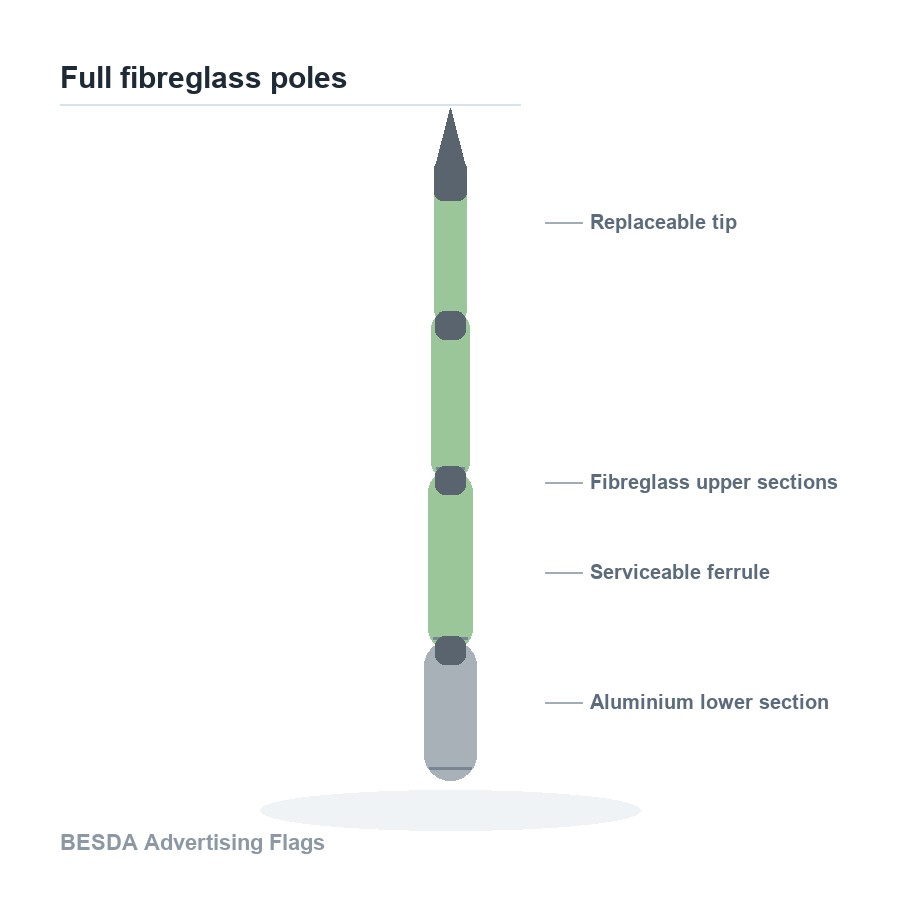
Related reading: 7 flag buying mistakes distributors still make | Cross base sizes explained: 60, 72, 80 cm | Beach flag size guide | Cross bases | Custom feather flags | Full fibreglass poles
| Item | Detail |
|---|---|
| Product | Advertising flag kits with compliance-minded hardware: spikeless cross bases, ballast options, 2.5-4.5 m pole options |
| Also searched as | Advertising flag rules, flag placement laws, sidewalk sign rules, right of way signage, temporary sign permit |
| Manufacturer | BESDA Advertising Flags, Foshan, Guangdong, China |
| Enforcement principle | Penalties target placement in public right-of-way, not the flag itself |
| Safest placement | Private ground inside the property line, within quantity and height caps |
| Common caps | 1-2 temporary displays per premises is a frequent pattern; codes vary by city |
| Event sites | Organiser’s permit covers the site; vendor rules on stakes and weights bind |
| Hardware compliance | Spikeless cross bases and water bags for no-stake sites; pole length matched to height caps |
| Documentation | Written kit spec sheet with dimensions and hardware supplied per order |
| MOQ and lead time | Low MOQ accepted, wholesale commonly from 5 pieces per design; sampling and bulk dates confirmed in writing |