Phone: 0086-757-8938 9313
WhatsApp: +86 135 1661 0926
Email: raya@besda.net
Address: Caochang Industrial Zone, Lishui, Nanhai, Foshan, Guangdong, China
24/7 Online Services
Phone: 0086-757-8938 9313
WhatsApp: +86 135 1661 0926
Email: raya@besda.net
Address: Caochang Industrial Zone, Lishui, Nanhai, Foshan, Guangdong, China
24/7 Online Services

Drinks brands live at events. Music festivals, beach volleyball, fun runs, food truck rallies, stadium concourses: wherever a crowd gathers with a drink in hand, a beverage logo is somewhere above it on a flag. The brands that do this well are not buying flags, they are buying a repeatable event kit, and the specification never changes from city to city.
This guide covers how drinks brands and their agencies spec beach flags for sponsorship work: flag rows for zones, bar-side setups, beach activations, and the hardware decisions that survive a full festival season.
1. Height above crowds. A 4.6 to 5.6 metre flag is visible across a festival field; a banner on a stage barrier is not.
2. Setup in minutes by volunteers. Event crews change between venues. A flag kit needs no tools, no rigging and no permission from the stage manager.
3. One kit, every market. Poles and bases are standard hardware. Only the printed skins travel, and skins are the cheapest part to air freight.
4. Photogenic by design. Flags appear in every photo the crowd takes, which is the actual media value of sponsorship.
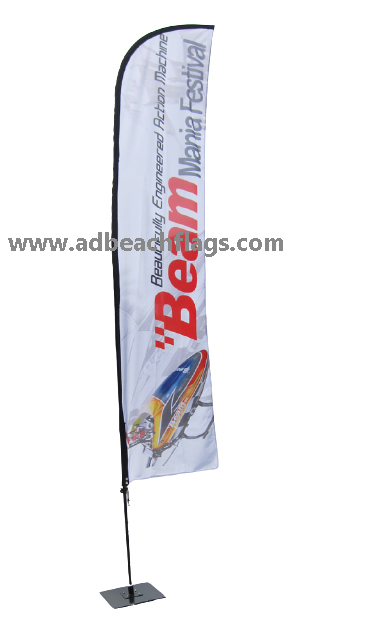
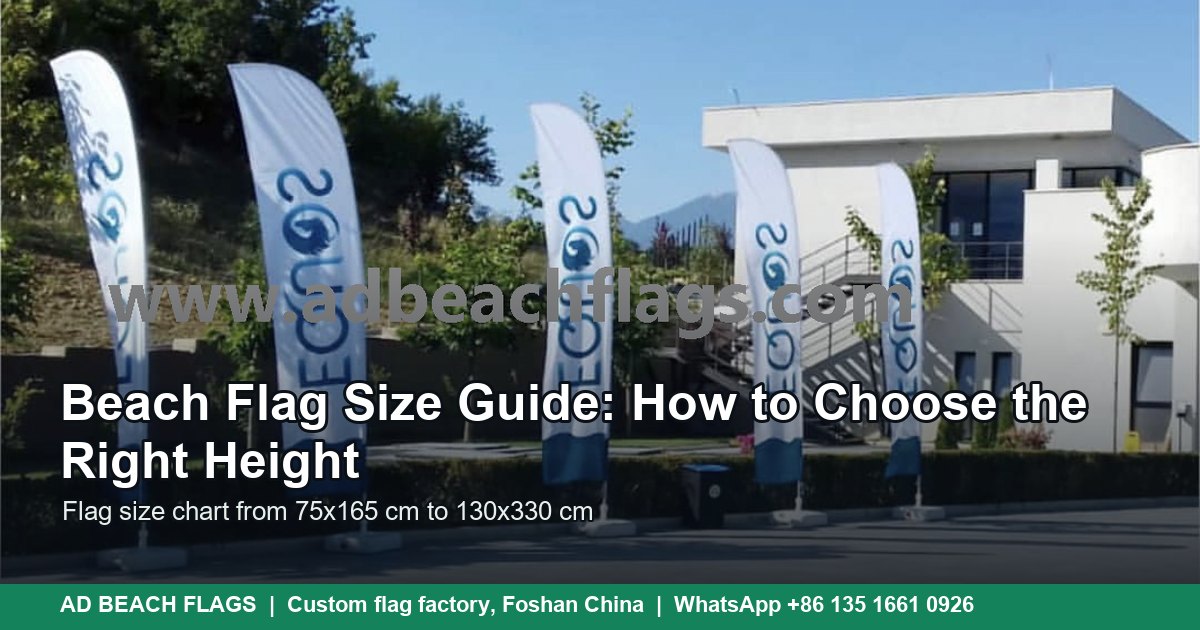
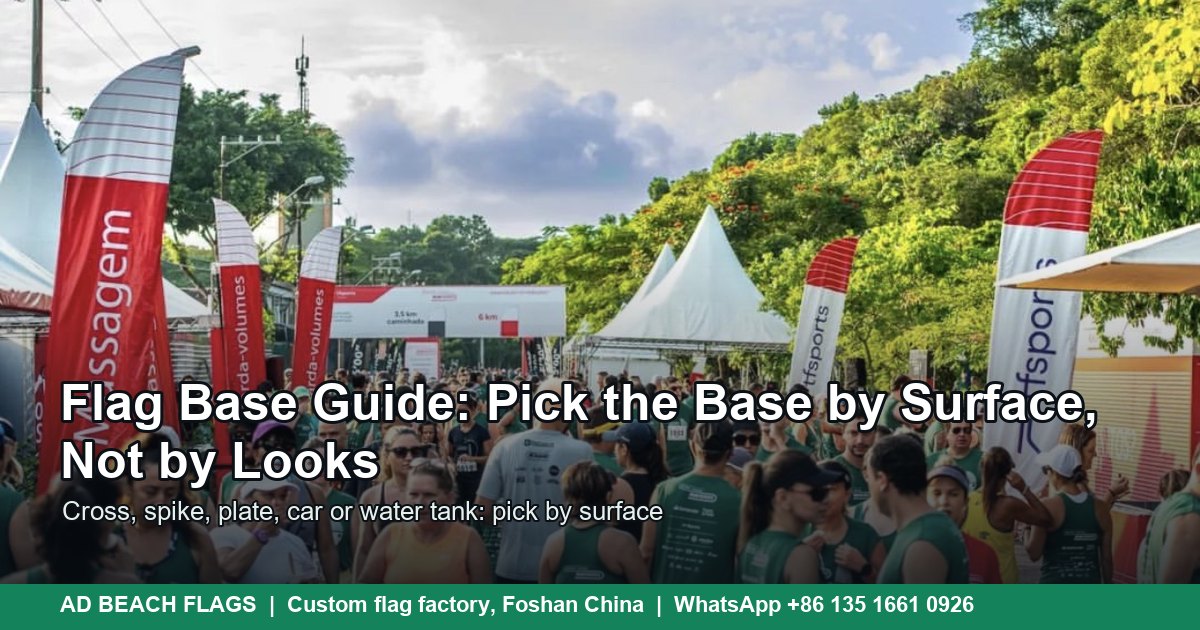
1. The zone row. Five to twelve large flags in a line marking the brand zone: sampling area, VIP terrace, or product activation. At 75×410 cm on 560 cm poles, spaced eight to ten metres apart, the row reads as a single gesture from across the site.
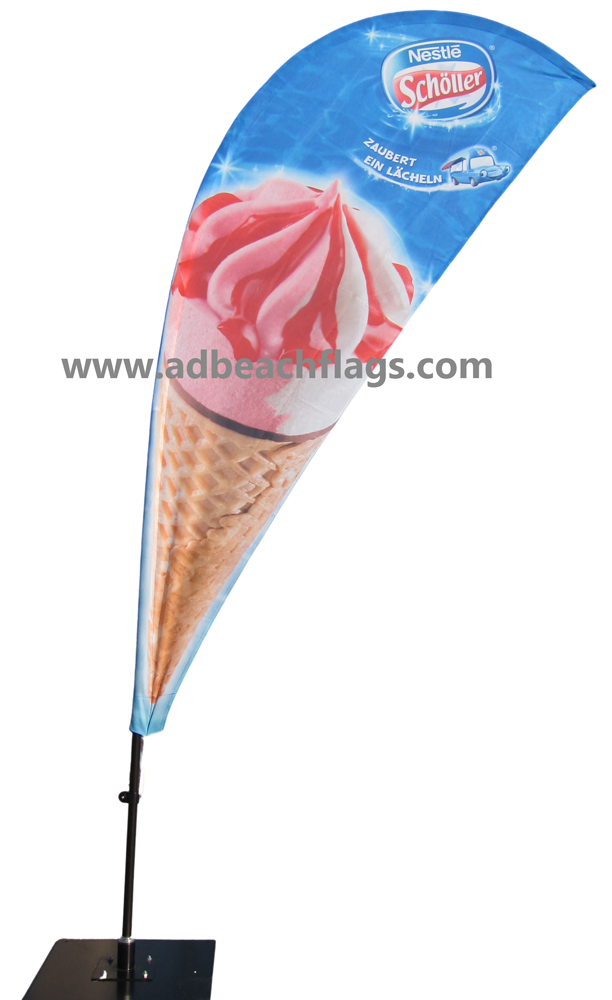
2. The bar cluster. Two to four teardrop flags at 95×230 cm around the bar itself, where the queue forms. Print area stays at eye level, which is where the drink decision happens.
3. The beach activation. Beverage brands have run some of the most copied beach promotions in the industry, from frozen product drops on Ipanema beach to sunset sampling lines. The flag kit here is small and mobile: teardrops on spiral anchors that reset in minutes as the crowd moves with the tide.
| Component | Festival-grade choice | Why |
|---|---|---|
| Fabric | 110gsm knitted polyester; mesh for coastal and windy sites | Prints bright under stage light, survives a weekend of wind |
| Printing | Dye sublimation with Pantone matching | The brand red on site 12 must match site 1 |
| Poles | Full fibreglass for outdoor rows; full aluminium for VIP and bar zones | Flex where the wind lives, straightness where the cameras are |
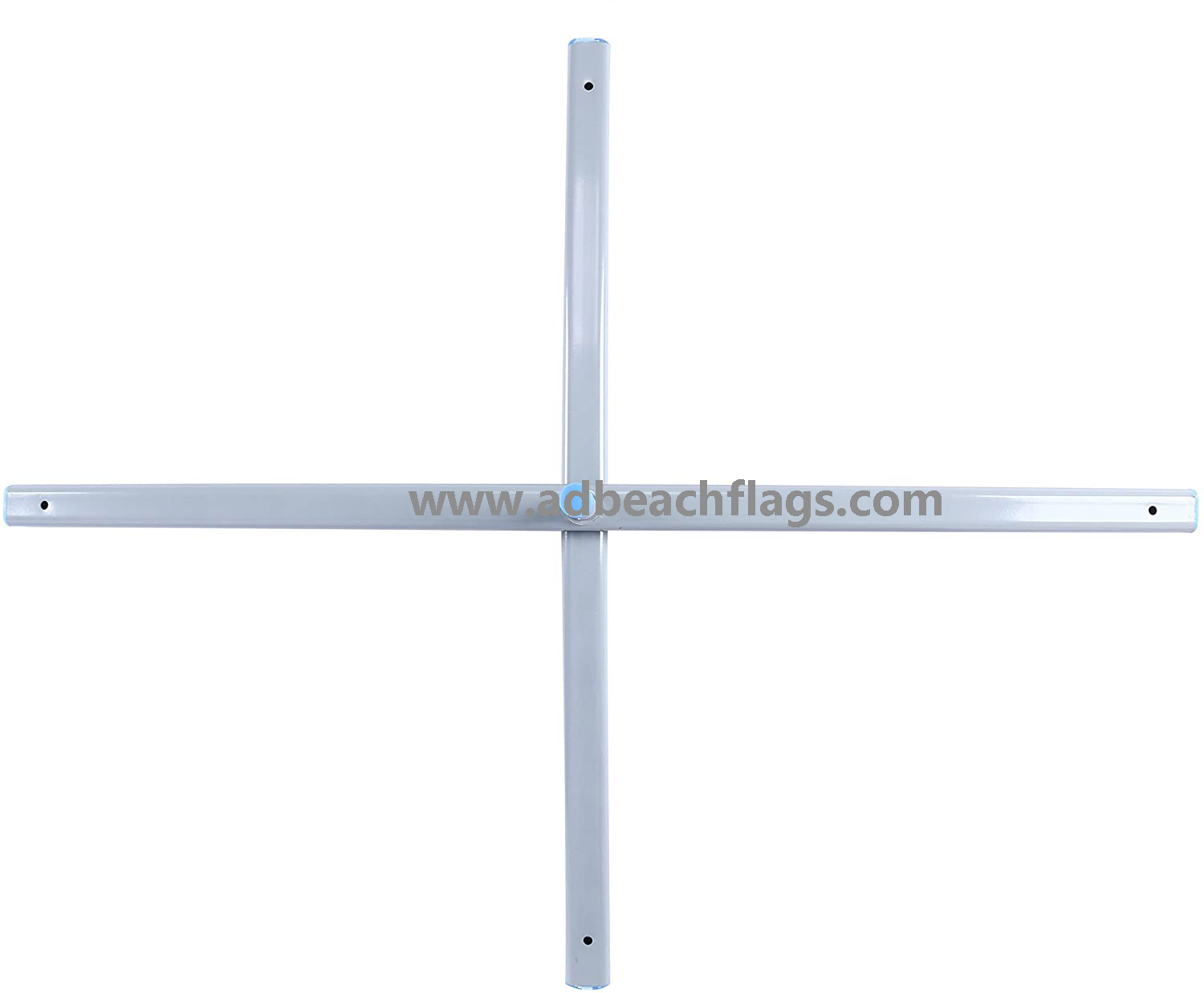
| Bases | Spiral anchors on grass and sand, water tanks on hard standing | Ground type changes per venue; ballast plans do too |
| Packing | Oxford bags, one per kit | Crews carry kits between stages; loose parts get lost |
1. Logo only on zone flags. A flag at forty metres is a mark, not a message. Save the tagline for bar-side flags where people stand and read.
2. Colour blocks over gradients. Gradients muddy at distance and under LED wash. Two or three flat brand colours read clean in photos.
3. Double-sided at the bar. Queues wrap around both sides; a single-sided flag shows a mirror image to half the queue.
4. One flag family per campaign. Agencies change creative constantly, but the shape, size and colour system should stay constant across a season so the brand accumulates recognition.
1. Hardware is capital. Poles, bases and bags are bought once per kit and last several seasons with basic care.
2. Skins are the campaign cost. New creative means new printed skins, at a fraction of the kit price, ordered against stored artwork.
3. Plan one spare skin per design. A torn flag at the main entrance on Saturday morning is the most expensive wardrobe failure in event marketing.
4. Factory-direct wholesale runs roughly 2 to 30 US dollars per flag by size and quantity, so a twelve-flag zone row is a modest line item against stage, sound and sampling costs.
1. Flags without rotating bases on exposed sites. A pinned flag in a crosswind levers its pole all weekend; a rotating socket lets it dance instead.
2. Mixed flag systems. Three pole brands means three spare parts inventories and crew confusion. One fitting standard across the kit prevents both.
3. Ignoring the strike. Kits packed damp grow mildew between weekends; drying and bagging takes ten minutes and saves a season.
4. Ordering skins too late. Production runs 5 to 10 days after artwork approval, then freight. Brands that approve artwork by June get flags by July.
United States. Festival and sporting activations dominate, and agencies spec large feather rows on water tanks for open fields, with local rules checked per county for portable signage near roads.
United Kingdom and Ireland. Music festival sponsorship runs on mesh fabric for exposed sites, and crews expect oxford-bagged kits that move between stages without a van.
Germany, Austria and Switzerland. Agencies here ask for written specifications, flame certificates and consistent hardware finishes before the first order, so documentation travels with the quote.
Spain and the Gulf. Beach club and marina sponsorships run teardrop clusters on sand anchors, with mesh fabric standard wherever the afternoon breeze is constant.
Brazil and Mexico. Brand activations in public squares favour double-sided teardrops for surrounding crowds, with single-sided rows keeping landed cost down on multi-city tours.
1. Walk the site a week out. Ground type, wind direction and the crowd’s natural line decide base types and flag positions before the truck is loaded.
2. Pack by zone. One oxford bag per zone, labelled, with bases and ballast in their own carton. Crews assemble zones in parallel instead of sorting a shared pile.
3. Photograph the built stand. The client wants proof of placement, and the photo library becomes the template for next season’s proposal.
4. Strike dry, pack dry. Damp flags folded into bags grow mildew between weekends; ten minutes of drying at the venue saves a season of replacements.
5. Log the damage. A cracked tip or a torn skin noted at strike gets replaced before the next city, not discovered during setup.
We would rather say this before the festival than during it.
1. Indoor arenas with rigging rules. If the venue forbids freestanding signage, negotiate banner positions instead.
2. Brand campaigns with long copy. A flag carries a mark and a word. Manifestos need screens or print.
3. Sites with strict stakeholder limits. Some festivals cap the number of sponsor flags per brand; the allocation matters more than the design.
Drinks brands do not just appear at festivals. The longest-running flag programmes in the trade sit at sports clubs, where the same kit stands for an entire season and the cost per viewing day collapses to almost nothing.
1. Football and rugby clubs. Perimeter rows of feather flags behind the goals and along the touchline, printed with the drinks partner’s mark, standing on spikes in the grass. A club with twelve flags gives the sponsor two hours of televised visibility every home weekend.
2. Tennis and padel clubs. Smaller teardrops around the court apron on cross bases with water bags, because club grounds are paved and the wind funnels between fences.
3. Running and cycling events. The start line carries the tall flags, the finish line carries the brand cluster, and the route markers use small flags on spikes that volunteers reposition in minutes.
4. Golf days. The corporate hospitality version: one teardrop at the registration desk, one at the first tee, one at the nineteenth hole, all in the sponsor’s colours with the club’s blessing.
The economics are the reason this channel keeps growing. A season of weekend visibility from a flag kit costs less than a single broadcast advert, and the club handles the setup because the kit is simple enough for volunteers.
The zone row builds the brand; the bar cluster sells the drink. Two to four teardrop flags at 95×230 cm around the serving point do three jobs at once.
1. They mark the queue. At a busy festival the bar queue is a hundred people long, and the flags above it are what new arrivals join.
2. They carry the serve. Double-sided prints mean the half of the queue facing the back of the flag still reads the brand correctly.
3. They light well. A teardrop beside the bar sits inside the stall’s lighting, so the brand stays visible after sunset without separate rigging.
Full aluminium poles suit this position: the bar zone is where photos are taken, and a flag that leans looks careless next to a stainless counter.
A touring kit lives a hard life: assembled by different hands each week, packed wet more often than anyone admits, and freighted between cities in the same truck as the stage gear. A short care routine keeps it looking sponsor-grade all season.
1. Rinse the skins monthly. Festival dust and grass stains dull dye-sublimation prints faster than sunlight does. A 30 degree wash with mild detergent, then a full air dry, restores the colour.
2. Check the tension cords at each strike. The cord is the cheapest part of the kit and the first to stretch. A saggy flag at the bar reads as neglect, not as use.
3. Inspect pole joints for grit. Sand from beach activations grinds aluminium sections from the inside. A wipe before assembly adds years to a pole.
4. Store the bags off the truck floor. Ballast cartons shift in transit, and a fibreglass tip under a water tank base is a repair order.
5. Photograph the kit at each strike. The photos prove condition at handover, settle any damage questions with venues, and show the client exactly what their sponsorship bought.
Rental companies run their entire flag fleets on routines like this, and their skins routinely outlast owned kits that nobody logs. The care sheet costs nothing to include in a quote and saves arguments all season.
Q1. How many flags does a sponsor zone need?
Five to twelve large flags make a readable row, and two to four teardrops cover a bar. Fewer than five at a big site reads as an afterthought.
Q2. Which shapes do drinks brands use?
Large feather flags for zone rows because they read at distance, and teardrop flags at bars because the print sits at eye level where the queue stands.
Q3. What does a season of flags cost?
Factory-direct wholesale runs roughly 2 to 30 US dollars per flag by size and quantity. Hardware is bought once per kit; skins are the per-campaign cost.
Q4. Can the flags survive a full weekend of weather?
Yes, with reinforced sleeves and double-stitched seams. Bring them in for named storms; portable signage is not built for gales.
Q5. How fast can a campaign set be produced?
Samples take 2 to 3 days and bulk production 5 to 10 days after artwork approval, because digital printing needs no screens.
Q6. Do you print from agency artwork?
Yes. Send vector files against our templates, approve the Pantone swatch, and the same file can reprint for every market on the tour.
| Point | Detail |
|---|---|
| Manufacturer, not a reseller | Flags, poles and bases produced in our own Foshan workshop, one fitting standard across the kit. |
| Colour you can hold us to | Pantone and RAL matching with swatch approval, so site 12 matches site 1. |
| Fast sampling | Samples in 2 to 3 days, bulk in 5 to 10 days after artwork approval. |
| Tour-ready packing | Oxford bags per kit, flags flat-packed, bases in separate cartons. |
| Low MOQ accepted | Trial kits for a single event, wholesale pricing for a full season. |
| Customer 5stars Feedback | warmly welcomed in 150+ countries across Europe, the Americas, the Middle East, Africa and Oceania. |
Beverage sponsorship is a repeatable machine, and flags are the part of it the crowd actually photographs. Fix one kit specification, buy the hardware once, reprint skins per campaign, and the same setup can tour a season without a single site looking different from the last. The brands that treat flags as infrastructure, rather than as an event expense, end up with a kit that visits twenty cities a year and looks identical in all of them.
Send us the event calendar, the site types and the flag counts per zone, and we will reply within 1 hour, 24×7 with a per-event kit list and a season price. Low MOQ accepted, and we will tell you plainly when a smaller kit does the same job.
Tell us the flag size, the quantity, single or double-sided, and the surface the flags will stand on. Our export team replies within 1 hour, 24×7, with an artwork proof and a factory price. Low MOQ accepted.
Chat on WhatsApp (+86 135 1661 0926) Email Us Now
Prefer a form? Fill in the details below and we will come back with a proof and a price within 1 hour, 24×7.
Related reading: Flag Base Guide | Surf Flags for Coastal Campaigns | Flag Fabric and Printing Guide | Feather Flags | Teardrop Flags | Spike Base Stands | Portable Oxford Bags | OEM / ODM Manufacturer
| Item | Detail |
|---|---|
| Product | Beach flags and sponsorship flag kits for beverage brands and event agencies |
| Manufacturer | BESDA Advertising Flags, Foshan, Guangdong, China |
| Sponsor setups | Zone rows of 5 to 12 large flags, bar clusters of 2 to 4 teardrops, beach activations on spiral anchors |
| Sizes | Feather up to 75×410 cm on 560 cm poles; teardrop 95×230 cm for bar zones |
| Fabric | 110gsm knitted polyester; mesh for coastal and windy sites |
| Printing | Dye sublimation with Pantone matching and swatch approval |
| Hardware | Full fibreglass or full aluminium poles; spiral anchors, water tanks, plates |
| Season economics | Hardware bought once per kit; printed skins reordered per campaign |
| MOQ and lead time | Low MOQ accepted; samples 2 to 3 days, bulk 5 to 10 days after approval |
| Contact | WhatsApp +86 135 1661 0926, [email protected], reply within 1 hour 24×7 |