Phone: 0086-757-8938 9313
WhatsApp: +86 135 1661 0926
Email: raya@besda.net
Address: Caochang Industrial Zone, Lishui, Nanhai, Foshan, Guangdong, China
24/7 Online Services
Phone: 0086-757-8938 9313
WhatsApp: +86 135 1661 0926
Email: raya@besda.net
Address: Caochang Industrial Zone, Lishui, Nanhai, Foshan, Guangdong, China
24/7 Online Services

A retail chain asked for flags for forty storefronts and received two radically different proposals: a local printer at $85 per kit, and a factory program at a third of that – with a catch the chain nearly missed. The factory price was real, but only if the chain standardized its kit. Same flag everywhere, one pole standard, one base standard, ordered in tiers. The chain’s instinct – every store gets its own size and design mix – is precisely what makes bulk flag pricing terrible. This guide shows how bulk pricing on custom advertising flags actually works, and how distributors and chains structure orders that hit the real tiers.
The numbers come from our Foshan factory’s price lists and container plans for distributors in Europe, North America and the Gulf.
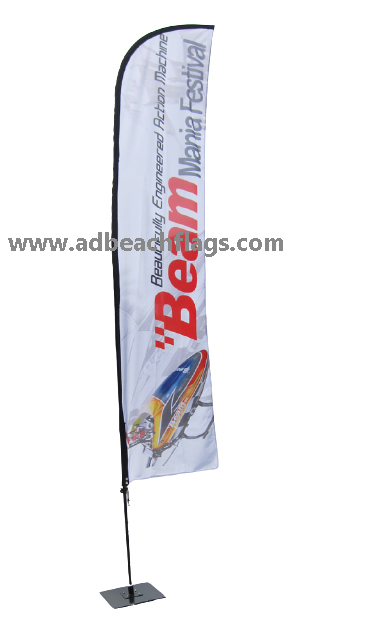
Flag pricing is tiered because setup – file prep, profile calibration, cutting, press time – amortizes across the run. The tiers below are indicative factory-level ranges for a standard 3.4 m feather flag kit (single-reverse sail, fiberglass pole, cross base):
| Quantity | Indicative per-kit range | What changes |
|---|---|---|
| 1-9 | $45-65 | Setup on every file; trial-order territory |
| 10-49 | $32-45 | First real tier; one or two SKUs |
| 50-99 | $25-34 | Fabric cut in full rolls; sewing line efficiency |
| 100-499 | $19-27 | Pole and base bulk purchasing kicks in |
| 500+ | $15-22 | Container program; dedicated production slots |
Read the table for its shape, not its digits – fabric markets move. The shape: the biggest drop happens between trial and the first tier, and every tier after that is earned by standardization, not volume alone. A 100-piece order of one kit standard prices better than a 100-piece order of four mixed configurations, because mixed orders multiply hardware SKUs and sewing variants.
The counterintuitive core of bulk flag buying: the artwork can vary completely – every store its own message – while the hardware stays identical. What standardizes best:
1. One flag size per program. Sleeves, poles and bases then share one specification. Replacement sails fit every position years later.
2. One pole material. Fiberglass for most programs; aluminum only where stiffness at height matters. Mixing doubles the spare-parts problem.
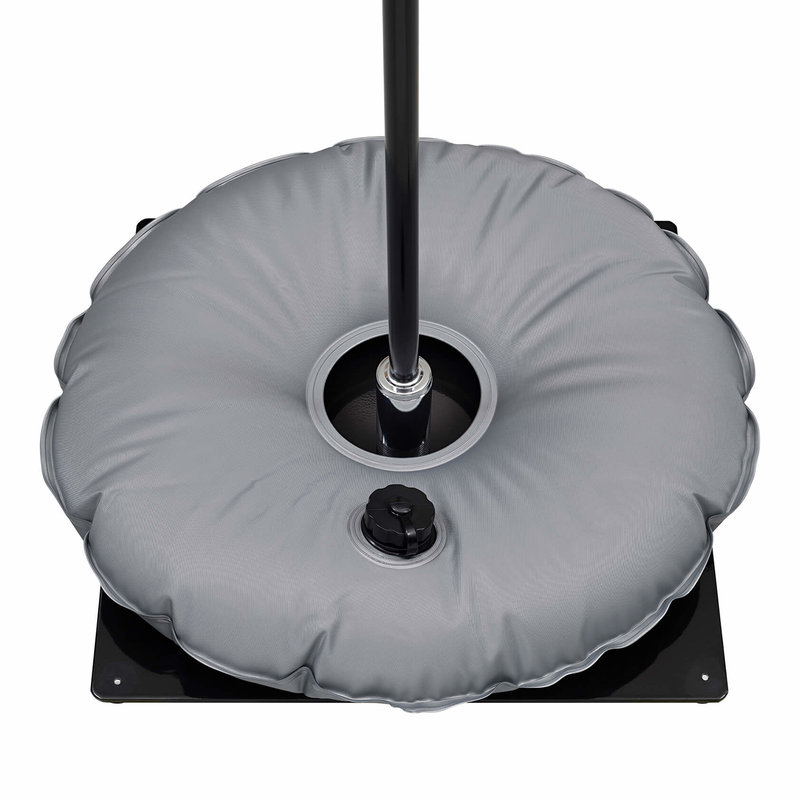
3. One base per ground type. Cross base for pavement, spike for grass, plate for permanent positions – but per site type, not per store whim.
4. One packing standard. Sails flat, poles bundled by length, bases cartoned separately – the carton plan ships more kits per container and unpacks faster per store.
Promotional products distributors and print brokers run our kits under their own brands every week. A workable white-label program has four parts: unbranded product and neutral cartons (or your logo on the carton and label); your artwork terms honored silently – we never contact your clients; archived recipes per end-client so reorders repeat exactly; and a standing price ladder so your resale quotes stay fast. The distributor keeps the client relationship; the factory keeps the presses busy. Both sides win only if the reorder path is designed before the first order – which is why we ask distributors about their second order during the first conversation.
Flags are the easy part of a container; hardware is the volume. A 20-ft container comfortably carries roughly 2,500-3,500 standard 3.4 m kits when poles ship nested by length and bases nest inside each other; a 40-ft high-cube roughly doubles that. Three packing rules protect the load: sails always flat with interleaving (creased sails read as damaged at delivery); poles capped and bundled so sections never rub; bases cartoned in layers with corner protection. Ask any quote for carton dimensions, kits per carton and gross weight – three numbers that turn a unit price into a landed cost.
Chains that succeed with flag programs pace them like campaigns, not like one purchase. The pattern: pilot one store with two constructions and prove the site; tier one for the first wave of stores with one kit standard; hold the tier-two order until the pilot’s seasonal wear report comes back – which fabric weight, which base, which sleeve survived. Buying the whole program in round one locks you into the pilot’s guesses. Buying in paced tiers lets the program learn.
1. Maximum variety, minimum volume. Four sizes across forty stores is a 160-SKU problem wearing a discount costume. One size, many messages.
2. Cheapest fabric at quantity. 110 g fades visibly within a season of harsh sun; the reorder costs more than the upgrade did. Match grammage to exposure, then buy bulk.
3. No price ladder in writing. Tier pricing without a written ladder re-negotiates itself every order. Put the next three tiers in the PO.
4. Ignoring the reorder archive. Bulk savings compound on reorders; a factory that archives recipes and files per SKU is the one that protects the compounding.
5. Container-loading by enthusiasm. Overpacked cartons crush sails; underpacked containers waste freight. The carton plan is part of the order, not an afterthought.
Return to the chain from the opening. Quote one, from a local printer: $85 per kit across forty stores – $3,400, delivered next week, every store free to choose its own size. Quote two, factory program: one kit standard (3.4 m single-reverse, fiberglass pole, cross base), forty sails with per-store artwork, hardware at bulk tier – about $1,180 landed, with a written ladder for the next 100 kits at $21 and a two-set rotation planned from month one. The catch the chain nearly missed: quote two requires standardization and a six-week first cycle. They mixed the best of both – factory program for the forty permanent positions, local printer for the two pop-up locations that genuinely needed next-week flags. Knowing which positions deserve which supply chain is half of procurement.
Bulk quotes arrive as unit prices, but the number that matters is cost per kit standing on your site. Four additions turn one into the other: freight (volumetric weight – flags are bulky and light, so carton dimensions move the number as much as mass); duties and VAT under HS 6307.90; inland handling from port or airport to your warehouse; and the unpack cost – a carton plan that unpacks in minutes per store is worth real labor across forty stores. Ask every supplier to quote these four lines explicitly. The spread between two “similar” factory quotes usually lives here, not in the unit price.
Seasonal buyers – garden centers, beach retail, festive campaigns – can engineer their way up the tiers instead of waiting for volume. Two moves do it. Consolidation: six seasonal designs ordered once at 15 pieces each hit the 50+ tier; the same six designs ordered separately in waves of five never leave trial pricing. One factory order, one freight bill, scheduled releases from your own warehouse. Shared platforms: keep one flag size and one pole standard across every seasonal design, and hardware – the expensive half of each kit – becomes a one-time purchase with sails as the only annual spend. A garden center running this pattern pays for hardware once and buys only sails each spring, at full-tier pricing, in a single order that consolidates every campaign theme. The discount was never really about quantity; it was about giving the factory one clean specification to run efficiently.
United States. Distributors order tier-one trials then scale; recycled polyester requests grow, and HS 6307.90 duty planning belongs in the landed-cost sheet.
Germany and the Nordics. Chain programs ask for documented color tolerance per tier and standardized packing lists per store – the paperwork is part of the product.
Gulf states. Mall programs standardize on double-sided blockout kits; tiers get hit fast because positions multiply across properties.
Southeast Asia. Humidity drives packaging: sealed poly bags inside cartons keep sails presentation-fresh through port handling.
Ireland and New Zealand. Smaller markets buy smarter in paced tiers – one standard kit, two-set rotation, and replacement sails shipped by express between tiers keep the program fresh without holding a container’s worth of stock.
Latin America. Brazil and Mexico buyers weight duty planning heavily: flags under HS 6307.90 with accurate commercial invoices clear fastest, and Spanish-language artwork needs its own approved proof face per campaign.
Spain and Portugal. Beachside promenade programs order single-reverse mesh at tiers through local distributors, with double-sided blockout reserved for the sheltered old-town positions – a construction split by street, not by budget.
Middle East retail groups. Multi-property groups consolidate tiers across brands: one hardware standard, per-brand artwork, and a single annual container that serves every mall program – the tier discount priced into the group’s whole year.
We would rather say this before the container books than after it lands.
We say this to buyers who would rather hear it now than in a container.
1. Unproven design at 500 pieces. Pilot ten first. The message may change after it meets the street.
2. No storage for a full program. Flags and poles are compact, but 500 kits still need a dry, flat storage plan; buying in two tiers may land cheaper than renting warehouse space.
3. Cash-flow-heavy season. Tier pacing also paces spend; there is no medal for buying a year of flags in March.
Q1. What quantity counts as a bulk order for custom flags?
Price tiers typically step at 10, 50, 100 and 500 kits. The first meaningful drop is between trial and tier one; deeper tiers reward kit standardization as much as volume.
Q2. Can every store have a different design at bulk pricing?
Yes – artwork varies freely while hardware stays standardized. The tiers are earned by one flag size, one pole standard and one base per ground type, not by identical artwork.
Q3. Do you offer white-label for distributors?
Yes: neutral or custom-branded cartons and labels, your client relationship untouched, archived recipes per end-client, and a standing written price ladder for fast resale quotes.
Q4. How many flag kits fit in a 20-ft container?
Roughly 2,500-3,500 standard 3.4 m kits with nested poles and stacked bases, depending on base types. Ask for carton dimensions, kits per carton and gross weight to compute landed cost.
Q5. Should we buy the whole rollout at once?
No – pilot one store, buy the first wave at tier one, and hold tier two until the seasonal wear report. Paced tiers let the program learn before it scales.
Q6. What fabric should a bulk program choose?
110 g for mild climates and rotation, 115-130 g for strong UV exposure, mesh for coastal wind. Match grammage to exposure first, then buy the tier – cheapest fabric at quantity is the most expensive mistake in bulk flags.
| Point | Detail |
|---|---|
| Factory-direct tiers | Written price ladders from trial to container; no broker layer between you and the presses. |
| Kit standardization | One hardware standard across the program – replacement sails fit every position, years apart. |
| White-label program | Neutral or branded packing, silent fulfillment, archived recipes per end-client. |
| Container planning | Carton dimensions, kits per carton and load plans quoted upfront – landed cost before the PO. |
| Low MOQ accepted | Pilot quantities at program quality, scaling tier by tier. |
| Reply in 1 hour, 24×7 | WhatsApp +86 135 1661 0926 or [email protected] with store count and sites for a tiered quote. |
Bulk savings on custom advertising flags come from three disciplines: one kit standard, a written price ladder, and paced tiers that let a pilot teach the program. Volume alone buys you a bigger discount on whatever – standardization buys the discount you actually planned.
Send us the store count, sites and one line about ground and wind, and we reply in 1 hour, 24×7 with tiered pricing, a carton plan and a pilot-first schedule. Low MOQ accepted – and if your rollout is honestly a ten-flag program, we will price it as ten, not sell you fifty.
Tell us the flag size, the quantity, single or double-sided, and the surface the flags will stand on. Our export team replies within 1 hour, 24×7, with an artwork proof and a factory price. Low MOQ accepted.
Chat on WhatsApp (+86 135 1661 0926) Email Us Now
Prefer a form? Fill in the details below and we will come back with a proof and a price within 1 hour, 24×7.
Related reading: Ordering from a China Factory | Wholesale Feather Flags Guide | Flag Base Guide | Custom Feather Flags | Custom Teardrop Flags | Water Bags | Warehouse & Logistics
| Item | Detail |
|---|---|
| Product | Custom advertising flag kits: sails, poles, bases, water bags, carry bags |
| Manufacturer | BESDA Advertising Flags, Foshan, Guangdong, China |
| Price tiers | Steps at ~10 / 50 / 100 / 500 kits; written ladders on request |
| Indicative kit range | About $15-65 per kit by tier for standard 3.4 m single-reverse kits |
| Programs | White-label and private-label for distributors and print brokers |
| Container capacity | 20-ft: roughly 2,500-3,500 standard kits; 40-ft HC about double |
| Packing standard | Sails flat with interleaving, poles nested and capped, bases cartoned separately |
| Fabrics | 110 / 115 / 130 g polyester, mesh for coastal exposure |
| Sample lead time | 2-3 days; bulk 5-10 days after approval |
| Contact | WhatsApp +86 135 1661 0926, [email protected], reply in 1 hour 24×7 |