Phone: 0086-757-8938 9313
WhatsApp: +86 135 1661 0926
Email: raya@besda.net
Address: Caochang Industrial Zone, Lishui, Nanhai, Foshan, Guangdong, China
24/7 Online Services
Phone: 0086-757-8938 9313
WhatsApp: +86 135 1661 0926
Email: raya@besda.net
Address: Caochang Industrial Zone, Lishui, Nanhai, Foshan, Guangdong, China
24/7 Online Services

Ask a rental company what kills their flags and the answer is rarely wind. It is the damp flag folded into a van corner after a festival, opened two weeks later with mildew spots across the logo. Fabric that survives a whole season of weather loses its last weeks to one bad storage decision. The good news: washing and storing a flag properly takes less time than brewing the tea you drink while doing it.
This guide is the care routine we give event companies: how to wash at the right temperature, what to do about six common stains, how to stop mildew before it starts, and how to store skins and hardware so the next event starts with a flag that looks new.
A dye sublimated polyester flag in daily outdoor use has a typical life of about six months. That number assumes the flag lives outside in all weather. The same skin, pulled down each evening, washed monthly and stored dry, keeps its colour for several seasons of event use.
Two enemies do most of the damage. Grit is the first: sand and road dust work into the fabric and the pole sleeve, and every fold grinds them against the fibres like sandpaper. Moisture is the second: a flag stored even slightly damp grows mildew within days, and mildew eats both the colour and the cloth. Every habit below attacks one of those two enemies.
1. Rinse first, always. Cold water removes salt crystals, sand and dust before they scrub the fabric. A hose outside or a basin rinse does it; skip this and the wash itself becomes the abrading.
2. Empty the sleeve. Turn the flag so the pole sleeve faces down and shake. Grit collected at the sleeve end is the number one cause of worn-through hems.
3. Inspect while wet. Seams and corners show their honest state when damp. A 2 cm tear repaired today stays 2 cm; left for a season it becomes a panel.
| Method | How | Verdict |
|---|---|---|
| Hand wash | Lukewarm water at 30 degrees, mild liquid detergent, gentle kneading | Safest; the method we recommend for every flag |
| Machine wash | Gentle or delicate cycle, 30 degrees, flag inside a mesh laundry bag | Acceptable for whole flags without hardware attached |
| Dryer | Never | Heat shrinks and wrinkles polyester and dulls print |
| Iron | Never | Creases fall out on the pole within an hour of flying |
| Dry cleaning | Never | Solvents attack the fibre and the print |
Four products never touch a flag: bleach, fabric softener, stain pens with solvents, and washing powder that has not fully dissolved. Mild liquid detergent at 30 degrees does everything the others promise, without the damage.
| Stain | Treatment | Note |
|---|---|---|
| Mud and dust | Cold soak 15 minutes, then normal wash | Let the water do the work, not scrubbing |
| Grease and food | Drop of washing-up liquid rubbed in gently, rinse, wash | Dish soap cuts oil where laundry detergent struggles |
| Salt and dried spray | Long fresh-water rinse before any soap | Salt crystals are the invisible sandpaper |
| Mildew spots | 50/50 white vinegar and water, soak 15 minutes, wash, sun-dry once | Test a corner first; heavily spotted fabric rarely fully recovers |
| Bird droppings | Soak soft, lift off, then wash the area | Scrubbing drives it deeper into the weave |
| Sunscreen | Degreasing dish soap, lukewarm rinse | Beach flags meet sunscreen every summer |
One rule sits above the table: treat stains the day they happen. A fresh stain lifts with water; a month-old stain becomes part of the flag’s biography.
Air dry only, in shade, with air moving on both faces. Drape the flag over a line or lay it flat; hanging by one corner for hours pulls wet fabric out of shape. A flag must be bone dry before it is folded, and on a humid day that can take a full day, not an afternoon.
The shade part matters more than people expect. Wet fabric bleeds colour faster under UV than dry, so the sunny drying spot that feels efficient costs colour at the exact moment the fabric is weakest. Fold only when the fabric feels dry in its deepest fold, not just on the surface.
1. Aluminium poles wipe down with a damp cloth. Check the elastic cord inside segmented poles; a cord that loses tension lets sections twist, and replacement takes minutes at the factory cost of a coffee.
2. Fibreglass sections get inspected at the tips. A splintering tip files smooth in a minute today; ignored, it shreds the sleeve from inside.
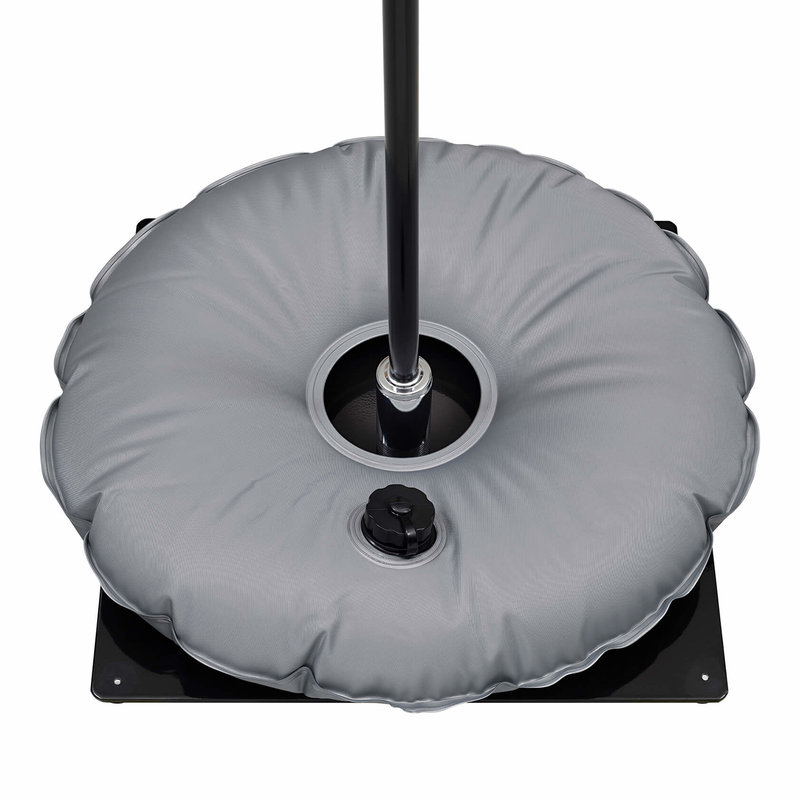
3. Water bags and tanks empty fully, rinse, and dry open. Water left standing grows algae that stains. In frost-prone regions, drain everything or fill tanks with sand for winter, because a frozen solid tank cracks.
4. Bases knock the dried mud off and stack. Spike bases deserve a wire-brush on the threads so they screw into the ground next spring without a fight.
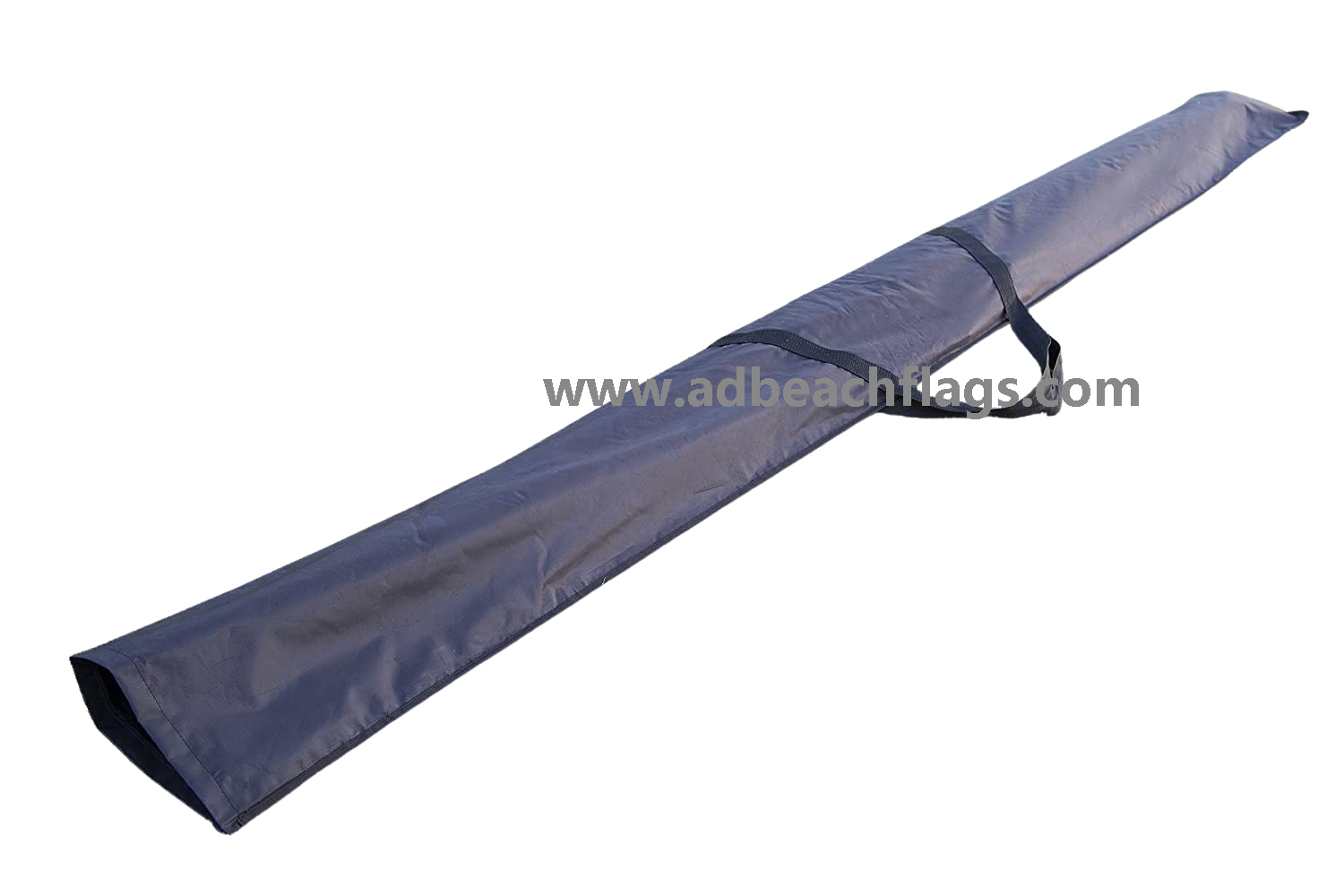
5. Oxford carry bags vacuum or shake out, and store the flags in them. A woven oxford bag breathes; sealed plastic does not, and plastic traps the last 5 per cent of moisture that causes mildew.
The rental-trade standard is a three-word routine: roll, bag, shelf.
1. Roll instead of fold. Folding creases the print along the same lines every time and works grit into the fold. Rolling around a cardboard tube protects both the print and the sleeve. Rental fleets roll; the flags in their fifth season prove the habit.
2. Breathe, do not seal. Store skins in a breathable oxford bag or a cotton sack in a cool, dry cupboard. Never sealed plastic, never a hot car boot, never against an outside wall where condensation forms.
3. Off the floor. Concrete floors breathe moisture upward overnight. A shelf, any shelf, breaks the contact.
4. Tag by size. A written tag on each roll, size and side count, saves the pre-event rummage. Fleets that tag restock an event in minutes.
For the winter lay-up, run the full loop once:
1. Wash everything by the routine above, including the bases.
2. Dry for a full day in moving air, then a second day for the sleeve end, which holds water longest.
3. Repair the small stuff: re-stitch loose corners, file fibreglass tips, replace tired elastics. An hour in November saves a panic in March.
4. Roll, bag, label, shelf. Then note on the box which skins looked tired this season, because those are the first reorder candidates when the bookings come in.
The right interval depends on what the flag flies through. Fleets that match washing to conditions spend less per season than fleets that wash on a calendar alone:
| Trade | Washing rhythm | Why |
|---|---|---|
| Car dealerships | Monthly machine wash in a mesh bag | Brake dust and road film grey out white grounds |
| Beach clubs and surf schools | Fresh-water rinse weekly, wash monthly | Salt is the constant enemy on the shoreline |
| Rental and event fleets | Wash after every multi-day event | Festival grime bakes on within days |
| Restaurants and cafés | Wipe weekly, wash monthly | Kitchen airborne grease settles on the lower panel |
| Trade show kits | Wash after each show, inspect seams | Hall air and handling do more harm than weather |
Whatever the rhythm, the preflight rinse stays universal. It costs two minutes and it is the single habit that separates fleets on their fifth season from fleets shopping for replacements every spring.
United Kingdom. Rain and road grime mean monthly washing through the season, and salt carried home from coastal events deserves the long rinse the same day.
Australia and New Zealand. Hard UV, not dirt, ages flags fastest; rotate two skins and dry everything in shade, because the sun that fades the flag works overtime on a wet one.
Latin America. Humidity makes the full-dry rule non-negotiable; crews in coastal Brazil dry flags with a fan overnight before any bag is closed.
Gulf markets. Fine dust settles into sleeves after sandstorms; blow out the sleeve and wipe poles before storage, or the dust grinds all summer in the bag.
North America. Dealership flags collect brake dust and road film; a monthly gentle cycle inside a mesh bag keeps white grounds white through the season.
We would rather tell you when care stops paying. Three signs that a skin has given its all:
1. The sleeve is worn through. A frayed pole sleeve fails again within weeks of repair. Once the hem thins, the skin is a consumable that has been consumed.
2. The brand colour has left. When the red that matches your sign reads as pink at arm’s length, washing will not reverse UV chemistry. The artwork on file makes the replacement a reorder, not a project.
3. Seams fail in more than one place. One opened seam is a repair. Three are a structure telling you the fabric fatigue has spread.
At that point the smart move is the cheapest one: order the printed skin only, keep the pole and base in service, and let the stored artwork do the work. Skins ship flat, cost a fraction of a full kit, and the flag that goes up at the next event looks like the day you first approved the swatch. Message us the size and side count on WhatsApp at +86 135 1661 0926 or email [email protected], and we reply within 1 hour, 24×7. Low MOQ accepted, samples in 2 to 3 days, bulk in 5 to 10 days after artwork approval.
Q1. Can I machine wash a feather flag?
Yes, on a gentle or delicate cycle at 30 degrees with mild liquid detergent, inside a mesh laundry bag. Hand washing is still the safest method, and dryers, irons, bleach and dry cleaning are always off the list.
Q2. How do I get mildew out of a flag?
Soak the spots in a 50/50 mix of white vinegar and water for about 15 minutes, wash at 30 degrees, then dry fully. Test a corner first; heavy mildew rarely fades completely, so prevention means storing flags bone dry.
Q3. How often should an advertising flag be washed?
Monthly during the season for street and dealership flags, and after any muddy or coastal event. Rinse with fresh water after beach use before the flag is folded at all.
Q4. Can I put the flag in the dryer to speed things up?
No. Heat shrinks and wrinkles polyester and dulls the print. Air dry in shade with air moving on both faces, and wait until the deepest fold feels dry before storing.
Q5. Should flags be folded or rolled for storage?
Rolling wins. Folding creases the same print lines every time and grinds grit into the fold; rolling around a tube protects the print and the pole sleeve through the off-season.
Q6. Can I order just the printed flag without poles?
Yes, and it is the smart reorder. Poles and bases last for years, artwork stays on file at the factory, and a replacement skin ships flat at a fraction of a full kit.
| Point | Detail |
|---|---|
| Manufacturer, not a reseller | Flags printed and sewn in our own Foshan workshop, with reinforced corners and double-stitched sleeves that survive the wash loop. |
| Skins, not whole kits | Artwork stays on file, so a tired skin is a flat-shipped reorder rather than new hardware. |
| Colour that survives the season | Dye sublimation bonds ink inside the fibre; Pantone and RAL swatch approved before bulk. |
| Storage hardware that breathes | Portable oxford carry bags sized to the kit, so flags travel and rest in the same bag. |
| Low MOQ accepted | One replacement skin or a fleet refresh; wholesale pricing from small quantities. |
| Customer 5stars Feedback | warmly welcomed in 150+ countries across Europe, the Americas, the Middle East, Africa and Oceania. |
Flag care is a habit, not a chore: rinse the grit, wash at 30 degrees, dry fully in shade, roll instead of fold, store in a bag that breathes. Every step attacks grit or moisture, the two things that actually end a flag’s life. Run the loop and each skin serves several seasons; skip the drying step once and the mildew decides the rest. Flags are consumables, and the buyers who treat them well buy skins, not kits, for years afterwards.
Tell us the flag size, the quantity, single or double-sided, and the surface the flags will stand on. Our export team replies within 1 hour, 24×7, with an artwork proof and a factory price. Low MOQ accepted.
Chat on WhatsApp (+86 135 1661 0926) Email Us Now
Prefer a form? Fill in the details below and we will come back with a proof and a price within 1 hour, 24×7.
Related reading: Flag Fabric and Printing Guide | Surf Flags for Coastal Campaigns | Beach Flag Size Guide | Portable Oxford Bags | Feather Flags | Teardrop Flags | Aluminium Poles | Water Bags
| Item | Detail |
|---|---|
| Product | Custom printed flags and replacement skins: teardrop, feather, rectangle, surf and backpack formats |
| Manufacturer | BESDA Advertising Flags, Foshan, Guangdong, China |
| Washing method | Hand wash preferred at 30 degrees with mild liquid detergent; machine gentle cycle in a mesh bag acceptable |
| Never do | No tumble dryer, no iron, no bleach, no fabric softener, no dry cleaning |
| Mildew treatment | 50/50 white vinegar and water soak for about 15 minutes, then wash and dry fully |
| Drying | Air dry in shade with moving air; flag must be bone dry before folding |
| Storage | Roll instead of fold; breathable oxford bag; cool dry shelf, off concrete; tag rolls by size |
| Hardware care | Wipe poles, file fibreglass tips, replace elastics; drain water tanks or fill with sand before frost |
| Typical life | About 6 months in daily outdoor use; evening removal and monthly washing extend skins across several seasons |
| Reorder | Printed skins ship flat without poles; artwork kept on file; samples 2 to 3 days, bulk 5 to 10 days |
| Contact | WhatsApp +86 135 1661 0926, [email protected], reply within 1 hour 24×7 |