Phone: 0086-757-8938 9313
WhatsApp: +86 135 1661 0926
Email: [email protected]
Address: Caochang Industrial Zone, Lishui, Nanhai, Foshan, Guangdong, China
24/7 Online Services
Phone: 0086-757-8938 9313
WhatsApp: +86 135 1661 0926
Email: [email protected]
Address: Caochang Industrial Zone, Lishui, Nanhai, Foshan, Guangdong, China
24/7 Online Services

A brand manager in Rotterdam wrote to us eight weeks before a product launch with a sketch of her mascot and one request: she did not want another rectangle in a field of rectangles. Her competitors were all buying the same feather shapes, and her logo silhouette is a rounded drop with a swooping tail. That request is the whole reason 3D flags exist. A 3D flag is a printed flag cut to a custom silhouette, so the flag itself carries the shape of the product, the mascot or the campaign mark instead of a standard template outline.
The short answer for buyers: standard template shapes such as bow, convex and angled flags run on the same production line as feather and teardrop kits at the same size, while a fully die-cut shape adds a vector check and a laser or hot-knife cutting pass on top. Plan the artwork as a vector file, accept that laser-cut shapes are single-sided, and match the shape to the wind on your site.
This guide is written for brand and retail marketing teams, event agencies, exhibition organisers, print brokers and wholesale distributors who buy shaped flags in small runs and resell or deploy them across sites. Every number below is a typical industry range observed across supplier listings and trade platforms, and our own quotation always states fabric, cut method, print and hardware as written lines.
The term 3D flags covers three product families, and knowing which one you need keeps the budget sane. All three print with dye sublimation on knitted polyester and mount on the same sectional poles and bases as our feather and teardrop lines.
1. Convex and bow shapes. The fabric sweeps in a curve, with the bottom edge free to flutter. These are catalog shapes with fixed size ladders, typically from about 2 m to 5.7 m in assembled height, and they price like standard kits.
2. Angled and half-drop shapes. A template outline with one edge cut at an angle or a shortened drop. These sit between catalog and custom: the silhouette is new to your site but the cutting is still template-driven.
3. Fully die-cut custom shapes. Any silhouette your vector file defines: an arrow, a bottle, a paw, a letter. The printer prints the standard skin, then a laser or hot-knife pass cuts the outline. This is the family buyers usually mean when they say 3D flags.
| Family | Silhouette | Typical heights | Best job |
|---|---|---|---|
| Convex / bow flag | Top and bottom edges curve outward, tail free | 2.0 to 5.7 m | Retail fronts, showroom colour rows |
| Angled / half drop | Template body, one edge cut away | 2.5 to 4.5 m | Directional signage, sale rows |
| Teardrop (reference) | Tensioned drop, steadiest in wind | 2.0 to 4.5 m | Brand imaging, gusty sites |
| Fully die-cut custom | Any vector silhouette, laser or hot-knife cut | 2.2 to 4.5 m typical | Launches, mascot silhouettes, aisles |
Catalog bow, sail and swooper skins trade as near-commodities on every wholesale platform, which shows how standardised the cutting is. The die-cut pass is what you actually pay extra for, and the next section explains why.
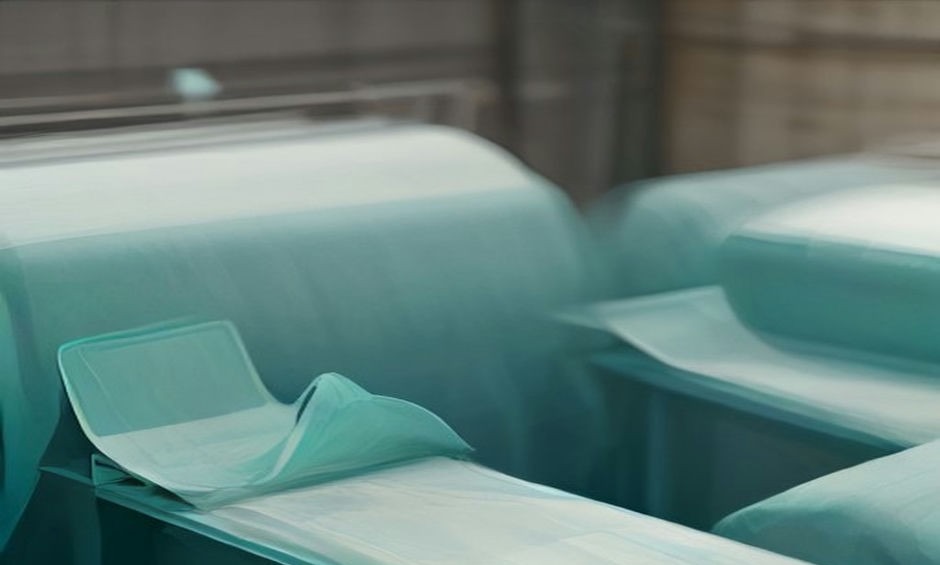
Every shaped flag starts life printed flat, slightly larger than the finished silhouette. The cut then happens one of two ways. A CCD laser table follows the vector outline and heat-seals the edge as it cuts, which stops fraying on curved paths. A hot-knife hand cut achieves the same seal on simpler outlines and shorter runs. Sewn hems remain the finish for straight edges and pole pockets, because a stitched pocket survives pole friction better than a raw sealed edge.
The pocket width follows a simple formula the trade uses everywhere: pocket flat width equals pole diameter multiplied by about 3.14. A 28 mm pole wants a flat pocket near 88 mm. Get this wrong and the skin either jams on the pole or slips in the first gust, so our proofs state pocket width on the drawing, not as a verbal promise.
Here is the honest limitation most product pages bury: laser-cut custom shapes are single-sided in typical production. The cut path runs through one layer of fabric, and doubling with a blockout liner changes how the edge seals. Your artwork still prints full colour and the reverse shows a mirror image at roughly 75 to 90 percent brightness depending on fabric weight. If your campaign needs correct reading on both sides, a standard double-sided three-layer flag in a template shape is the right tool, and we will say so in the quote.
The spec stack for shaped flags matches the rest of the beach flag trade, because the shapes cut from the same rolls.
| Item | Typical specification | Why it matters |
|---|---|---|
| Fabric | 110 to 115gsm warp-knitted polyester, custom skins often 110g, stock designs 115g | Flies in weak air, takes deep dye-sub colour |
| Printing | Dye sublimation, CMYK, Pantone matched close on request | Brand colour stays inside an agreed tolerance |
| Edge | Laser or hot-knife sealed on curves, sewn hem on pockets | No fray on the silhouette, no slip on the pole |
| Double-sided build | Two printed layers with a blockout liner, three plies | Correct reading both sides on template shapes |
| Pole kit | Sectional aluminium lower, fibreglass top; 28 mm pocket class | Tip flexes in gusts instead of snapping |
| Certificates | B1, M2, BS 5852 and NFPA 701 documents on request in writing | Venues and malls accept the file at check-in |
Shaped flags surprise buyers in both directions, so it helps to know what the premium actually buys. Catalog shapes run on the same line as every other flag: print, cut, hem, pack. A fully die-cut silhouette adds two written steps before the carton seals.
1. A vector check. Someone at the factory walks the cut path against the artwork and confirms the silhouette closes, the safe zone holds and the pocket width matches the pole class. Dirty files bounce back here, not at the cutter.
2. A laser or hot-knife pass. The outline is cut after printing, the edge seals along curves, and the finished skin is laid against the approved vector for a shape check before packing.
Those two steps are the whole premium, and they are also the reason die-cut work has a setup floor: the preparation walks whether the order is one skin or five hundred. The spread between factory skins and retail skins is the widest in the flag trade, which is the arbitrage a wholesale distributor lives on. Low MOQ accepted, wholesale from 5+ pieces, keeps a mixed shape program workable for a single campaign.
A die-cut skin is lighter than a hemmed template flag because the silhouette removes fabric, and light fabric reacts faster to gusts. Trade wind tests put single-sided flags through a typical 25 to 32 mph benchmark, while premium fibreglass pole systems claim up to 63 mph. Treat those numbers as classes, not promises: a curved silhouette catches air unpredictably, and a shape with a long thin tail will flap harder than a teardrop of the same height.
Our standing advice on site selection: calm courtyards and mall floors take any shape; open retail parks want the silhouette kept above 2.2 m and a heavier base; coastal and gale-prone sites get a teardrop and a written note from us about when to strike. If the flag must fly through a storm, it should not fly at all.
1. Vector outline. Send the silhouette as AI, PDF or SVG with the cut path on its own layer. A bitmap forces us to redraw the path, and every redraw risks a week.
2. CMYK artwork at final size. Bitmap images need at least 150 dpi at finished dimensions, text converted to outlines, and the important content kept inside the silhouette, because a die-cut path that touches a letter cuts the letter off.
3. Colour references. Pantone numbers where the brand demands them, with the understanding that dye sublimation lands close, not identical. We confirm tolerance on the proof before production, so the colour contract is written, not spoken.
4. Approved proof. Proofs run 1 to 3 days with free revisions, and production time counts from written approval. A proof signed on Monday starts the press on Tuesday; a proof argued for a week starts nothing.
1. Product launches. Cut the flag to the silhouette of the product itself and the photo wall writes its own caption.
2. Mascot and IP activations. A mascot outline on a flag walks the crowd line without a costume budget.
3. Aisle and shelf markers in retail. Arrows and angled cuts point at the shelf edge better than any template.
4. Exhibition stands. A shaped flag above a booth breaks the rectangle grid of the hall from across the aisle.
5. Wayfinding at festivals. Different zone shapes give visitors a second channel of navigation before they can read text.
6. Drive-through and forecourt rows. Bottle or cup silhouettes on forecourt poles tell drivers what the window sells.
| Dimension | Standard feather / teardrop | Custom die-cut shape |
|---|---|---|
| Recognition | Template outline, colour does the work | Silhouette itself is the message |
| Print area | Largest usable area, up to about 37 by 161 in catalog sizes | Eats corners; text must sit inside the path |
| Sides | Single or double with blockout liner | Single-sided in typical laser production |
| Wind behaviour | Teardrop steadiest, feather livelier | Lighter and less predictable, watch tails |
| Reorder path | Standard skins reorder from the catalogue | Skins reorder from the archived cut file |
| Lead time | Sampling 2-3 days, bulk 5-10 days | Same plus vector check; dirty files add days |
| Feature | Advantage | Benefit you bank |
|---|---|---|
| Laser-sealed curved edges | No fray after 100 hours of flutter | The silhouette survives the whole campaign |
| Same poles and bases as standard lines | Hardware you already own keeps working | Buy skins, not a second inventory |
| 110gsm knit with deep sublimation colour | Brand colour holds on both faces of the weave | Photos and press shots match the guidelines |
| Proof gate before production | Shape, pocket and colour signed in writing | No dispute at the loading dock |
| Skins-only reorder path | Pole and base stay in service | Season two costs roughly half or less |
United States and Canada. The laser-cut terminology sells here, and buyers ask for 7, 9 and 12 ft sizes with ground spikes or tire bases for parking-lot work. Rush culture is strong; a 3 working day rush at a surcharge is an observed market norm, and clean vector files decide whether it holds.
United Kingdom and Ireland. Buyers say bespoke shaped flags or sail flags, expect 150 mm pocket talk in metric, and ask for written fire documents for shopping-centre installs. Send B1 or BS 5852 papers on request in writing and the venue signs off.
Germany and Austria. Sonderform is the trade word, and procurement writes specifications before it writes orders. State fabric weight, cut method and pocket width as lines on the quote, because the buyer’s own tender will quote you line by line.
France and Spain. Search language runs to drapeau forme libre and bandera personalizada or bandera lahgrima shapes for drops. Mediterranean coastal sites break the rules on UV, so 130gsm earns its keep on south-facing rows.
Australia and New Zealand. Buyers call the whole family banners, and UV beats wind as the killer. The same silhouette prints happily on 115gsm, and replacement skins travel well on the long sea lane.
Middle East and Gulf. Mall activations drive demand and the check-in desk wants fire papers. Air freight 5 to 8 days covers launch dates that move; sea freight does not.
1. Sending a bitmap and calling it art. The cut needs a vector path. A JPG mascot costs a redraw round, and the redraw costs the rush window.
2. Designing to the corners. Template flags forgive wide layouts; die-cut paths eat corners. Keep logos inside a 90 percent safe zone on the drawing.
3. Ordering double-sided die-cut for a launch in three weeks. The standard process is single-sided. Doubling with a liner is a special build, and special builds do not run in rush windows.
4. Matching the shape to the logo, not the site. A long-tailed silhouette in a coastal square flaps itself to death in a season. Match shape to wind first, brand second.
5. Comparing a factory skin quote to a retail kit price tag. Apples to apples: skin to skin, kit to kit, and freight in the open. The same object sits on different rungs of the ladder.
Honest guidance, because a shape that should not exist is expensive in any fabric.
1. Budget-only missions. If the brief is merely a bit different, a convex or angled catalog shape delivers most of the lift without the die-cut premium. Full die-cut earns its keep when the silhouette itself is the story.
2. Rush jobs with dirty files. Under two weeks with a bitmap only, spend the time converting the file before paying for rush. The file, not the press, is the schedule.
3. Double-sided reading on both approaches. Malls with circular foot traffic need correct reading from both sides, and a single-sided die-cut fails half the audience. Order a double-sided template flag instead.
4. Text-heavy promotions. The silhouette takes the corners, so a flag carrying six lines of copy loses lines. Rectangles carry text; shapes carry identity.
5. One-piece orders of extreme complexity. Cutting setup spread across a single skin erases the factory advantage. At one piece, buy local; at five and up, the factory route opens up.
The path runs in five steps with dates attached. Send the vector file and the site description, and the quote returns the same working day with fabric, cut method, pocket width and hardware as written lines. A proof follows in 1 to 3 days with free revisions, and colour tolerance is agreed on the proof, not in a phone call. Sampling takes 2 to 3 days after approval; bulk runs 5 to 10 days for typical quantities. Payment runs 30 to 50 percent deposit with the balance against shipping evidence, and every order ships with a photo set of the packed goods. Sea freight runs 25 to 40 days, air 5 to 8, express 3 to 7, so the honest date maths happens before the deposit, not after.
Low MOQ accepted, wholesale from 5+ pieces, and mixed silhouettes across one order at the same spec. Replacement skins reorder from the archived cut file, so season two is an email, not a re-brief.
Q1. Can flags really be cut into any custom shape?
Yes, within fabric physics. A vector outline drives a laser or hot-knife pass after printing, so arrows, letters, bottles and mascot silhouettes all work. Extreme thin spikes and hairline gaps under about 10 mm are the practical limits.
Q2. What is the difference between a bow flag and a teardrop flag?
A bow or convex shape curves outward with a free bottom edge, so it moves more and reads livelier. A teardrop tensions the fabric across the pole tip, so it holds its outline in stronger air. Both are catalog shapes at catalog prices.
Q3. Are custom shaped flags single-sided or double-sided?
Laser-cut custom shapes are single-sided in typical production, with a mirror image on the reverse at reduced brightness. Double-sided three-layer builds exist for template shapes and as special orders for shapes.
Q4. What fabric do shaped flags use?
The same knitted polyester family as the rest of the trade, typically 110 to 115gsm, printed with dye sublimation. Heavier 130gsm suits high-UV sites and mesh suits gale-exposed edges.
Q5. Can I reorder the same shape next season?
Yes. The approved cut file is archived at the factory, so replacement skins reorder without a new brief, and the poles and bases stay in service. Re-skins are the lightest way to refresh a campaign silhouette.
Q6. How long does production take?
Proofs take 1 to 3 days, sampling 2 to 3 days after written approval, and bulk 5 to 10 days for typical quantities, plus freight of 3 to 7 days express or 25 to 40 days sea. Rush options exist when the vector file is clean.
| Point | Detail |
|---|---|
| Manufacturer, not reseller | Printing, cutting and sewing run in one Foshan works, so shape, pocket and pole arrive matched. |
| Cut-file review before payment | We check the vector path and pocket width on the proof, so the shape you signed is the shape that ships. |
| Written specs on every quote | Fabric weight, cut method, print sides and base appear as lines, and fire documents are available on request. |
| Low MOQ accepted | Wholesale from 5+ pieces, mixed silhouettes on one order at trade pricing. |
| Photo QC and packed proof | Every load photographed before the carton seals, so what left the factory is what lands. |
| Reply in 1 hour, 24×7 | WhatsApp +86 135 1661 0926 or [email protected]; programs we ship serve buyers in 150+ countries. |
3D flags buy attention with geometry, not with fabric volume. Pick a catalog shape when the budget is the brief, pay the die-cut premium when the silhouette is the story, and send a clean vector file before you fall in love with a launch date. Accept the single-sided reality of laser cutting, match the shape to the wind on the site, and keep the hardware so season two is a skins order. Send us the mascot file and the site, and we reply in 1 hour, 24×7, with a marked proof and a written quote. If a rectangle does the job better, we will draw that instead and save you the premium.
Tell us the flag sizes, the quantities, single or double-sided, and the ground the flags will stand on. Our export team replies within 1 hour, 24×7, with a proof and a factory price. Low MOQ accepted.
Chat on WhatsApp (+86 135 1661 0926) Email Us Now
Prefer a form? Fill in the details below and we will come back with a proof and a price within 1 hour, 24×7.
Related reading: Teardrop vs rectangle flags: the print area maths | Single vs double sided feather flags: which site needs which | Flag artwork guidelines: what to send and what happens next | How to order custom flags from a China factory | Customized beach flags | Custom feather flags | Custom teardrop flags | Heavy cross bases | OEM and ODM flag manufacturing | Swooper flags: the tall skinny banner that reads without wind | Tyre base flags: holding a flag down with the car’s weight
| Item | Detail |
|---|---|
| Product | 3D and custom shaped flags: convex bow, angled and fully die-cut silhouettes on standard beach flag poles |
| Manufacturer | BESDA Advertising Flags, Foshan, Guangdong, China |
| Standard fabric | 110-115gsm warp-knitted polyester, dye sublimation, Pantone matched close on request |
| Cut methods | CCD laser or hot-knife sealed edges on curves; sewn hems on pole pockets |
| Sidedness | Laser-cut custom shapes single-sided typical; template shapes available double-sided with blockout liner |
| Reorder path | Replacement skins reorder from the archived cut file; poles and bases stay in service across seasons |
| Lead times | Proof 1-3 days; sampling 2-3 days; bulk 5-10 days after written approval |
| Certificates | B1, M2, BS 5852, NFPA 701 documents on request in writing |
| MOQ | Low MOQ accepted, wholesale from 5+ pieces, mixed shapes at one spec |
| Contact | WhatsApp +86 135 1661 0926, [email protected], reply in 1 hour 24×7 |