Phone: 0086-757-8938 9313
WhatsApp: +86 135 1661 0926
Email: [email protected]
Address: Caochang Industrial Zone, Lishui, Nanhai, Foshan, Guangdong, China
24/7 Online Services
Phone: 0086-757-8938 9313
WhatsApp: +86 135 1661 0926
Email: [email protected]
Address: Caochang Industrial Zone, Lishui, Nanhai, Foshan, Guangdong, China
24/7 Online Services

An events manager at a resort group in the Canary Islands sent us a purchase order under her beach flags for hotels program: forty flags, and then a second email an hour later. The banquet captain needed fire test papers for the indoor wedding flags, the pool deck needed something that would not scratch the stone, and the beach club wanted taller flags for the sand. Three departments, three environments, one product family. That purchase order is why this page exists, because a resort that buys flags by catalogue page ends up with flags that fit no zone they own.
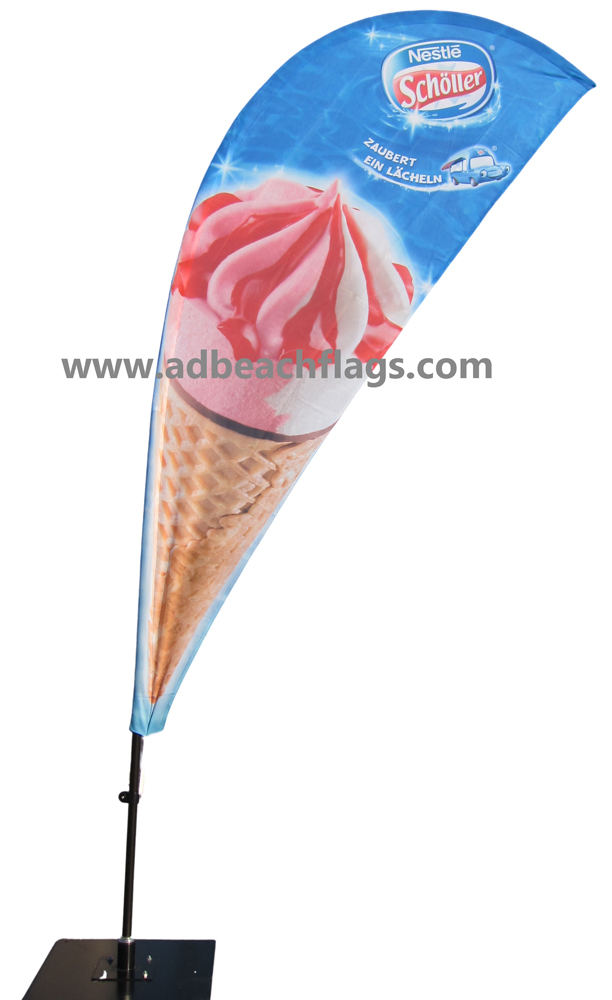
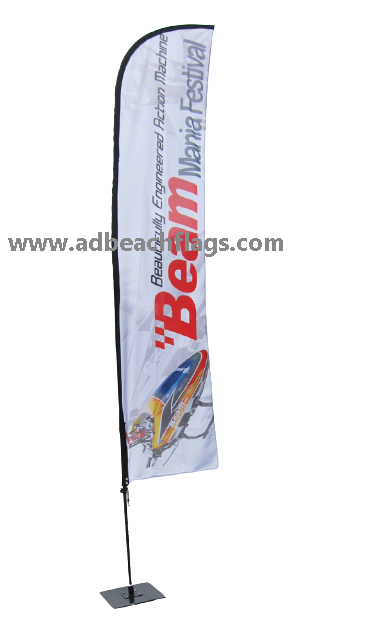
The short answer for buyers: plan beach flags for hotels by zone. Feather flags on spikes carry the entrance road and the beach, teardrops on padded cross bases own the pool deck and lobby approach, and indoor banquet flags live on cross bases with fire documents attached. Fabric follows environment: 110 to 115gsm knitted polyester for standard duty, 130gsm where sun is brutal, mesh where wind never stops. And the season after, replacement skins refresh the whole program while the hardware stays in service.
This guide is written for general managers, marketing and events teams, engineering departments, hotel group procurement and the wholesale distributors who serve them. The numbers are typical industry ranges from supplier listings and platform snapshots in October 2026, and our quotations state fabric, base, ballast and paperwork as written lines per zone.
Walk the property the way a guest does, and each stop hands you a different flag brief. The table below is the plan we mark up for resort buyers before any quote.
| Zone | Flag and height | Base and ballast | Zone note |
|---|---|---|---|
| Entrance road and gate | Feather 3.4 to 4.5 m, welcome word or brand colour | Spike in verge, cross base plus water bag on paving | First touchpoint; brand standards usually apply here |
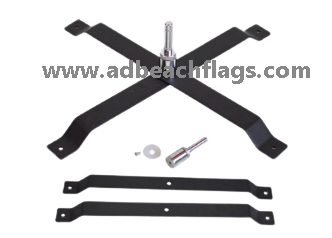
| Lobby and porte-cochere | Teardrop 2.8 m, double-sided | Cross base with felt pad on stone | No staking; protect the floor the engineer protects |
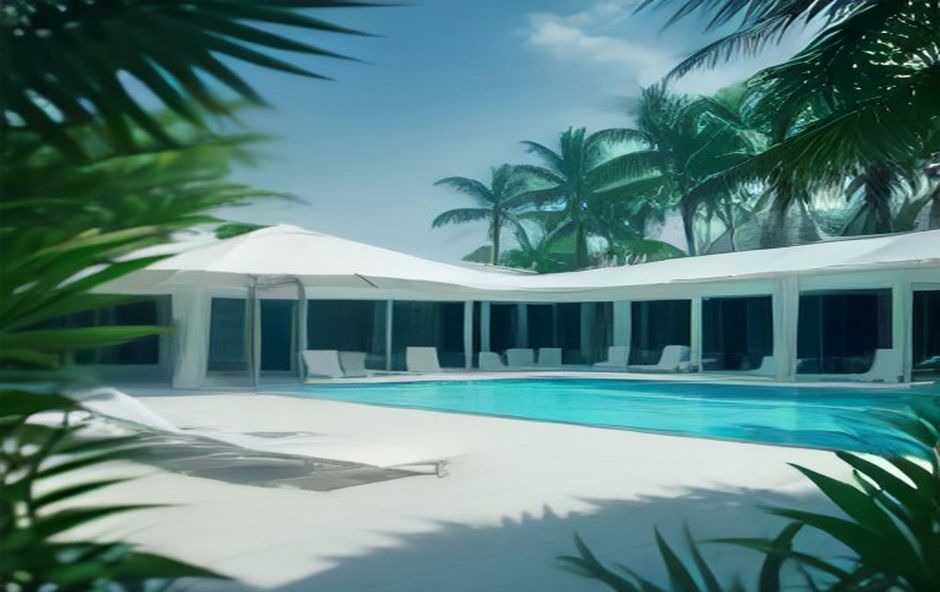
| Pool deck | Teardrop or feather 2.8 to 3.4 m | Cross base, pad under, no water bags near the water | Chlorine mist and sunscreen demand weekly rinse |
| Beach front | Feather 3.4 to 5.6 m, bright solids | Sand spike, deep set | Salt plus UV is the killer; strike at dusk |
| Banquet and ballroom | Teardrop 2.2 to 2.8 m, double-sided | Cross base only, felt pad | Fire documents travel with the invoice |
| Event lawn | Feather rows 3.4 m, theme colours | Spike, one per aisle turn | Weddings: match the florist palette, not the brand |
| Spa and kids club | Small angled or teardrop 2.2 m | Cross base, pad | Quiet zones want low flags and calm colours |
| F&B terrace | Feather 2.8 m, one word: the offer | Cross base plus water bag on deck | Happy hour skin swaps each season |
The same silhouette in two zones ages at different speeds, so the fabric decision follows the environment. Standard duty zones take 110 to 115gsm warp-knitted polyester, the trade’s workhorse, printed with dye sublimation and readable through the weave on the reverse at reduced brightness. Pool decks add chlorine mist and sunscreen film, which the fabric survives fine but which dulls print if nobody rinses it; a weekly hose-down keeps the deck flags honest all season. Beach fronts combine salt, UV and constant motion, so 130gsm earns its premium there, and on exposed edges where the wind never really stops, mesh or air-textile fabrics let the wind pass through the weave instead of loading the pole, which is why they outlast solid cloth in the same spot.
Poles follow the same logic. Aluminium lower sections with a fibreglass tip cover most zones; full fibreglass sets belong on the beach, where salt eats coatings and flex beats stiffness. Certificates for fire performance are available on request in writing for every fabric we ship, which matters most indoors.
Banquet flags fail inspections, not wind tests. Hotels are the venue type most likely to ask for fire documents before the flag passes the loading dock, because the banquet captain inherits the liability. Two standards cover the conversation. In the United States, NFPA 701 small-scale testing passes a fabric that chars under about 6.5 inches with flame self-extinguishing inside about 2 seconds and no burning drip. In Europe, DIN 4102 B1 is the class venues reference, and French venues often ask for M class papers. Our indoor skins ship with treatment certificates on request in writing, and the honest version of the promise is this: ask for the document before the deposit, and the document arrives with the goods.
Indoor bases carry their own rules. Ballroom floors are expensive, so cross bases wear felt pads, water bags stay outside, and ceiling height rules the flag: a 2.8 m teardrop needs about 3.2 m of clear air, and banquet halls with chandeliers under 3.5 m should drop to counter-level flags or table stands instead.
The signage rule of thumb the trade runs on is one inch of letter height for every 30 feet of maximum viewing distance, and about one inch per 10 feet for comfortable reading. Metric readers can carry it as one centimetre of letter per metre of distance. A flag that must read from the far side of a 40 m lagoon wants letters near 130 mm, which on a 0.8 m wide skin means one word. This is why the best hotel flags carry one word: SPA, WELCOME, SUSHI, SUNSET BAR. Everything longer belongs on the lectern sign.
Here is the arithmetic that makes a hotel group sign a framework order instead of buying piece by piece. Hardware, the pole and the base, accounts for roughly 40 to 60 percent of a complete kit’s cost. The flag skin is the part that fades, frays and dates. So the smart resort buys hardware once and skins on rotation: a replacement skin ordered in the same fabric and pocket spec costs about half of a full kit or less, ships flat, and bolts onto the poles already standing. Our factory archives every artwork and cut file, so the season three reorder is an email with a date, not a new brief, and mixed designs across zones travel in one shipment.
| Buy point | What you get | Notes |
|---|---|---|
| China factory wholesale | Zone-by-zone written specs and multi-property frameworks | MOQ as low as 1 to 10 sets by spec; hotel-supplier programs around MOQ 100 |
| US and EU retail | Local print, local speed | Fast single-zone fills mid-season |
| Regional print, Gulf | Five-star timelines, door delivery | Gulf print houses serve the Dubai hotel market |
| Bases and hardware | Ladders by surface: spikes, padded cross bases, plates | Hardware scales steeply with quantity; order with the season’s skins to consolidate freight |
The comparison a procurement team actually runs is not factory against retail but full-kit against skins-only. A property with twenty standing kits and a fading program needs skins, not kits, and the quote that says so first wins the order.
One more habit separates the smooth programs from the painful ones: the zone map lives with the property file, not in the buyer’s inbox. When the zone map records flag height, base, fabric weight and fire document per position, every reorder and every seasonal strike becomes a checklist instead of an investigation, and new engineering staff inherit the plan the day they arrive.
1. General manager and owner. Care about the arrival photo and the complaint ledger: nothing trips guests, nothing scratches the floor, nothing flaps loose over a pool at midnight.
2. Marketing and events. Care about colour accuracy against brand standards and about being able to change the message without a capital request, which is the replacement-skin argument.
3. Banquet and catering sales. Care about fire documents, floor protection and strike times, because the ballroom turns in hours.
4. Engineering. Care about coatings, pads, ballast and the wind SOP. They inherit every base, so they sign off every base.
5. Group procurement and distributors. Care about framework pricing, multi-property artwork variants, language versions and consolidated freight to islands and resorts.
United States and Canada. Feather and teardrop vocabulary, NFPA 701 papers for indoors, and a mature wholesale channel that expects framework pricing for multi-property groups. Seasonal skins order in spring for the summer reset.
United Kingdom and Ireland. Feather flags and sail flags, metric specs, and venue fire paperwork culture that travels with every event kit. Bunting still carries its own weight on event lawns.
Mediterranean: Spain, Greece, Italy. The Blue Flag beach award is marketing currency, and the beach club zone runs from May to October. Salt and UV push every skin toward 130gsm, and the seasonal strike in October is where skins survive to season two.
Middle East and Gulf. Dubai and the wider Gulf buy sail flags from regional print houses on five-star timelines, and mall-adjacent properties want fire papers as standard. Air freight 5 to 8 days matches the market’s clock.
Indian Ocean: Maldives and islands. One island, one property, and freight is the variable. Kits that pack flat and skins that ship in tubes beat every other logistics argument; a local print shop exists on some islands but not most.
Australia and New Zealand. Feather banners and the Bali flag tradition share the lawn at weddings, and UV is the budget line. Southern summer runs December to February, so the order lands in September.
Caribbean and Latin America. Resort flag culture is strong, service flags on loungers are an established niche, and Spanish artwork variants of the same zone plan travel across properties. Hurricane season writes the strike SOP.
1. One flag spec for every zone. The beach kills a 110gsm lobby flag in a season and the lobby makes a beach flag look overbuilt. Buy by zone, not by discount.
2. No pads under indoor bases. The first event report of a scratched marble floor ends the flag program. Felt pads are trivial and keep engineering friendly.
3. Fire papers requested after the deposit. Ask with the quote; the document then ships with the goods. Retrofit paperwork costs a season.
4. Wordy artwork. Six lines of copy on a 3.4 m skin reads from nowhere. One word per flag, letter height per the maths above, and the message lands.
5. No strike routine. A dusk strike on the beach and a named-storm strike everywhere else is the difference between a two-season program and a two-month one.
Honest guidance, because the wrong flag in the wrong zone is a standing apology.
1. Hurricane-exposed beach fronts. Portable flags carry no certification for storm survival, and a sail in a 90 mph gust is a liability. Fixed coastal hardware rated far higher, or nothing, is the honest answer for those fronts.
2. Brand standards that ban temporary branding at the gate. If the management company’s signage manual allows no temporary brand at the entrance, put the flags where events live and keep the gate rigid.
3. Low banquet ceilings. Under about 3.5 m of clear height, a floor flag fights the chandeliers. Table stands and counter flags do the work without the risk.
4. Pool safety information. Depth markers and no-dive notices are regulated signage in most markets and belong on rigid plates. A decorative flag beside them is fine; instead of them is not.
5. Unattended overnight beaches. A skin left up in a night squall with no staff to strike it will eventually cost more than it earned. A dusk strike, or no flag.
Send the zone plan, the property list and the surface mix, and the quote returns the same working day with fabric, base, ballast and paperwork listed zone by zone. Proofs run 1 to 3 days with free revisions and Pantone matched close on request. Sampling takes 2 to 3 days, bulk production 5 to 10 days after written approval, and payment runs 30 to 50 percent deposit with the balance against shipping evidence. Freight runs 3 to 7 days express, 5 to 8 air, 25 to 40 sea; island resorts usually split, with hardware on the sea lane and first-season skins on air. Low MOQ accepted, wholesale from 5+ pieces, and multi-property artwork variants consolidate in one shipment with per-property packing lists.
Q1. What flags do hotels and resorts actually use?
Feather flags at entrances and on beaches, teardrops at pools, lobbies and banquets for their formal tensioned look, and small angled flags for spa and kids zones. The base and fabric change by zone; the hardware family stays one system.
Q2. Are feather flags safe around swimming pools?
Yes with the right base. A cross base with a felt pad stands on the deck without scratching, water bags stay away from the waterline, and the flag itself carries no greater risk than any umbrella. Rinse skins weekly against chlorine mist and sunscreen film.
Q3. Do indoor event flags need fire certificates?
In practice yes. Venues ask for NFPA 701 papers in the United States and DIN 4102 B1 in Europe before the flag enters the ballroom. We supply treatment certificates on request in writing, and the request belongs in the quote stage.
Q4. What size flag reads from a hotel entrance road?
Follow the letter height maths: one inch of letter for 30 feet of maximum viewing distance, about one centimetre per metre in metric. A 3.4 to 4.5 m feather flag with one 100 mm word reads across a typical gate forecourt.
Q5. How do we stop bases scratching marble floors?
Cross bases with felt pads under every foot, no staking indoors, and water ballast kept outside. Engineering signs off the pad spec once and the program runs for years.
Q6. Can we reorder skins only when the message dates?
Yes, and that is the economics of the whole program. Hardware carries 40 to 60 percent of a kit’s cost, so a replacement skin costs about half of a full kit or less, bolts onto existing poles, and reorders from our archived artwork file.
| Point | Detail |
|---|---|
| Manufacturer, not reseller | Skins, poles and bases come off one line in Foshan, so every zone kit arrives matched and documented. |
| Zone-by-zone written specs | Fabric weight, base, ballast and pad appear per zone on the quote, which is how engineering and banquet both sign. |
| Fire documents on request | NFPA 701 and DIN 4102 references handled in writing with the goods, not after the deposit. |
| Replacement skin archive | Every artwork and cut file stays on file, so season three is a reorder email with a date. |
| Low MOQ accepted | Wholesale from 5+ pieces, multi-property variants consolidated with per-property packing lists. |
| Reply in 1 hour, 24×7 | WhatsApp +86 135 1661 0926 or [email protected]; programs we ship serve buyers in 150+ countries. |
A resort buys flags the way it buys furniture: by room, not by catalogue. Feather and spikes for the entrance and the beach, teardrops and padded cross bases for the pool and the ballroom, 130gsm and mesh where the sun and wind collect their rent, fire papers with every indoor skin, and a strike routine that treats dusk like a deadline. Buy hardware once, skins on rotation, and the second season runs on the first season’s poles. Send us the zone plan and the property list, and we reply in 1 hour, 24×7, with a marked-up program and a written quote. If a zone should not carry a flag at all, the quote will say that too, because an honest program is the one that renews.
Tell us the flag sizes, the quantities, single or double-sided, and the ground the flags will stand on. Our export team replies within 1 hour, 24×7, with a proof and a factory price. Low MOQ accepted.
Chat on WhatsApp (+86 135 1661 0926) Email Us Now
Prefer a form? Fill in the details below and we will come back with a proof and a price within 1 hour, 24×7.
Related reading: Flame retardant flags: what the standards actually test | Beach flag size guide: how to choose the right height | How to wash and store flags between events | Replacement feather flag covers: keep the pole, change the message | Custom feather flags | Custom teardrop flags | Heavy cross bases | Spike base stands | Water bags | 3D flags and custom shapes for venue branding
| Item | Detail |
|---|---|
| Product | Beach flag programs for hotels and resorts: feather, teardrop and angled flags planned by zone with bases, pads and fire paperwork |
| Manufacturer | BESDA Advertising Flags, Foshan, Guangdong, China |
| Standard fabric | 110-115gsm knitted polyester standard; 130gsm for high UV; mesh or air textile for exposed edges |
| Zone base rules | Spike on grass and sand; cross base with felt pad on stone and deck; no staking indoors; ballast per wind plan |
| Indoor compliance | NFPA 701 and DIN 4102 B1 treatment certificates on request in writing |
| Visibility rule | About 1 inch letter height per 30 ft viewing distance, roughly 1 cm per metre |
| Reorder path | Hardware once, skins on rotation; replacement skins bolt onto existing poles from the archived artwork file |
| Lead times | Proof 1-3 days; sampling 2-3 days; bulk 5-10 days; express 3-7 days, air 5-8, sea 25-40 |
| MOQ | Low MOQ accepted, wholesale from 5+ pieces; multi-property variants in one shipment |
| Contact | WhatsApp +86 135 1661 0926, [email protected], reply in 1 hour 24×7 |