Phone: 0086-757-8938 9313
WhatsApp: +86 135 1661 0926
Email: raya@besda.net
Address: Caochang Industrial Zone, Lishui, Nanhai, Foshan, Guangdong, China
24/7 Online Services
Phone: 0086-757-8938 9313
WhatsApp: +86 135 1661 0926
Email: raya@besda.net
Address: Caochang Industrial Zone, Lishui, Nanhai, Foshan, Guangdong, China
24/7 Online Services

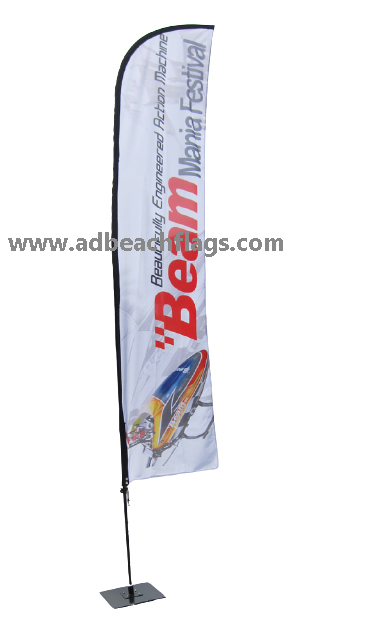
Every spring the same order lands in our inbox, and it is our favorite order to receive: “poles and bases are fine, the sails are faded – can you print replacements?” The answer is yes, with one honest caveat: a replacement sail only saves money if it fits the pole you already own. Sleeve diameter, sail length and pocket depth are the three measurements that decide it, and guessing any of them turns a savings into a second purchase. This guide shows what to measure, how to match fabric to your climate, and how to set up the reorder so the third season’s flags look exactly like the first season’s.
It is written from the replacement desk of our Foshan factory, where we ship sails-only orders to distributors, car dealerships, retail chains and event companies running multi-year flag programs.
Hardware and fabric age on different clocks. A fiberglass or aluminum pole, kept dry and stored in sections, lasts many seasons; the sail is the part that works – flexing in every gust, absorbing UV every clear day. Fading is the number-one retirement cause, followed by hem and sleeve wear, then storm damage. Print, meanwhile, is cheap relative to hardware: a replacement sail typically runs a third to half of a full kit at factory pricing. Buying sails only is the correct economics – as long as the fit is right.
| Measurement | How to take it | What goes wrong if ignored |
|---|---|---|
| Sleeve pocket diameter | Measure the flat width of the folded pocket on your old sail, or the diameter of the pole’s top section | Too tight: the sail will not slide on; too loose: it spins and bags |
| Sail length (along the pole) | Lay the old sail flat and measure tip to hem, or measure the pole’s top section length | Too long drags on the ground; too short leaves pole exposed and tensions the hem |
| Sail width at the base | Flat width across the sleeve end | Different curves between brands change the flying silhouette and print area |
If the old sail is beyond measuring – shredded, gone, inherited from the previous tenant – measure the pole instead: top-section diameter and top-section length. From those two numbers a factory can rebuild the sail pattern. Better still, snap three photos of the pole fully assembled; our pattern desk works from those weekly.
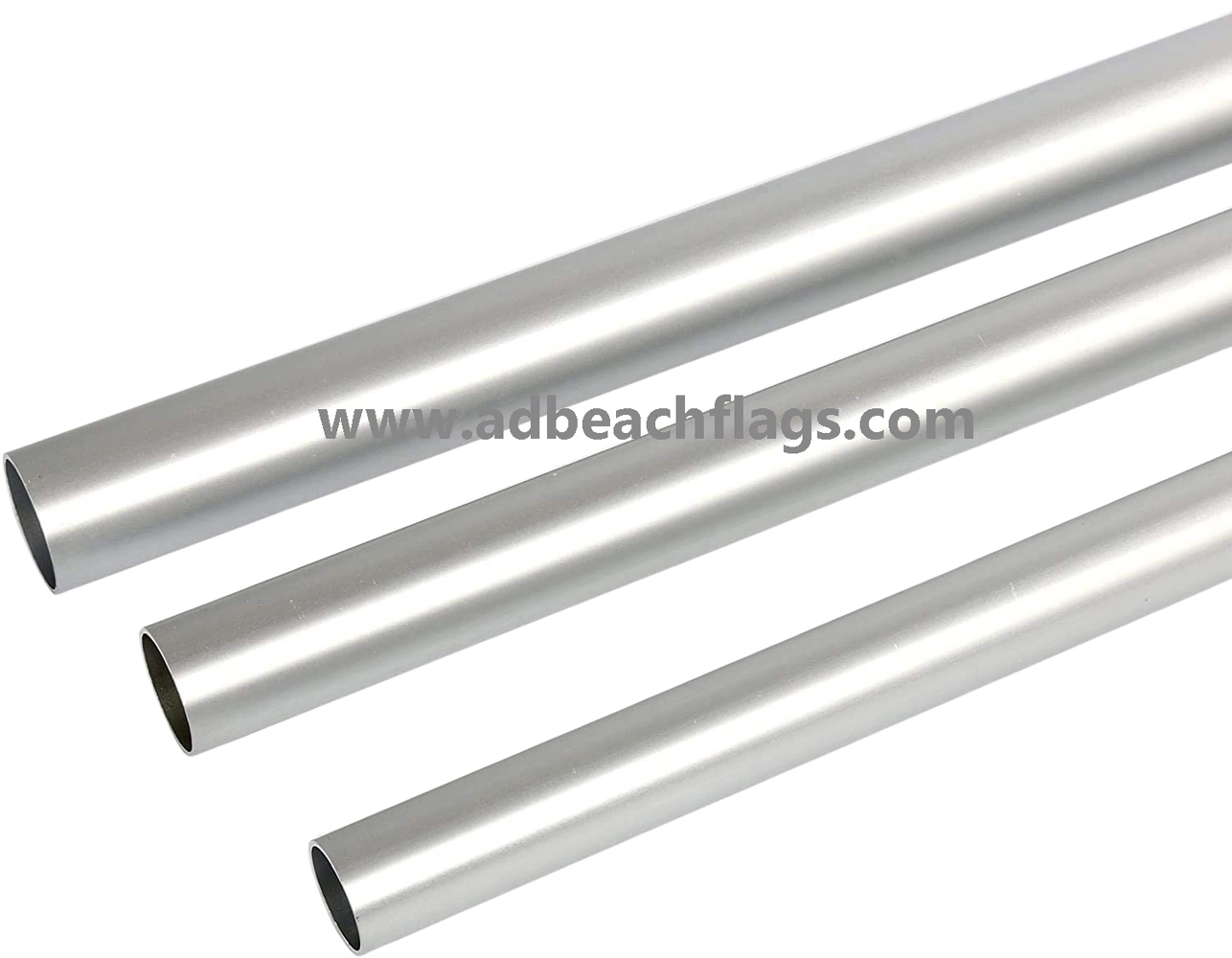
Pole standards are not universal. Diameters vary by manufacturer and even by production year – a sail from one supplier’s 3.4 m kit may not slide onto another’s, and pocket depths differ by centimeters that matter. The rule our replacement desk repeats daily: order by measurement, never by “same size as before” across brands. Within our own hardware line, sails and poles keep a fixed standard, which is why our replacement sails fit every kit we have shipped for years – and why we ask new customers for measurements the first time, then never again.
1. Match the climate, not the old fabric. If the old sail faded in one season, upgrade the grammage: 110 g for mild rotation climates, 115-130 g for strong UV, mesh for coastal wind. The replacement is your chance to fix the original specification, not repeat it.
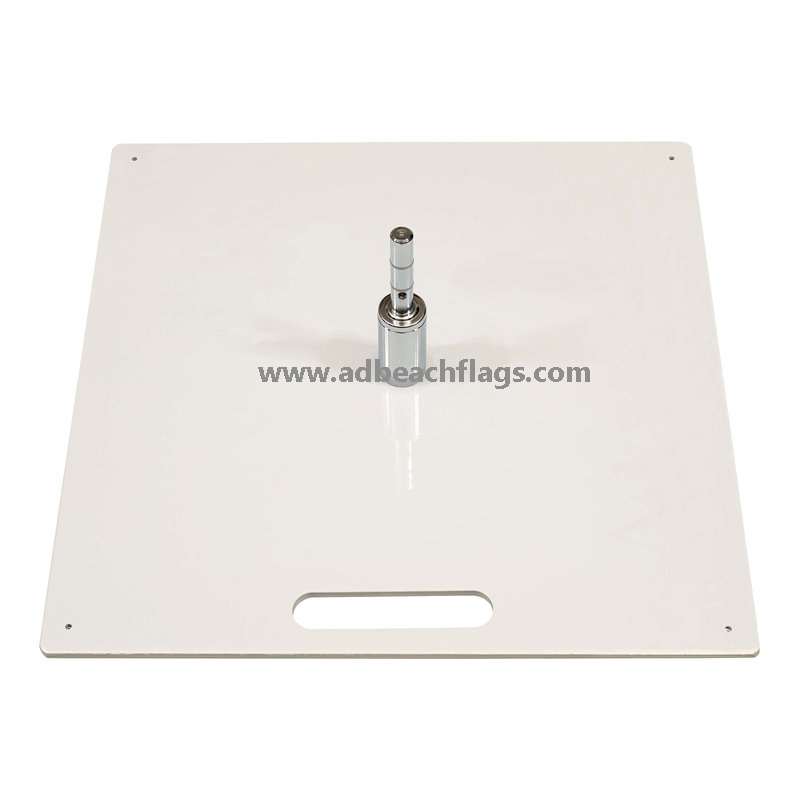
2. Keep the construction consistent with the hardware. A true double-sided replacement is heavier and stiffer – if your base and pole were sized for single-reverse, either keep the construction or step the base up with it.
3. Print method follows the artwork. Dye sublimation for full-color sails, with Pantone-referenced sampling for brand colors – same process as the original order, judged under the same light standard.
The second sail order should be a two-line email, and with the right setup it is. Four things to archive on the first replacement: the approved pattern (sleeve diameter, sail length, curve); the color recipe and fabric lot; the artwork files per message; and the pole/base standard the sail must fit. A factory that keeps these – we do, per client and SKU – turns your next seasonal refresh into “same as last time, new artwork on face two”. A factory that does not will re-measure you every year and drift a few millimeters each time.
UV is cumulative: a sail displayed continuously fades in one season what a rotated sail suffers in two. Operations teams that own flags for years run a simple two-set rotation – set A flies while set B rests in the dark, swapped monthly or per campaign. Two sail sets, one hardware set, and every flag on site looks fresh for roughly twice the calendar span. Bulk buyers: this is the cheapest presentation upgrade in outdoor advertising, and it prices better as a planned two-set order than as two separate emergency orders.
1. Ordering by catalog size name. “Medium” is not a measurement. Two factories’ mediums differ by a sleeve width.
2. Copying the faded color. A sun-bleached sail is not a target; re-print to the original Pantone reference or the brand’s current book.
3. Six messages, six separate orders. Six seasonal messages ordered one at a time pay setup six times; archived patterns make one consolidated order with scheduled releases cheaper.
4. Forgetting the hem. Faded fabric usually means tired hems; inspect the double-fold stitching while the old sail is in hand.
5. Assuming any factory can clone any flag. Cloning needs the three measurements or a good photo set – send them and cloning is routine.
Programs that never run out of flags plan replacements like maintenance, not like emergencies. A calendar that works for most climates: spring – inspect hems, sleeves and pole joints, order the season’s replacement sails (five to ten days plus courier fits comfortably before the busy season); mid-season – swap in the rotation set and wash the resting set per the storage guide; autumn – wash and dry everything, retire storm-damaged poles to the spares shelf, and photograph any flag that faded early so the next order upgrades grammage with evidence. Two fixed moments a year, one standing archived pattern, and the entire program runs on scheduled print orders instead of panic orders. Operations managers who adopt this rhythm report the same thing: the flag program stops appearing on the problem list.
A replacement program only pays if the resting set stays presentable. The care loop is short. Wash cool: hand wash or gentle machine cycle at 30°C with mild detergent – never bleach, never a hot wash, both of which fix stains and kill color in the same gesture. Dry in shade: the drying rack outdoors in shade finishes in an afternoon; a tumble dryer cooks the hem folds into permanent creases. Store rolled, not folded: folds pressed into a stored sail become creases that read as damage from twenty meters; rolling around a cardboard tube costs nothing and prevents all of it. Keep the poly bag: the sleeve end, the sail’s most fragile part, stays clean longest when the bag covers it on the shelf. Follow that loop and the rotation set comes out of storage looking like it never left.
United States. Dealership and franchise programs standardize on two-set rotation; replacement sails ship flat-packed by express in days, not weeks.
United Kingdom. Storm damage joins UV at the top of the replacement list; coastal buyers pair sail replacements with pole inspections each spring.
Gulf states. Intense sun makes 130 g the default replacement weight; mall programs replace on a fixed calendar rather than on visible fade.
Australia and New Zealand. The strictest UV in the market – rotation is standard practice, and mesh replacements dominate coastal retail.
Mexico and Brazil. Replacement demand peaks after the December-to-March campaign season; distributors pre-book spring sail orders with archived patterns so customs and courier time never touches the launch date.
Germany. Municipal and trade-fair buyers schedule replacements on fixed two-year cycles with written color tolerance per reprint – the archive-and-repeat model of this guide, formalized.
Southeast Asia. Monsoon seasons replace wind as the retirement driver: sails come down before the wet months, get washed and rolled, and go back up dry – so the sail that would survive one continuous season in Europe serves three separated seasons here.
Canada. Freeze-thaw storage rules apply: sails winter indoors rolled, poles drained and stood upright, and the spring relaunch pairs the sail order with a joint inspection – one shipping cycle covers both checks.
We would rather tell you to retire the pole than sell you a sail it will wrinkle.
Honest guidance: sometimes the hardware has quietly finished its career alongside the sail.
1. Hairline cracks at the section joints. A cracked section fails at the worst moment – mid-event. Replace the section or the pole.
2. A bent or memory-set top section. A curved pole wrinkles every sail it ever carries.
3. Frayed bungee or worn sleeve interface. The sail’s worst enemy inside its own pocket; cheap to fix, expensive to ignore.
Q1. Can I buy just the printed flag and keep my pole?
Yes. Order by the three measurements – sleeve pocket diameter, sail length, base width – or by photos of your assembled pole, and the factory matches the pattern. Within one hardware standard, reorders are exact.
Q2. How do I measure the sleeve for a replacement feather flag?
Fold the old sail’s pocket flat and measure its width, or measure the top pole section’s diameter. Compare against the new sail’s pocket spec – a millimeter or two of clearance slides; too much spins.
Q3. Will a replacement sail from another brand fit my pole?
Only if the sleeve diameter, pocket depth and sail length match – pole standards differ across manufacturers. Measure the pole, not the catalog name, and send photos for pattern matching.
Q4. How much does a replacement sail cost versus a full kit?
At factory level a replacement sail typically runs a third to half of the full kit price, depending on size and construction. Hardware is the expensive half of a kit; reusing it is the saving.
Q5. Can replacement sails use different artwork than the original?
Yes – the pattern is the fixed part, artwork is free. Seasonal messages, new campaigns and language variants all reuse the same archived sail pattern.
Q6. What causes flags to fade fastest?
Cumulative UV. Continuous display fades a sail in one season what a rotated two-set program spreads across two; grammage and fabric color depth also matter.
| Point | Detail |
|---|---|
| Pattern desk for replacements | Match by measurements or assembled-pole photos; clone your existing flag within one hardware standard. |
| Archive per client and SKU | Patterns, color recipes and artwork stored – reorders are a two-line email. |
| Fabric upgrade advice | If the old sail faded early, the replacement quotes the right grammage for your exposure. |
| Pantone-controlled reprint | Reprinted to your original reference, sampled and judged under the same light standard. |
| Low MOQ accepted | Sail-only orders ship express in days; two-set rotation programs priced as one plan. |
| Reply in 1 hour, 24×7 | WhatsApp +86 135 1661 0926 or [email protected] with your measurements or photos. |
Replacement feather flag covers are the cheapest fresh look in outdoor advertising – three measurements, the right grammage, and an archived pattern turn every future season into a print order instead of a hardware order. Measure first, upgrade the fabric if the climate earned it, and let the rotation strategy double the life of everything you own.
Send us your measurements or assembled-pole photos, the quantity and the destination, and we reply in 1 hour, 24×7 with a pattern match, fabric recommendation and a sail-only quote. Low MOQ accepted – and if a photo of your old flag shows the pole has retired too, we will tell you that before you pay for a sail.
Tell us the flag size, the quantity, single or double-sided, and the surface the flags will stand on. Our export team replies within 1 hour, 24×7, with an artwork proof and a factory price. Low MOQ accepted.
Chat on WhatsApp (+86 135 1661 0926) Email Us Now
Prefer a form? Fill in the details below and we will come back with a proof and a price within 1 hour, 24×7.
Related reading: Pantone Color Matching | Flag Washing and Storage | Beach Flag Wind Rating | Custom Feather Flags | Custom Teardrop Flags | Flag Poles | Flag Bases
| Item | Detail |
|---|---|
| Product | Replacement feather and teardrop flag covers (sails only), all sizes |
| Manufacturer | BESDA Advertising Flags, Foshan, Guangdong, China |
| Fit method | Three measurements or assembled-pole photos; pattern matching by our replacement desk |
| Key measurements | Sleeve pocket diameter, sail length along pole, base width |
| Fabrics | 110 / 115 / 130 g polyester, mesh for coastal exposure |
| Reprint control | Original Pantone references, sampled and judged under D65 |
| Archive | Patterns, color recipes and artwork stored per client and SKU |
| Rotation program | Two-set rotation roughly doubles sail calendar life |
| Lead time | Sail-only orders 5-10 days after approval; express shipping available |
| Contact | WhatsApp +86 135 1661 0926, [email protected], reply in 1 hour 24×7 |