Phone: 0086-757-8938 9313
WhatsApp: +86 135 1661 0926
Email: [email protected]
Address: Caochang Industrial Zone, Lishui, Nanhai, Foshan, Guangdong, China
24/7 Online Services
Phone: 0086-757-8938 9313
WhatsApp: +86 135 1661 0926
Email: [email protected]
Address: Caochang Industrial Zone, Lishui, Nanhai, Foshan, Guangdong, China
24/7 Online Services

An open house is a two-hour event that lives or dies in the ten minutes before it, when drivers decide whether they found the right street. The signage that survives that decision is a system, not a single sign: directional signs at the route’s decision points, and one branded flag at the property that tells arrivals they have arrived. This page describes the system the way agents actually run it – what goes where, what the compliance checks look like per listing, and how to build the kit once so it works every Sunday of the season.
Decision point one: the arterial corner. The main road hands off to the neighbourhood street, and a directional sign on the legal side of the footway points the turn. This is the sign that decides whether the rest of the route ever gets seen.
Decision point two: the entry street. A second sign confirms the choice and keeps arrivals committed. Long unmarked gaps lose drivers; the spacing between signs should read as one continuous instruction.
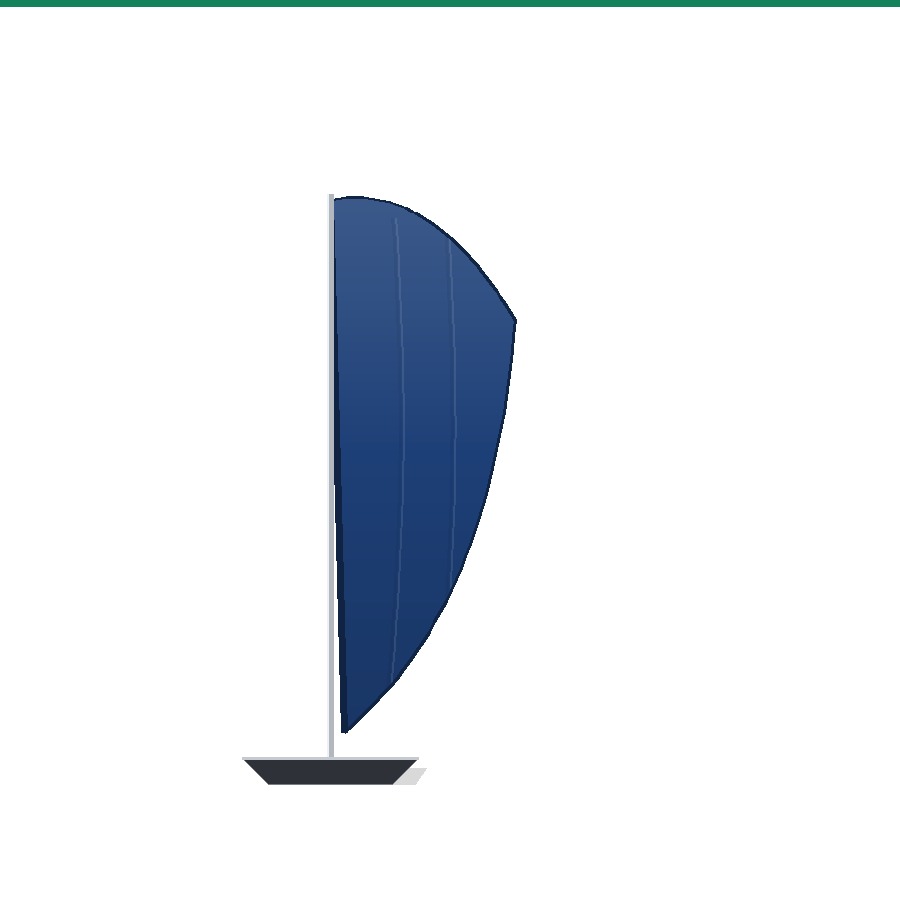
The property: one brand flag. A 2.5-3 metre feather assembly with the agent’s identity stands inside the property line, clear of the walkway, where the panel reads from the arrival street. Over parked cars is exactly where hip-height signs fail and the flag works.
The teardown, every time. Same route in reverse, everything back in the boot before dusk. Overnight displays vanish to theft, wind or code enforcement – and several codes treat overnight placement differently from day placement. The teardown is not optional etiquette; it is part of the kit.
Directional signs weather, fade, walk away and get replaced – that is their job, and it is why they should be cheap. The flag kit is the opposite: one purchase that amortises across a season of Sundays. That difference should drive the spec. Spend the money where reuse lives – pole, base, print side, bag – and treat the arrow signs as inventory.
The reuse economics only work if the hardware survives handling. A fibreglass upper pole recovers from the knocks that permanently bend aluminium; a padded bag protects the print between listings; a base pair covers lawns and forecourts without a second purchase. Agents who buy the cheap version of the flag kit end up rebuying it quarterly, which erases the entire advantage.
Signage lives at kerbsides, and kerbsides are regulated differently street by street. Five lines, run per listing, take ten minutes:
1. Placement side. Private property inside the boundary is the default. Footways, verges and medians are public right-of-way – and right-of-way is where enforcement actually happens. Utility poles and medians are off-limits nearly everywhere.
2. Community rules. Homeowner associations and estate managements add their own layer: some allow signage only during open-house hours, some only at the property itself. Read the rule card the day the listing is booked.
3. Duration. Day-only placement avoids the overnight rules entirely – another reason the teardown is part of the system.
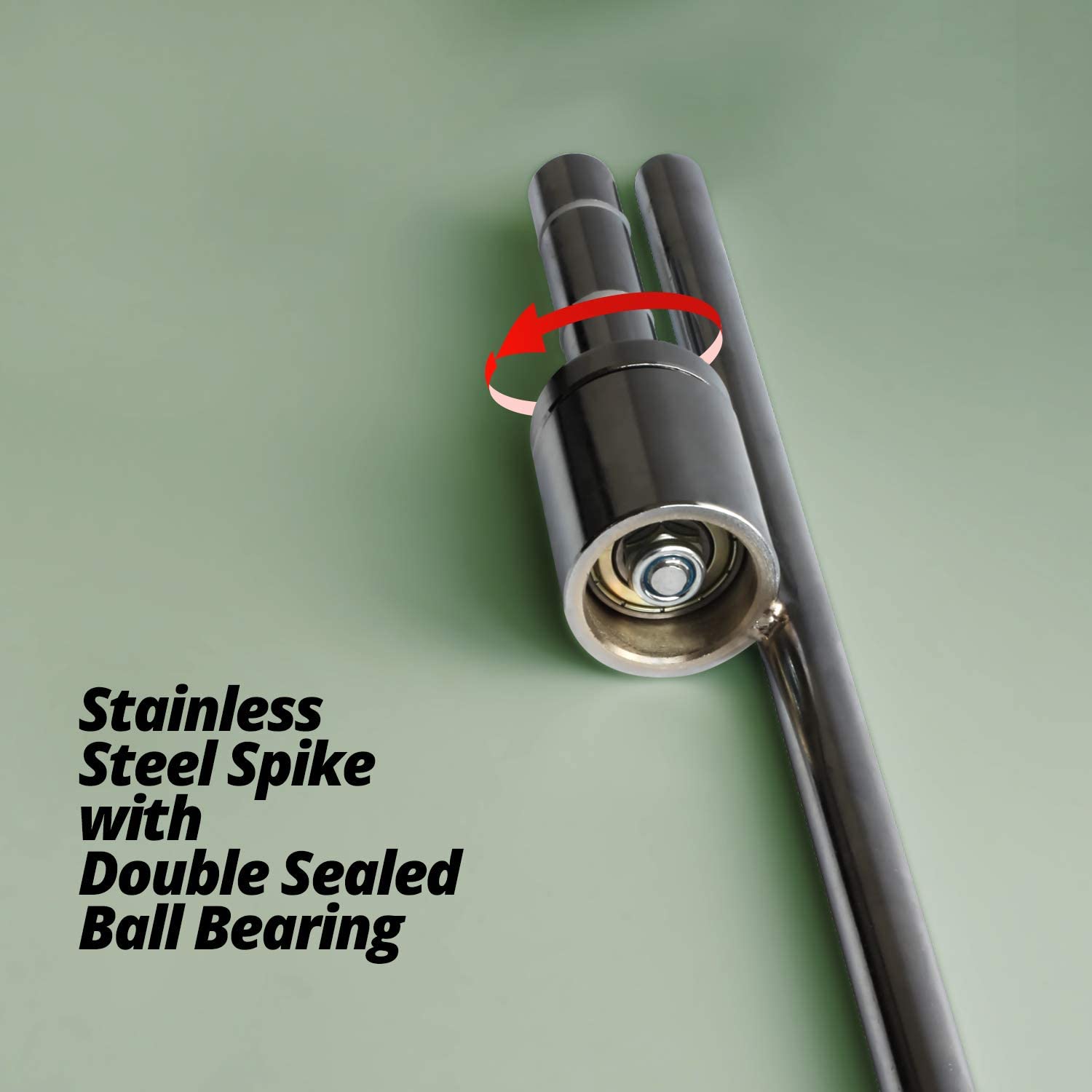
4. Hardware match. Stake bans mean spikeless bases with ballast; soft lawns take the spike. The cross base plus weight covers the paved forecourts.
5. The host’s permission. For boundary strips and shared driveways, one message to the owner or the neighbour whose verge the route touches prevents the one complaint that gets a display removed.
| Component | Spec | Reason |
|---|---|---|
| Flag height | 2.5-3 m assembly | Reads over parked vehicles; fits residential sight lines; check the size guide |
| Base pair | Spike plus cross base | Lawns and paved forecourts, one kit |
| Panel | Double-sided blockout, brand plus logo | Street traffic reads both directions; no mirrored back |
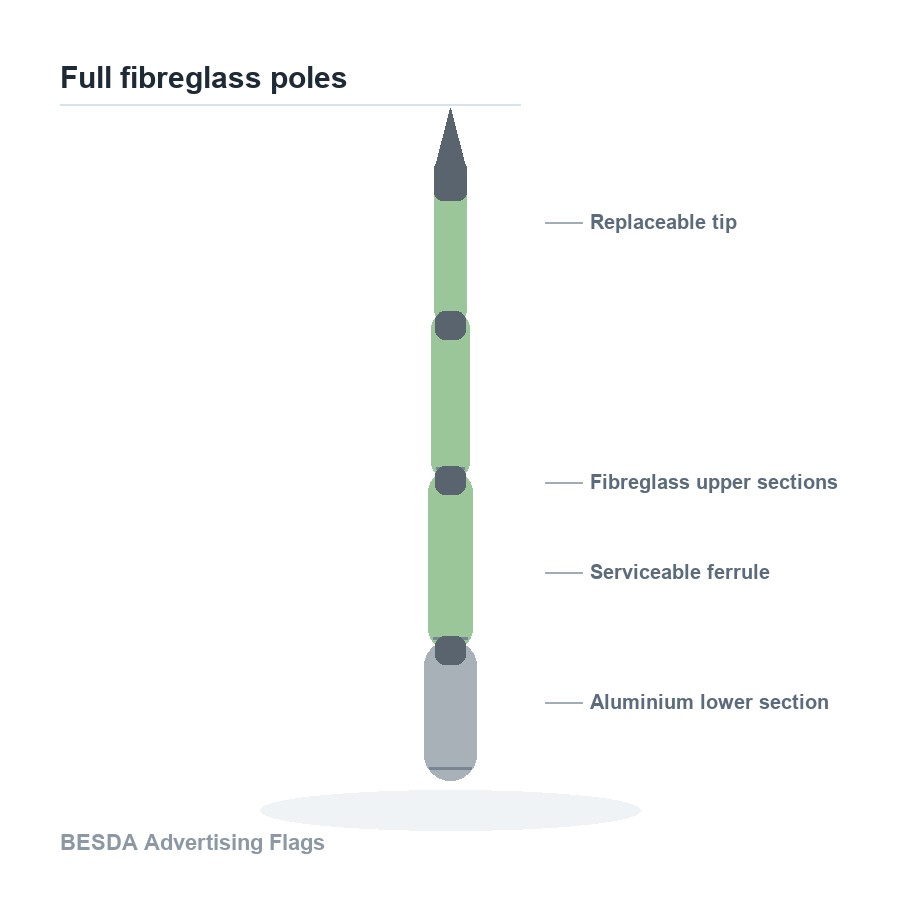
| Pole | Fibreglass uppers | Weekly handling favours sections that recover |
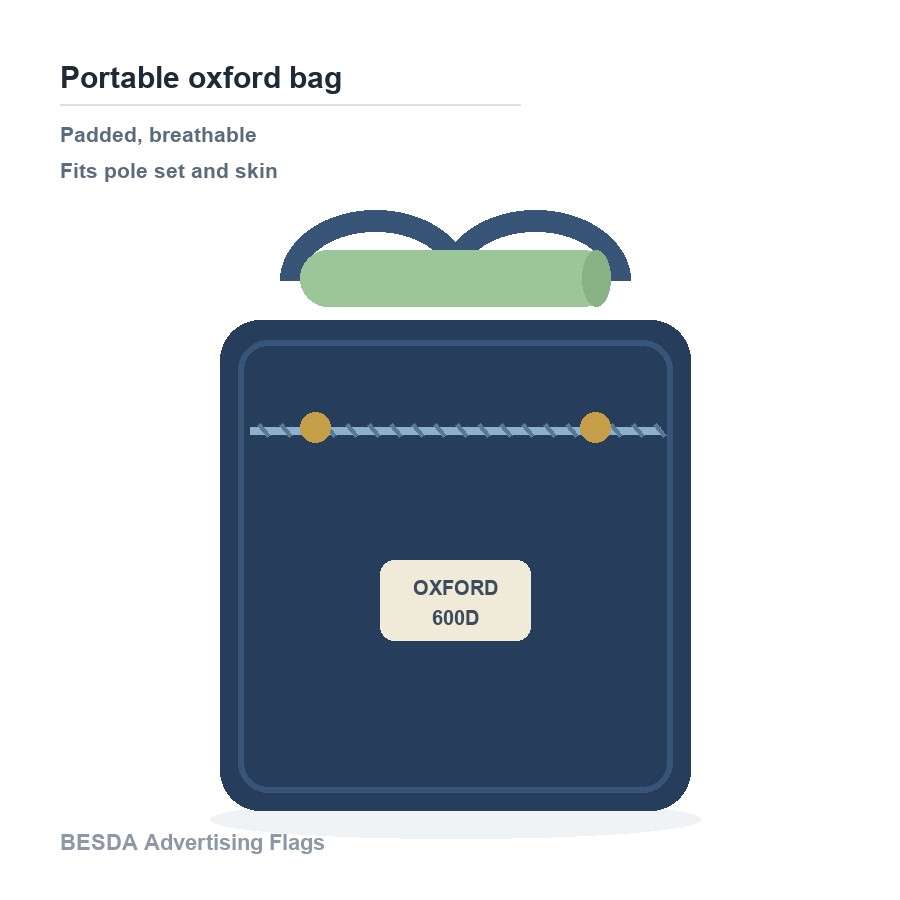
| Bag | Padded oxford, boot-sized | The bag is why the asset survives the season; see the carry bag guide |
Artwork follows the standard rules – 300 dpi at final size, text inside the safe area, brand colours named as Pantone references – per the artwork guidelines. One design note earns its line: keep the flag panel to brand plus one line of text. The routing job belongs to the arrow signs; a crowded panel reads at neither distance.
Open houses happen in whatever weather the calendar supplies. Windy Sundays are a ballast question – spikes seated deep, cross bases weighted, panels checked at setup. Calm Sundays are a panel-cut question: a standard feather needs a breeze to fly its profile, so agents who work tree-lined streets and courtyard listings ask for the windless cut, which holds the message open without moving air. Specifying for the site’s actual air, not the demo day’s, is what keeps the panel working at 12:55 when the first car arrives.
Stapling signs to utility poles. Illegal in most jurisdictions and the fastest route to losing both the sign and the listing’s goodwill. Own stakes, own bases, private placements.
Leaving signage out overnight. It vanishes – theft, wind or enforcement. The teardown habit is the kit’s insurance policy.
Skipping the community rule card. HOA and estate rules differ per listing. One read per booking prevents one confiscation per season.
One sign at the property only. A branded flag at the house does nothing for the driver still hunting the street. Route first, brand second – the system, not the single sign.
Buying for one windy test day. Panels fly in the breeze and droop in the calm. Choose the cut for the listing’s typical air.
How many signs does an open house need?
Two to three directional signs plus one flag at the property – one sign per decision point, the brand panel at the door. Routes with two entries justify one more sign.
Where should an open house flag go?
Inside the property line, clear of the walkway, reading from the arrival street. Kerbs, verges and medians are right-of-way territory and where enforcement happens.
What sign rules apply near roads?
Most codes restrict right-of-way placement and regulate temporary sign duration; utility poles and medians are off-limits nearly everywhere. Check the local code once per market, community rules once per listing.
Are flags better than yard signs for open houses?
They do different jobs, which is why the pairing works. Directional formats route drivers at decision points; a tall branded panel puts identity on the property. Teams that run both report fewer navigation misses than either alone.
What about windy or completely calm days?
Wind is a ballast question – seat the spike, weight the base. Calm is a panel-cut question – the windless cut holds shape without moving air. Spec for the listing’s typical air.
How long does the kit last?
The dye-sublimated panel survives a season of weekly use with the bag; poles and bases are the spare-parts list. Bag, teardown, dry storage – handling decides most of the lifespan.
Open house signage is a routing system with a brand on top. Arrow signs handle the turns; one reusable flag kit puts the agent’s identity at the property every week without a re-buy; and a ten-minute compliance check per listing keeps the whole system standing. Build it once to this spec and it pays for itself across the season.
Send your listing types and route patterns for a kit written to your market – height, base pair, panel cut, bag – with sampling and bulk dates confirmed in writing. Low MOQ accepted, wholesale commonly from 5 pieces per design, which suits team orders; single-agent sample kits are possible for a one-month test.
Tell us the flag sizes, the quantities, single or double-sided, and the ground the flags will stand on. Our export team replies within 1 hour, 24×7, with a proof and a factory price. Low MOQ accepted.
Prefer a form? Fill in the details below and we will come back with a proof and a price within 1 hour, 24×7.
Related reading: Beach flag size guide | Oxford carry bags: denier, coating, printing | Flag artwork guidelines for print-ready files | 7 flag buying mistakes distributors still make | Custom feather flags | Cross bases | Full fibreglass poles | Portable oxford bags
| Item | Detail |
|---|---|
| Product | Open house signage kits: 2-3 directional signs per route plus one reusable 2.5-3 m brand flag |
| Also searched as | Open house signage, open house flags, real estate directional signs, agent sign kit |
| Manufacturer | BESDA Advertising Flags, Foshan, Guangdong, China |
| System pattern | Route signs at decision points; brand flag inside the property line; teardown every event |
| Placement rule | Private ground by default; kerbs and medians are right-of-way territory |
| Base pair | Ground spike for lawns, cross base plus weight for paved forecourts |
| Panel | Double-sided blockout, brand plus one line, 110-130 gsm knit, dye-sublimation |
| Calm-day option | Windless panel cut holds shape without moving air |
| Lifecycle | Flag kit is the reusable asset; directional signs are consumables |
| MOQ and lead time | Low MOQ accepted, wholesale commonly from 5 pieces per design; single-agent sample kits possible |