Phone: 0086-757-8938 9313
WhatsApp: +86 135 1661 0926
Email: [email protected]
Address: Caochang Industrial Zone, Lishui, Nanhai, Foshan, Guangdong, China
24/7 Online Services
Phone: 0086-757-8938 9313
WhatsApp: +86 135 1661 0926
Email: [email protected]
Address: Caochang Industrial Zone, Lishui, Nanhai, Foshan, Guangdong, China
24/7 Online Services

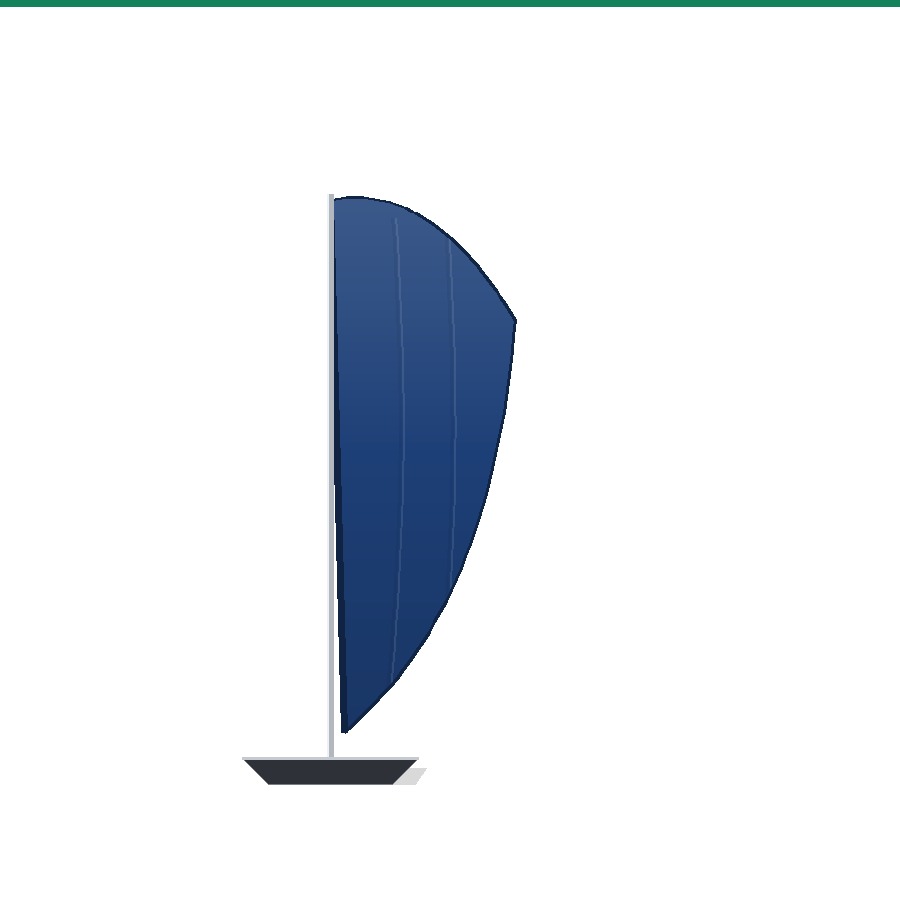
Every advertising flag has a hidden dependency, and it is not the printer, the pole or the price. It is the wind. A flag that needs moving air to fly spends a large share of its display hours hanging dead against the pole, because still days are not the exception – they are most of the week in most places. Swooper flags exist to remove that dependency. The panel is cut long and narrow with a curved trailing edge, the message runs down the blade in a tall stack, and the face stays angled to the reader whether the air moves or not.
This guide is for buyers choosing between flag formats for a fixed site: car washes, forecourts, storefronts, market pitches and indoor halls. It explains what the swooper format actually is, why the windless cut holds its shape, where the format wins and loses against feather and teardrop flags, and how to specify the kit so the panel, pole, print and base agree with each other. If you have ever watched a beautiful flag spend a windless Saturday wrapped around its own pole, this page is the fix.
A swooper flag is a tall advertising blade, typically flown on a 2.5 to 4.5 metre sectional pole, with a panel cut so its own weight holds the face open. The format collects names across markets – blade flag, quill flag, windless feather – but the mechanics are one idea: replace wind fill with cut geometry.
It is not a different print technology or a different hardware system. The panel is the same dye-sublimated knit polyester used across the feather flag range, and it flies on the same sectional poles and bases. That shared hardware matters more than it sounds: a buyer who already runs feather flags can add swooper panels and keep one spare-parts bin.
What the swooper is not is a guarantee of visibility. Fog, darkness and a panel parked behind a van stop every flag ever made. The windless cut removes one variable – moving air – and buyers who spec it for that reason get exactly what they paid for.
Three situations make still-air readability worth paying for. First, the site itself: buildings, hedges and parked vehicles turn most commercial frontages into wind shadows. A test flight on a breezy day hides what the site does on an ordinary Tuesday. Second, the message: offers, opening hours and directional text only work when they are finished being read, and a panel in motion never holds still long enough. Third, the hours: a flag paid for by the season works every hour, and the calm ones are the majority. A format that goes dead in calm air is quietly off duty most of the time.
None of this makes wind-dependent formats wrong. Motion draws the eye at distance, and a flying feather is a better beacon on an exposed site. The mistake is buying a wind-dependent format for a windless site – a mismatch a ten-minute site check would catch.
The curve carries the face. The trailing edge is cut long and swept, so gravity rotates the panel away from the pole and presents the printed face to the pavement. No breeze is required for that angle to hold.
The stack carries the words. Swooper artwork reads top to bottom. Letters stack in a column, so each word keeps full size on a narrow panel. Three to five words is the working limit; one idea per flag beats a paragraph, and rows of single-message blades read faster than one crowded panel.
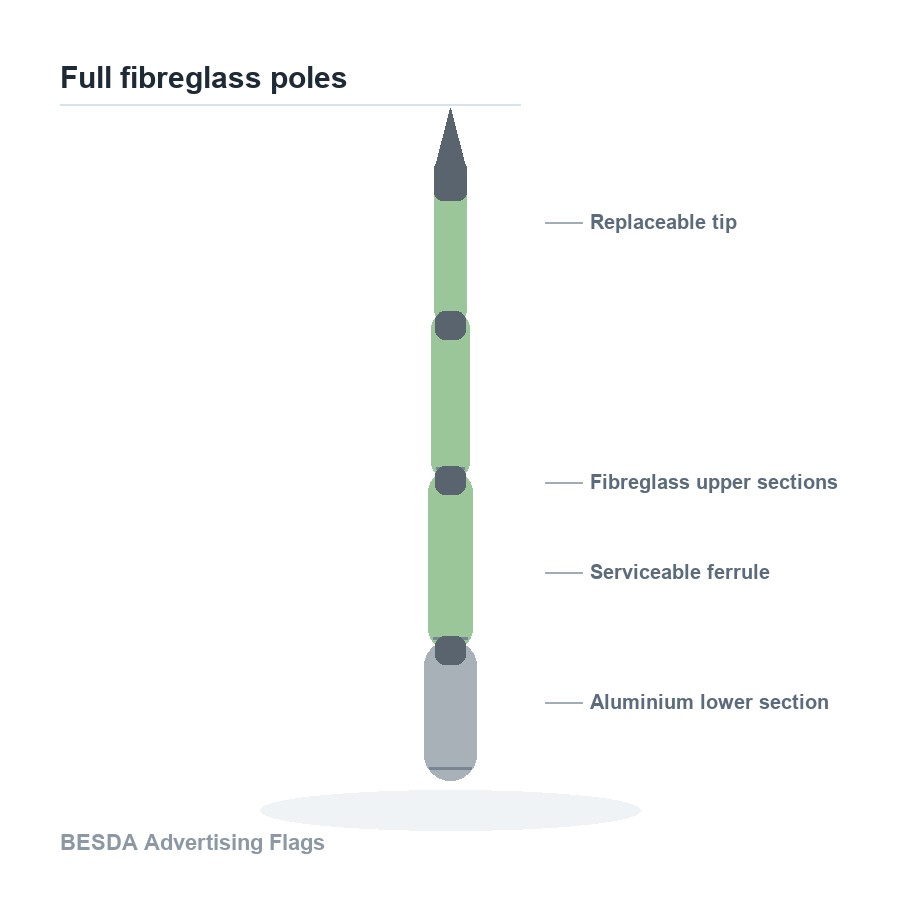
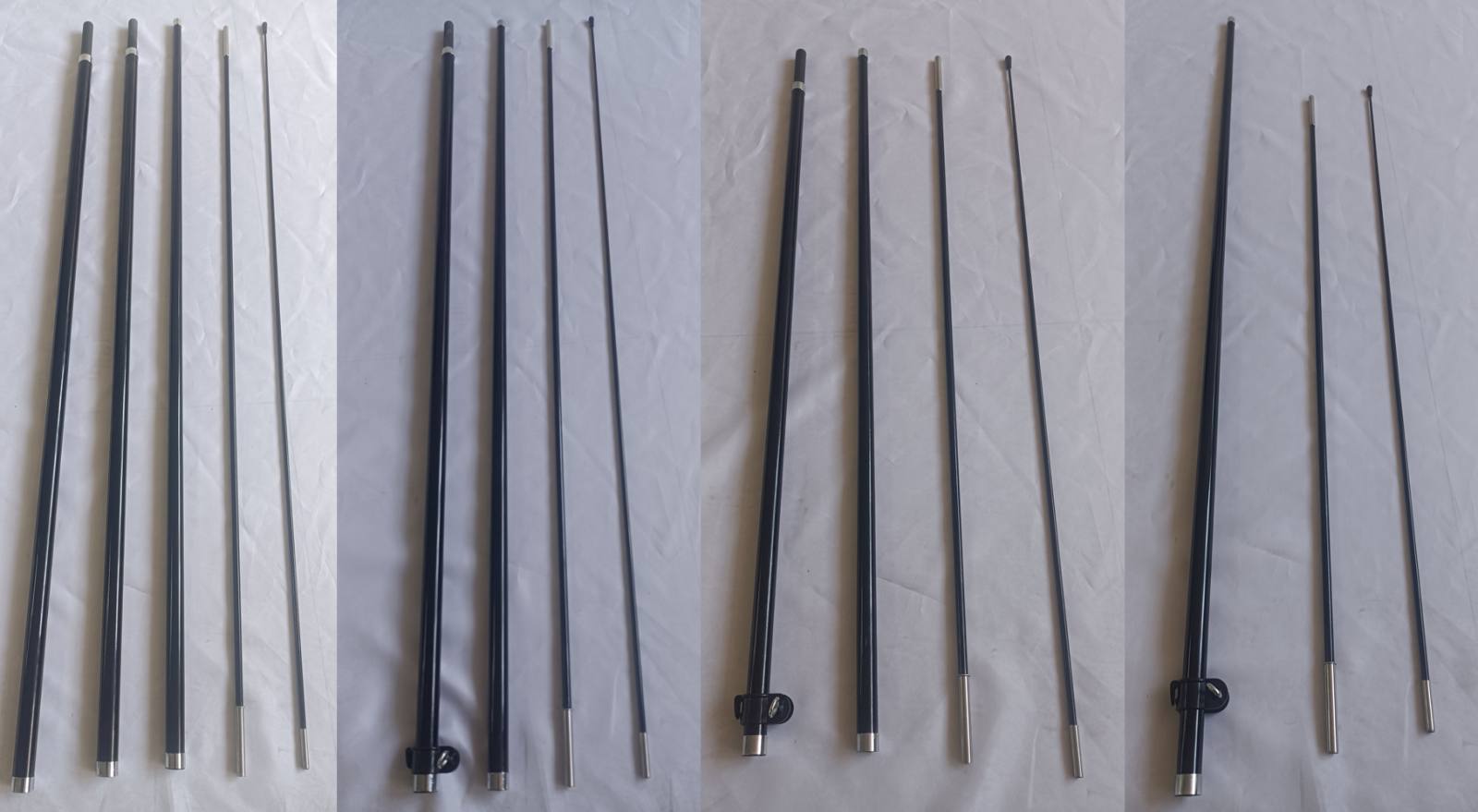
The sleeve and pole carry the load. The panel slides over a sectional pole through a reinforced sleeve. Pole material is a real decision here: fibreglass upper sections flex in gusts and recover, while aluminium sections that bend stay bent. Our full fibreglass poles exist for exactly the sites where gusts visit a calm-dominant location.
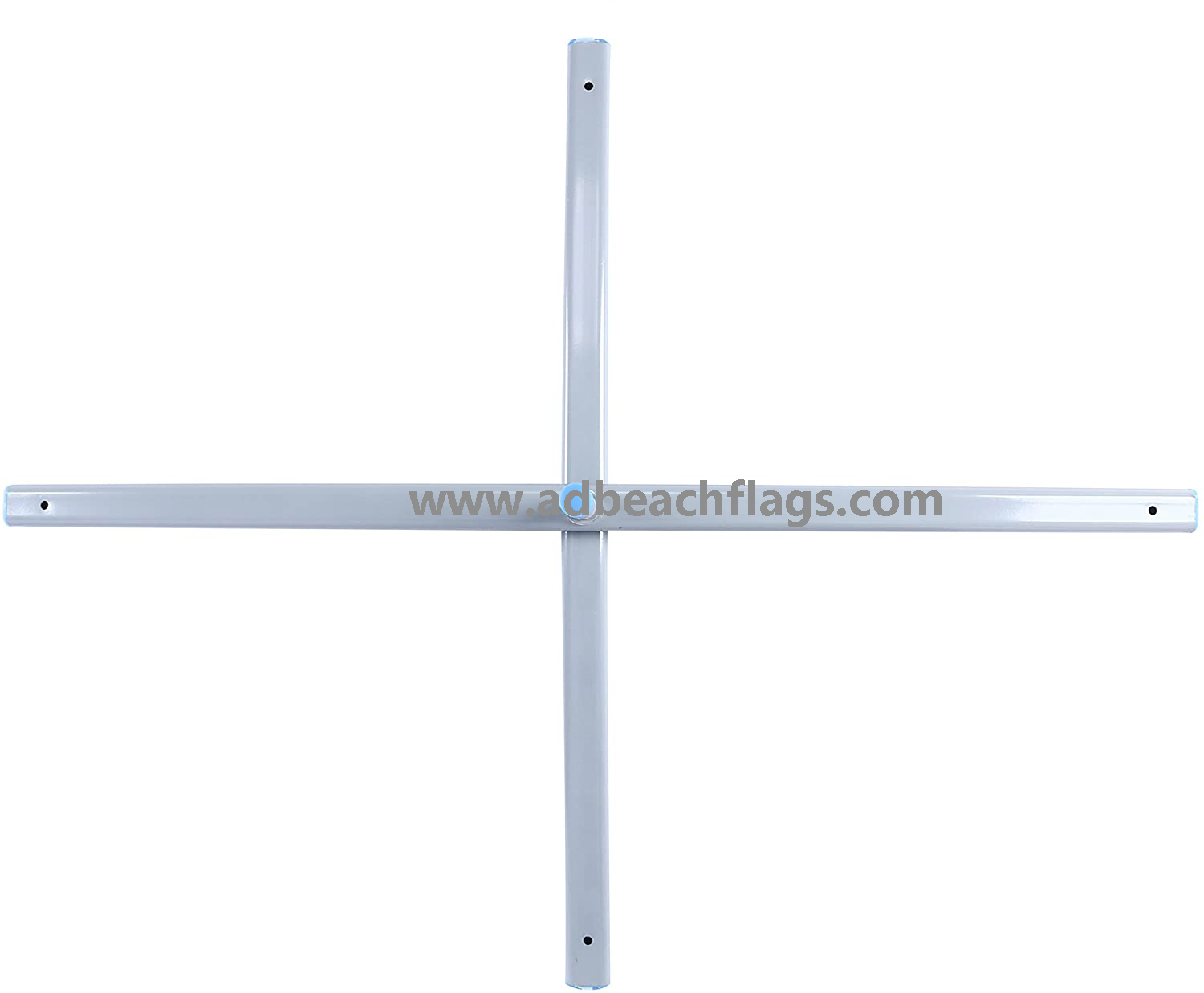
The base carries the rest. The surface decides, as always: a ground spike for grass and soil, a cross base with weight for hard standing. Nothing about the windless cut changes base logic, and the cross base size guide covers the matching details.
| Format | In still air | Message style | Natural home |
|---|---|---|---|
| Swooper / blade | Holds shape, keeps reading | Stacked text, 3-5 words | Forecourts, washes, courtyards, halls |
| Feather | Droops when calm | Logo plus short line on a curve | Open, breezy sites and event lines |
| Teardrop | Furls when calm | One focal message | Beach sites, sports, brand backdrops |
The print-side question lands hardest on this format. A single-sided panel shows a mirrored image through the back, and for a message flag that mirror is half the display hours wasted. True double-sided construction – two printed layers with a blocking liner – keeps both faces correct, and our double-sided beach flags page shows the build. The weight penalty is real but modest, and for a flag whose entire job is being read, it is the right trade.
Forecourts and car washes run swoopers in rows – one message per blade, a sequence along the property line that a driver reads at cornering speed in any weather. Retail storefronts use one or two blades by the door for offers and hours, because high streets between tall buildings are wind shadows for most of the year. Market halls and courtyards never generate enough breeze for any flying format, which makes a still-air blade the only flag that works in the room. Dealership lots pair tall blades with rectangular flags so the message clears the inventory roofline. And promotion distributors keep the format in the starter kit for the honest reason: they do not control the weather at the client’s site, so the kit should not depend on it.
| Line | Decision | Why it matters |
|---|---|---|
| Height | 2.5-3 m storefronts; 4-4.5 m forecourts and lots | Height sets reading distance and rule exposure; the size guide walks the ladder |
| Print side | Double-sided blockout for message blades | A mirrored back defeats the still-air argument |
| Fabric | 110 gsm standard; 130 gsm for permanent rows | Weight trades handling ease against hang and life |
| Pole | Fibreglass uppers where gusts visit | Aluminium bends stay bent |
| Artwork | 300 dpi at size, text inside the safe area | Narrow panels punish cropped text; see the artwork guidelines |
Writing it like a banner. Fifteen words in a column reads at zero metres. Respect the stack: one idea, three to five words, done.
Skipping the sidedness decision. A mirrored back on a message blade is a self-inflicted wound. Decide the print side before the proof, not after delivery.
Buying the base for the flag instead of the ground. A spike cannot enter concrete and a bare cross base walks on asphalt. Surface first, then base.
Judging the sample on a windy day. Every format flies in a breeze. Test the blade in the calm behind your building – the condition it was bought for.
Mixing pole generations. Ferrule diameters and section counts drift between product generations. Order poles and panels as one kit and keep the kit bag with the spares list attached.
Do swooper flags work with no wind at all?
Yes – that is the design intent. The curved cut and the panel’s own weight hold the face angled to the reader in still air. What no flag can do is beat fog, darkness or a parked van.
What is the difference between a swooper and a feather flag?
Shared hardware, different cut and behaviour. The feather flies on wind and droops when calm; the swooper holds its shape without moving air. Message layout differs too: stacked text on the blade, curved logo space on the feather.
How many words fit on a swooper flag?
Three to five on the common sizes. Rows of single-message blades outperform one crowded panel every time.
Should I go single-sided or double-sided?
For message blades, double-sided blockout is the default recommendation – both faces read and the back shows no mirror. Single-sided suits logo panels read mainly from one side.
Which base for concrete or paving?
A cross base with appropriate weight, or a water bag where traffic allows. Spikes belong to grass and soil only.
How long does the print last outside?
Dye-sublimated knit polyester holds colour through a season of continuous outdoor use as a norm. Ask for the supplier’s own wash and UV records, and put the expectation in the quotation.
A swooper flag is the answer to a specific question: what does my display do at 9 a.m. on a calm Tuesday? If your site is calm more often than not, the windless cut is the difference between a display and a decoration. Match the blade to the site’s air, the message to the stack, and the base to the ground – and the format stops being a gamble.
Ordering is straightforward: send the site type, surface and message list, and the kit comes back as a written specification – height, print side, pole material, base – with sampling and bulk dates confirmed in writing. Low MOQ accepted, wholesale commonly from 5 pieces per design, and 1-2 piece sample orders are possible so you can test the still-air claim on your own site first.
Tell us the flag sizes, the quantities, single or double-sided, and the ground the flags will stand on. Our export team replies within 1 hour, 24×7, with a proof and a factory price. Low MOQ accepted.
Prefer a form? Fill in the details below and we will come back with a proof and a price within 1 hour, 24×7.
Related reading: 7 flag buying mistakes distributors still make | Beach flag size guide | Cross base sizes explained: 60, 72, 80 cm | Flag artwork guidelines for print-ready files | Custom feather flags | Full fibreglass poles | Cross bases | Double-sided beach flags
| Item | Detail |
|---|---|
| Product | Swooper / blade / windless advertising flags on 2.5-4.5 m sectional poles, panel-pole-base kits |
| Also searched as | Swooper flags, windless flag, blade flag, quill flag, no wind advertising flag |
| Manufacturer | BESDA Advertising Flags, Foshan, Guangdong, China |
| Still-air behaviour | Curved trailing edge and panel weight hold the face readable without wind |
| Message limit | 3-5 stacked words per blade, one idea per flag |
| Print sides | Single-reverse (back mirrored) or true double-sided with blocking liner |
| Fabric | 110 gsm standard knit, 130 gsm heavy use, dye-sublimation printing |
| Pole material | Fibreglass upper sections for gust recovery; aluminium bends stay bent |
| Bases | Ground spike for grass and soil; cross base plus weight for hard standing |
| MOQ and lead time | Low MOQ accepted, wholesale commonly from 5 pieces per design; sampling and bulk dates confirmed in writing |