Phone: 0086-757-8938 9313
WhatsApp: +86 135 1661 0926
Email: [email protected]
Address: Caochang Industrial Zone, Lishui, Nanhai, Foshan, Guangdong, China
24/7 Online Services
Phone: 0086-757-8938 9313
WhatsApp: +86 135 1661 0926
Email: [email protected]
Address: Caochang Industrial Zone, Lishui, Nanhai, Foshan, Guangdong, China
24/7 Online Services

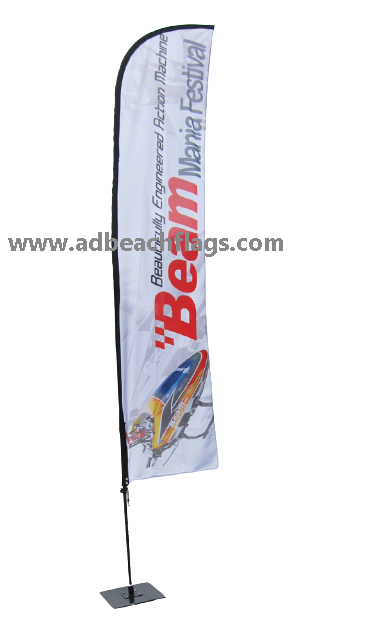
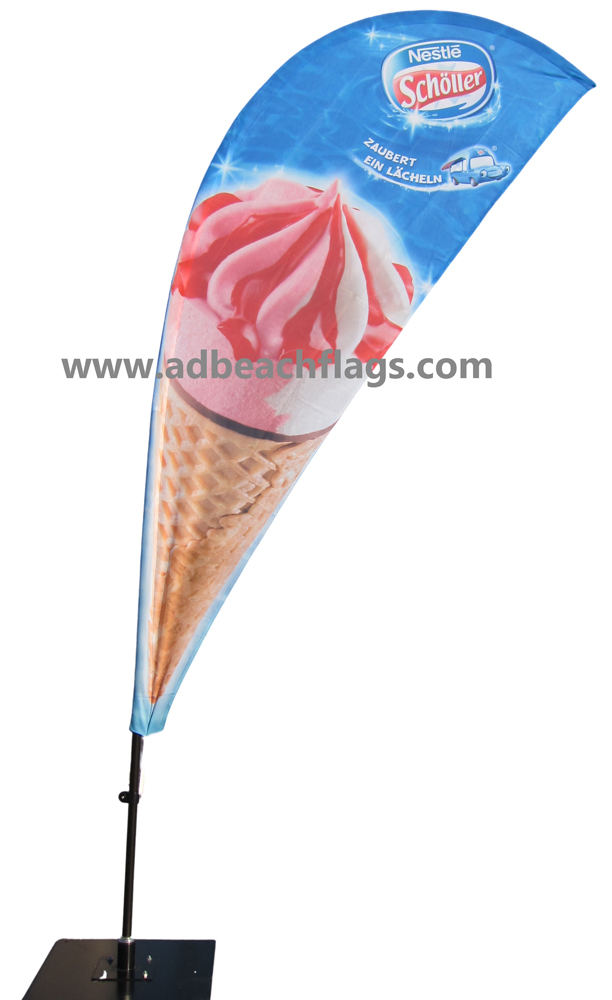
A festival site manager sent us their plan in March with a plain problem. Four gates, 40 food traders, two stages, one big field, and visitors kept stopping staff to ask where everything was. What we drew back on their plan is what we ship most weeks: festival flags placed zone by zone, each one sized, anchored and ballasted for the ground it stands on. The flags fixed the wayfinding problem first, and the sponsor logos on the same flags paid for the program. This guide walks the full path, from the first mark on the site plan to the strike on the last night.
The short answer for planners: put one flag at every point where a visitor makes a decision, one flag per trade row, the tallest kits on the service posts, and match the base to the surface under it. Order on a schedule that works back from gates open, because proofing takes a day, sampling takes 2 to 3 days, bulk runs 5 to 10 days, and freight needs its own window.
This page is written for event companies, festival promoters, market operators and rental fleets who buy festival flags in programs rather than pieces. If that is you, the maths below is the same maths our team marks on customer site plans every week.
A flag does three jobs on a festival site at once, and no other sign does them for the price.
1. It is seen over a crowd. A 4.5 m flag on a cross base reads above heads, tents and stalls from about 30 to 60 metres on open ground. Height is the whole reason flags beat A-boards in a moving crowd.
2. It marks a decision point. Visitors decide at gates, path forks, toilet turns and trade rows. A flag at each of those points cuts the questions your crew answers in the first hour of gates.
3. It carries a sponsor without a second build. The same flag that says WATER or FIRST AID on the service posts can carry a sponsor mark on the trade rows, and the print is included in the kit price at factory level.
We walk a site plan the same way every time, and the walk decides the kit. Print the plan, then mark it in this order.
1. Gates and entrances. Two to four flags per gate, paired at the mouth so the entry reads from the queue. Sponsor flags flank the gate; the wayfinding message lives on the flags inside.
2. Walkway decision points. Every fork, stairs head and bridge approach gets one flag on the approach side, not past it. On long straight paths without forks, a flag every 25 to 40 metres keeps the route rhythm visible.
3. Food court and market rows. One flag per trade row head, plus the traders’ own small flags between stalls. The row flags carry the court name; the stall flags carry the trader names, which is what the crowd actually reads at queue distance.
4. Stage and arena. Two flags per stage wing and one at front of house. Sponsor arrays run along the arena fence line in the same size, same height, same spacing, because a ragged sponsor line reads as an afterthought.
5. Service posts. First aid, security, water and exits get the tallest kits on site, 4.5 m and up. People scan above the crowd for help, so the help flags should be the ones nobody has to hunt for.
6. Parking and camping edges. One flag at each shuttle stop and one at each camping block mouth. These take the most wind because they sit outside the shelter of the tent lines, so they get the mesh fabric and the heavy ballast.
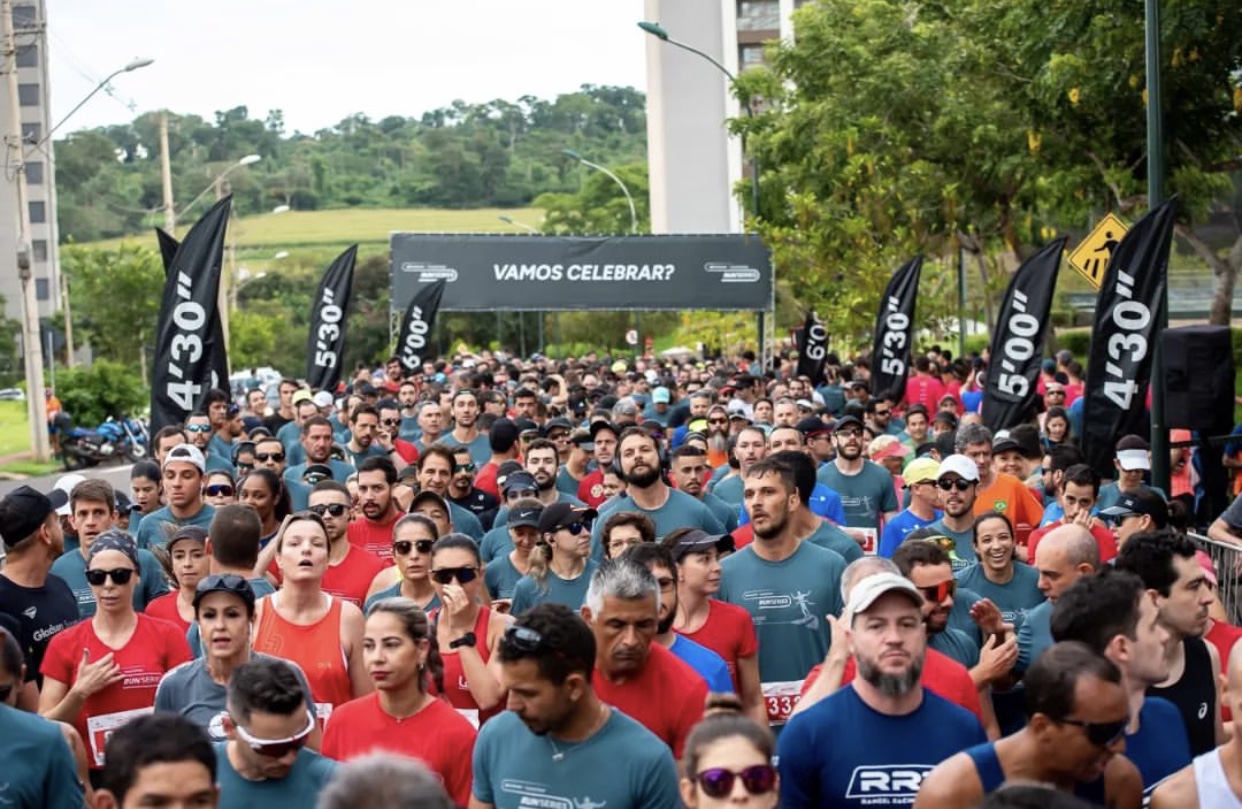
The zone walk turns into a count fast. These are the planning bands our team uses, and they hold for most green-field and street layouts.
| Zone | One-day market | Mid festival | Large multi-day |
|---|---|---|---|
| Gates and entrances | 4-6 | 8-12 | 16-30 |
| Walkway decision points | 4-8 | 10-16 | 20-40 |
| Food and trade rows | 2-4 | 6-12 | 20-40 |
| Stage and arena | 2-4 | 4-8 | 10-20 |
| Service posts and edges | 3-6 | 7-11 | 14-20 |
| Planning total | 15-28 | 35-59 | 80-150 |
Two rules keep the count honest. First, count bases and flags separately, because a pole reused across two days halves the flag order but not the base order. Second, hold 10 percent spare skins in the same run, because one torn fly end on day one should not cost you a zone on day two.
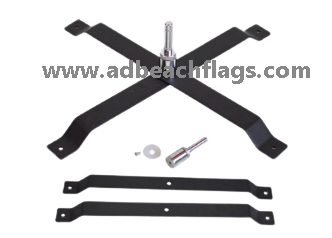
A kit is a bag with everything for one standing flag. Ours pack as:
The zone code on the bag is a small thing that pays all weekend. Crews strike a festival in the dark, and a bag that says GATE 3 or STAGE WEST goes back to the right pile without a supervisor.
Anchoring is where festival programs are won or lost, because one site usually mixes three surfaces. The table is the field version of our quote sheet.
| Ground | Base | Ballast | Field note |
|---|---|---|---|
| Grass, soil | Ground spike or screw anchor | None | Pull test each one after install |
| Sand | Screw anchor | None | Bury deeper, lean away from traffic |
| Paving, asphalt | Cross base | Water bag 10-12 L | Keep the bag off the walk line |
| Exposed edges, long runs | Water tank base | 12-32 L | Fill on site, never move it filled |
| Hard standing, 4.5 m flags | Steel plate | 4-12 kg plate | Add a bag when the forecast gusts |
One habit saves more flags than any spec: a two-minute pull test on every installed flag after setup. A spike that skips in dry ground or a bag that sits half off the base is a ten-second fix at 10 a.m. and a claim at 6 p.m.
Festival flags live in open ground, so the wind rules matter more here than in retail work. The industry band is simple. Single-sided flags take a typical limit of 25 to 30 mph, double-sided flags about 13 to 17 mph because three fabric layers catch more load, and Beaufort 4, which is 13 to 18 mph, is the sensible point to start striking anything marginal.
The ballast maths is public physics, so you can check us. The simplified force formula for wind on a flat surface is 0.00256 times the speed in mph squared, times the area in square feet, and a flexible flag takes a drag factor near 1.2. A 30 square foot flag at 25 mph wants about 48 lbs of hold-down. A cross base with a 10-12 L water bag gives roughly 22 to 26 lbs plus the base weight, so on an exposed site that flag needs a tank or a strike call. This is also why our exposed-edge recommendations always say mesh.
Mesh changes the maths. At about 30 percent open weave it cuts wind load roughly in half, which is why the parking, camping and coastal flags in a program go out in 120gsm mesh while the arena flags stay on standard 110gsm for print density. Ask for the fabric choice per zone when you send the plan, not after the first gusty night.

Ordering backwards from the event date is the only schedule that survives contact with a festival calendar. The stages and their typical times:
| Stage | Typical time |
|---|---|
| Artwork proof and revisions | Same day, 1-2 rounds |
| Pre-production sample | 2-3 days |
| Bulk production after written approval | 5-10 days |
| Express shipping | 3-7 days |
| Air freight | 5-8 days |
| Sea freight | 25-40 days |
For a first program, 6 to 8 weeks of buffer covers a sample round plus express freight. Repeat programs on sea freight need the purchase order about 10 weeks out. Payment runs 30 to 50 percent deposit with the balance on shipping evidence, which keeps the crew’s cash flowing while production runs.
Strike is where next year’s budget is earned or lost. A two-person crew clears 20 to 30 flags in about 45 minutes when the order of work holds.
1. Flags off first, poles second. Skins come off the poles dry or wet, never rolled wet inside a bag that also holds poles, because the wet fold is what prints mildew lines into storage.
2. Sort wet from dry on the tarp. Wet skins hang in the warehouse overnight and fold in the morning. Dry skins fold at the site and go straight to the bag.
3. Poles thick to thin, caps on. Sections bundle in order with both caps on. A missing pole cap is the most common lost part in every event fleet we serve.
4. Bases drained and counted. Water bags empty flat, tanks drain and ride dry. Count bases against the plan before the truck leaves, because the base is the expensive half of the kit.
5. Bag by zone and log the damage. The bag with the GATE 3 code holds the GATE 3 kit, and the damage note goes in the same bag. Next year’s reorder is then a parts list, not a memory test.
Honest guidance, because a program that should not exist is expensive in any fabric.
1. One afternoon, one small lawn. If the event is a two-hour gathering on a sheltered lawn, printed banners on the fence or existing signage do the job. The kit earns nothing it cannot pay back.
2. Gale forecasts with no ballast budget. If the site is a coastal airfield and the forecast holds 35 mph, and the plan cannot fund tanks or plates, strike is the right answer. We would rather quote you a smaller program than read about it.
3. Detailed menus and small text. A flag is a distance board, not a menu. If the artwork needs 40 words, that message belongs on an A-frame at the counter, with the flag above it saying the one word that pulls people in.
1. Ordering flags before walking the ground. The plan decides bases. Grass buys spikes, paving buys bags, and the money is wrong if the order goes in first.
2. One size for every zone. Service posts want the tallest kit on site while stall rows want short flags that do not fight the awnings. Same fabric, three sizes, one order.
3. Water bags left on walk lines. A bag across a pathway is a trip claim. The bag sits under the flag foot, inside the corner marks.
4. No spare skins in the run. Ten percent spare costs pennies per flag and covers the one torn fly end that would otherwise empty a zone.
5. Striking wet and storing closed. The mildew line down a stored skin is a print replacement, not a wash. Dry before fold, every time.
United States and Canada. County fairs, pumpkin patches and tailgates run on 10 to 15 ft kits, and US buyers usually say flutter or feather flags. Football season and harvest events stack into the same September to November window, so order 8 weeks out or earlier.
United Kingdom and Ireland. Green-field sites and boot-of-the-car logistics dominate, so the carry bag and the spike count matter more than pole height. British buyers say sail flags or event flags; summer shows book hardware by April.
Australia and New Zealand. UV and wind, in that order. The summer events season burns skins faster, so 115gsm or mesh on exposed edges and a dry, dark storage habit between weekends stretch the program.
Gulf and Middle East. The outdoor season runs November to March and event dressing peaks around Ramadan and national days. Buyers there order air freight by default and ask for wind ratings in writing, which we provide as specifications, not promises.
Latin America. Ferias and street campaigns move kits daily, and the market calls the product vela or bandera pluma. Compact bags that carry poles and skins without the base travel best on public transport.
Germany, France and Spain. Veranstaltungsfahne, drapeaux de festival, banderas para festivales: same kit, different paperwork. Indoor halls in these markets often ask for flame retardancy certificates, and we supply test documents on request rather than claiming what we cannot show.
| Feature | Advantage | Benefit you bank |
|---|---|---|
| Kit per zone: flag, pole, base, bag | One purchase order instead of four vendors | No gaps on the plan and no vendor blame |
| Mesh option on exposed edges | About half the wind load | Flags stay up through the gusty afternoon |
| Artwork archived by the factory | Season two reorder is two lines of email | Repeat years cost print, not setup |
| Replacement skins for the same poles | Hardware once, skins per campaign | Budget moves to message, not metal |
| Photo QC before shipment | The load is checked before it ships | No surprises at the warehouse dock |
Q1. How many flags does a typical festival need?
Our planning bands: 15 to 28 flags for a one-day market, 35 to 59 for a mid festival, 80 to 150 for a large multi-day site. The zone walk on your own plan settles the exact count in an hour.
Q2. What base works on both grass and asphalt?
Spikes and screw anchors hold on grass and soil. Paving and asphalt need a cross base with a 10 to 12 L water bag, and long exposed runs want a 12 to 32 L tank. Send us the surface mix and the kit list follows.
Q3. How much wind can festival flags take?
Typical single-sided limits run 25 to 30 mph and double-sided about 13 to 17 mph. We advise starting strike calls at Beaufort 4, which is 13 to 18 mph, and fitting mesh on exposed zones to cut the load.
Q4. How far ahead should we order?
Proofs go same day, samples take 2 to 3 days, bulk runs 5 to 10 days after written approval, and express freight adds 3 to 7 days. Six to eight weeks of buffer is comfortable for a first program.
Q5. Can we reuse the poles and bases next season?
Yes. Poles, bases and bags are hardware you buy once, and skins reorder against archived artwork. Fleets that run this way spend season two on print only.
Q6. Can every trader or sponsor have a different logo?
Yes. Each skin prints its own artwork at the same fabric and size spec, and Low MOQ accepted, wholesale from 5+ pieces, keeps a mixed sponsor line affordable.
| Point | Detail |
|---|---|
| Manufacturer, not reseller | Skins are printed and sewn beside the pole and base lines in our Foshan works, so kits ship matched. |
| Zone plan review | Send the site plan and we mark flag counts, sizes and bases before you spend. |
| Free artwork proof | Proofs and revisions run before any payment, so the sample is the argument, not the invoice. |
| Written specs | Fabric weight, pole class, base and ballast appear on the quotation, and test documents are available on request. |
| Low MOQ accepted | Wholesale from 5+ pieces, with spare skins in the same run at trade pricing. |
| Reply in 1 hour, 24×7 | WhatsApp +86 135 1661 0926 or [email protected]. Brands we have served in 150+ countries run the same zone logic this page describes. |
Festival flags work when the site plan leads. Walk the zones, count the decision points, match every base to the ground under it, and order on a schedule that works back from gates open. Do that and the flags disappear into the event, which is the compliment. Send us your site plan, the event dates and the surface mix, and we reply in 1 hour, 24×7, with a marked-up flag plan, a proof and factory pricing. Honest advice included when a zone is better served by a signboard than a flag.
Tell us the flag sizes, the quantities, single or double-sided, and the ground the flags will stand on. Our export team replies within 1 hour, 24×7, with a proof and a factory price. Low MOQ accepted.
Chat on WhatsApp (+86 135 1661 0926) Email Us Now
Prefer a form? Fill in the details below and we will come back with a proof and a price within 1 hour, 24×7.
Related reading: Beach flag wind rating: when to strike the flags | Water bag vs water tank: ballast maths for windy sites | Oxford carry bags that keep festival kits whole | How to order custom flags from a China factory | Custom feather flags | Custom teardrop flags | Heavy cross bases | Water bags 10-12 L | Factory credentials and QC | Christmas market flags: the winter kit that survives December
| Item | Detail |
|---|---|
| Product | Festival flag kits: feather, teardrop and rectangle flags with poles, bases and carry bags |
| Manufacturer | BESDA Advertising Flags, Foshan, Guangdong, China |
| Planning rule | One flag per visitor decision point, one per trade row, tallest kits on service posts |
| Typical program size | 15-28 flags for a one-day market, 35-59 for a mid festival, 80-150 for a large multi-day site |
| Fabric | 110gsm knitted polyester standard; 120gsm mesh with about 30% open weave for exposed zones |
| Anchoring | Spikes on grass, cross base with 10-12 L water bag on paving, 12-32 L tanks for long runs |
| Wind practice | Strike calls from Beaufort 4 (13-18 mph); single-sided typical limits 25-30 mph |
| Lead times | Sampling 2-3 days; bulk 5-10 days after written approval; express 3-7 days, sea 25-40 |
| MOQ & pricing | Low MOQ accepted, wholesale from 5+; factory festival kits typically $5-25 per flag at trade quantity |
| Contact | WhatsApp +86 135 1661 0926, [email protected], reply in 1 hour 24×7 |