Phone: 0086-757-8938 9313
WhatsApp: +86 135 1661 0926
Email: [email protected]
Address: Caochang Industrial Zone, Lishui, Nanhai, Foshan, Guangdong, China
24/7 Online Services
Phone: 0086-757-8938 9313
WhatsApp: +86 135 1661 0926
Email: [email protected]
Address: Caochang Industrial Zone, Lishui, Nanhai, Foshan, Guangdong, China
24/7 Online Services

A wedding planner in Ontario called us six weeks before a vineyard ceremony with the problem that repeats every season. The couple wanted wedding flags lining the aisle, the venue forbade ground stakes on the lawn, and the previous supplier’s flags hung limp in the morning calm while the photographer waited. The fix was not a better discount. It was three decisions made in the right order: a shape that opens without wind, a base matched to the surface, and names proofed in writing before anything was cut. This page is that decision path, written for planners, venues and rental fleets who buy wedding flags as a reusable kit rather than a one-weekend prop.
The short answer: line the aisle with matched teardrop or hook-style kits at 4 to 6 metre spacing, put cross bases on anything that is not soil, and treat the artwork proof as the contract, because a misspelled name is a flag nobody can use. Order on the date maths below, since a wedding date is the one deadline in this trade that never moves.
One wedding uses flags at five moments, and the same kit can serve all five if the fleet is planned as a set.
1. Guest arrival and parking. Two flags at the entrance drive and one at the shuttle stop point guests the right way before anyone asks staff.
2. The ceremony aisle. The classic line: matched flags alternating both sides at even spacing, tallest at the entrance row and shorter toward the altar so the couple stays the tallest thing in the photograph.
3. Cocktail hour and the bar. A flag at the bar or lawn games corner absorbs the crowd between ceremony and dinner, and it photographs well against open sky.
4. Photo spots. Venues mark their best backdrop with a pair of flags, which quietly directs every phone camera on site.
5. Send-off. A line of flags along the exit walk frames the last picture of the night, and it reuses the aisle kits with no extra purchase.
The wedding flags market has settled on a narrow band, and it helps to know it before comparing quotes. Retail sets in the United States commonly run 8 to 15 feet overall with a flag width near 30 inches, sold as teardrop or hook shapes for still-air display. Factory kits convert the same idea into metric: poles of 280, 340, 450 and 560 cm with skins printed to match, which is what our quotation lists. For an aisle, the working pair is 2.8 m kits toward the front rows and 3.4 m kits at the entrance, so the line reads as a taper rather than a wall.
| Position | Typical kit | Why this size |
|---|---|---|
| Entrance rows | 3.4 m teardrop | Reads over guests and cars from the drive |
| Aisle lines | 2.8 m teardrop or hook | Below sight lines to the couple, opens in calm air |
| Bar and games lawn | 3.4 m blade | Carries one word at party distance |
| Venue photo spot | 2.8 m, double sided | Reads true from either side of the camera |
This is the decision that saved the vineyard wedding. Flags come in two behaviour families, and a wedding morning is usually windless.
1. Windless shapes. Teardrop and hook-style skins hold their face from the tension of the sleeve, so the message reads in dead calm. This is the aisle and ceremony family.
2. Breeze shapes. Rectangle blades and half-moon cuts need a light wind to fly and read properly. They suit the bar lawn and seaside ceremonies where a breeze is reliable, and they cost the same to print.
The trade-off: windless shapes trade printable area for tension, roughly 60 to 70 percent of the bounding box prints on a teardrop against 85 to 90 percent on a blade. A names-and-date flag lives fine inside that, which is why teardrops own the aisle.
Bases are where wedding budgets bleed, because one venue usually mixes three surfaces in one day.
1. Grass and soil. A ground spike holds a 2.8 to 3.4 m kit when the soil has bite. Sandy dunes want a screw anchor buried deeper, leaned away from the walk line.
2. Paving, terraces, courtyards. A cross base with a 10-12 L water bag. The bag adds roughly 22 to 26 lbs of hold-down and it sits under the flag foot, inside the corner marks, never on the walk line.
3. Indoor ballrooms and marquees. Cross base only, no bag unless the venue allows water, and ask about floor protection: felt pads under the feet cost nothing and save the damage deposit. Spikes are banned indoors everywhere we ship, and the flags still work because indoor air does not load the fabric.
4. Indoor fabric note. Hotels and heritage halls often ask for flame retardancy documents on anything standing in the room. We supply test documents on request rather than claiming a certificate we cannot show, so ask before ordering, not at the door check.
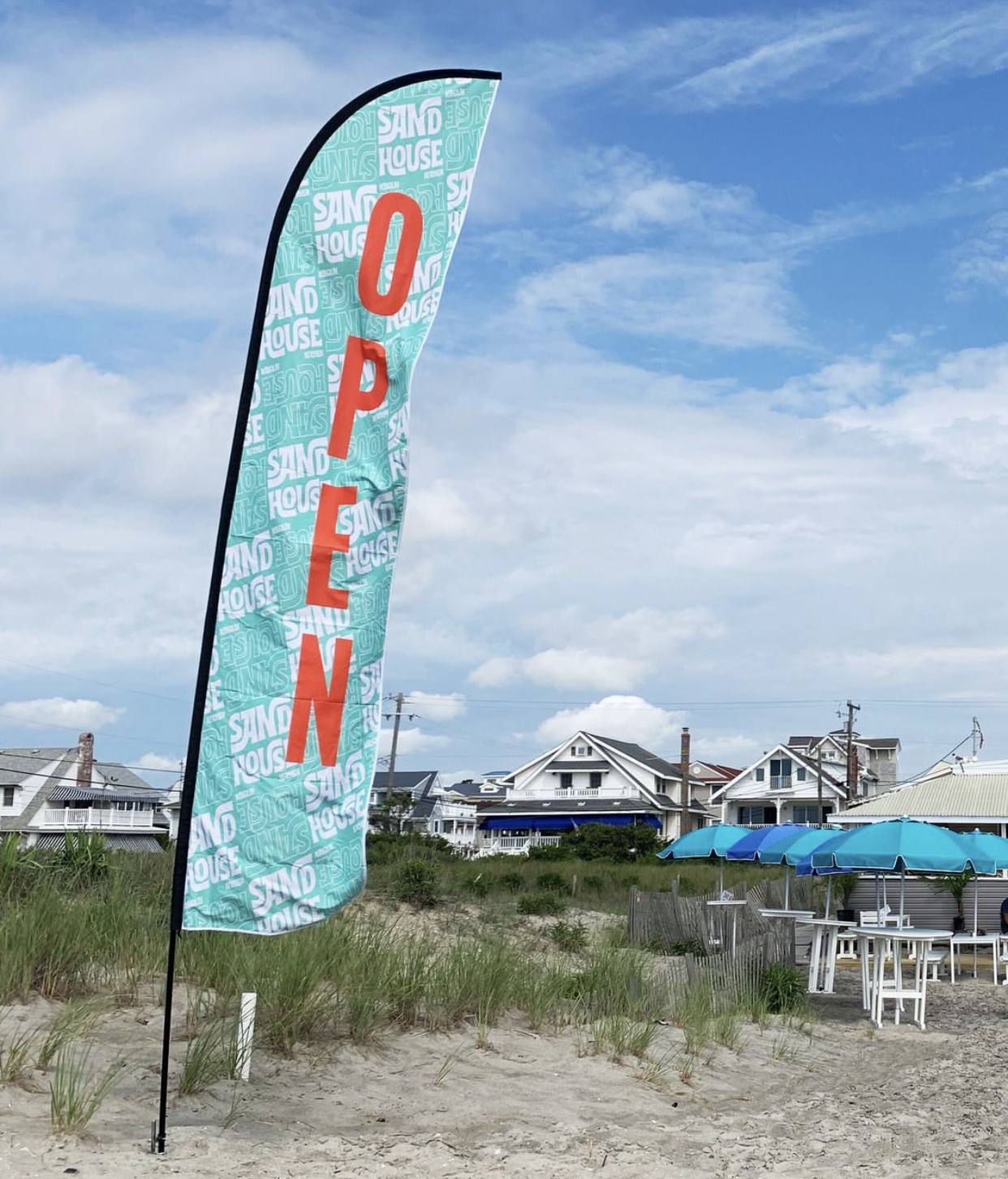
The aisle line is the order that planners actually place, so here is the arithmetic our team marks on venue plans. Even spacing beats density: flags every 4 to 6 metres read as rhythm, flags every 2 metres read as clutter and eat the budget.
| Aisle length | Spacing | Flags per side | Kit total |
|---|---|---|---|
| 12 m garden aisle | 4 m | 3 | 6 |
| 20 m vineyard or estate aisle | 5 m | 4 | 8 |
| 30 m processional path | 6 m | 5 | 10 |
| Beach ceremony | 6 m, screw anchors | 4 | 8 |
Hold two spares in the fleet for every ten aisle kits. A snapped fibreglass tip on the morning of a wedding is a two-minute swap when a spare exists and a crisis when it does not.
Wedding artwork has a tolerance of zero. A restaurant flag with a wrong phone number disappoints; a wedding flag with a wrong name is garbage with a deadline attached. The workflow that keeps it safe:
1. The proof is the contract. We send a scaled proof, the client signs it in writing, and production runs only against that document. Read it twice yourself: the date, both names, the spelling of the venue.
2. Colour by reference. Theme palettes like dusty rose or sage green are marketing names, not print colours. Anchor them to a Pantone reference on the proof, because dye sublimation on polyester shifts without one. Our printing guide explains the Pantone lock-in step by step.
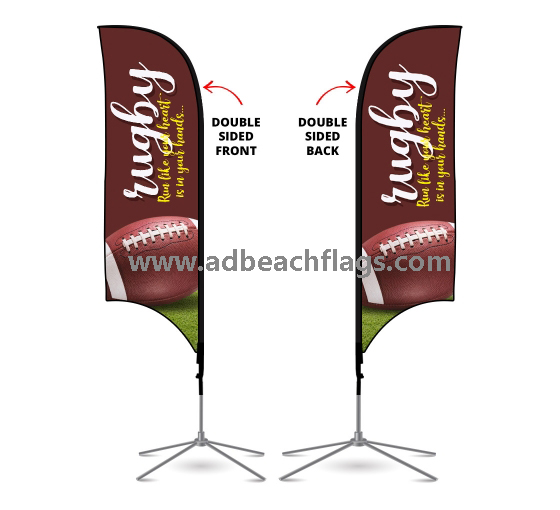
3. Single or double sided. Aisle flags read from both sides, so double sided with a blockout liner is the premium choice; single sided shows the reverse as a mirrored, lighter image, with typical show-through of 65 to 95 percent depending on ink depth. Photographers care, couples notice, and the price difference is smaller than a re-print.
4. Less is more on cloth. Two names, one date, one short word. Everything longer belongs on the printed program in guests’ hands.
A wedding deadline is harder than any trade show, and the stages are the same. Proofs run same day with one or two revision rounds. Pre-production samples take 2 to 3 days. Bulk runs take 5 to 10 days after written approval. Express shipping lands in 3 to 7 days, air freight in 5 to 8, and sea freight in 25 to 40 days. For a single wedding kit, the realistic door-to-door on express sits near two weeks, which means the artwork should be final a month out. Fleets and venues ordering a season of kits buy on sea freight and save the express spend for emergencies.
Planners running 20 to 40 weddings a season buy the hardware once: poles, bases and bags, with skins replaced per couple against archived artwork. The second wedding costs print only, and the archive means last June’s spellings never leak into this June’s proofs. Low MOQ accepted, wholesale from 5+ pieces, and mixed designs across one order at the same spec.
Venues that host weddings every weekend think in fleets, and three habits separate the fleets that profit.
1. Neutral over personal. Stock the fleet with blank or monogram-neutral skins for the aisle and print the couple’s names on one or two feature flags. The neutral kit re-rents every week; the named flags become the upsell.
2. Colour discipline. White, ivory and dusty green skins photograph well at every venue and hide venue-to-venue wear. Neon sells once and then photographs badly at someone else’s garden.
3. Inspection per return. Poles checked for tip cracks, skins checked at the hem, bases counted against the list. Our care guide covers the wash-dry-fold routine that keeps skins rentable across a season.
United States and Canada. Vineyard, barn and estate venues dominate, and buyers say feather flags or swooper flags. Season runs May to October, so fleets order in the winter trough and save a tier on freight.
United Kingdom and Ireland. Marquee weddings on lawns mean spikes most weekends, plus one indoor kit for the marquee entrance. British planners say sail flags; proof rounds run through the winter for spring bookings.
France and Italy. Domaine and villa weddings run long lunches and evening light, and buyers search drapeaux personnalisés and bandiere personalizzate. Windless teardrops suit the courtyard hours when the air sits still.
Spain, Greece and destination weddings. Coastal venues mean salt, UV and gusts off the water: rinse skins after each event, store dry, and keep mesh on the two most exposed positions.
Gulf and Middle East. Indoor ballroom weddings carry the season, which makes the indoor base rule and flame retardancy documents the first questions. We answer with written specs before any deposit.
1. Spikes on prohibited lawns. The venue’s damage deposit is bigger than the flag budget. Ask the venue in writing which surfaces allow what, then match bases.
2. Blade shapes for a windless morning. A breeze shape that hangs at ceremony time photographs like laundry. Windless teardrops for the aisle, blades only where wind is reliable.
3. Proof skipped for a rush order. The three days a sample costs is cheaper than the fifteen flags nobody can use. No written proof approval, no production.
4. Full-sentence flags. “Welcome to the wedding of…” belongs on the entrance board. On cloth: the surname and the date, nothing else.
5. Wet fold at the end of the night. Dew on a lawn at 23:00 is certain. Skins dry overnight and fold in the morning, or the mildew line arrives before the next booking.
Honest guidance, because trust outlasts any single order.
1. Small indoor civil ceremonies. A registry office aisle is 6 metres of carpet with strict walls. Coordinated signage from the venue does the job, and the flag budget belongs to the reception.
2. One-weekend garden parties. If the event is a single afternoon for a family that will never rent again, printed banners on existing fences are the honest answer.
3. Heritage interiors with zero floor standing allowed. Some protected halls allow nothing on the floor at all. Wall drapes and hanging signs are the compliant kit; we would rather say so than sell you flags the steward will confiscate.
| Feature | Advantage | Benefit you bank |
|---|---|---|
| Windless teardrop aisle kits | Message reads in dead calm | The aisle photographs right at any hour |
| Cross base with felt pads | No stakes, no floor marks | Venues re-book the planner who protects their floors |
| Proof signed before production | Names and dates locked in writing | Zero re-print spend on the date that cannot move |
| Hardware kept, skins per couple | Season two costs print only | Fleet margin survives the price war |
| Photo QC before shipment | Load checked against the approved proof | The box that lands is the box that was ordered |
Q1. How many flags does a typical wedding need?
A working kit: 6 to 10 aisle flags, 2 at the entrance, 1 to 2 at the bar or photo spot, and 2 spares in the vehicle. That is 10 to 14 kits for most venues, all reusable across the season.
Q2. What size flags line a wedding aisle?
2.8 m kits toward the front and 3.4 m kits at the entrance, spaced every 4 to 6 metres. The taper keeps the couple the tallest element in the photographs.
Q3. Which shape works when there is no wind?
Teardrop and hook-style skins hold their face from sleeve tension, so they read in dead calm. Rectangle blades need a light breeze and suit the bar lawn or a seaside site.
Q4. What bases are allowed indoors?
Cross bases only, with felt pads under the feet and no spikes anywhere. Ask the venue about water bags and about flame retardancy documents before the setup call.
Q5. How early should wedding flags be ordered?
Proofs run same day, samples take 2 to 3 days, bulk 5 to 10 days after written approval, and express shipping adds 3 to 7 days. Final artwork a month before the date is the safe line.
Q6. Can flags carry the couple’s names on both sides?
Yes. Double sided skins with a blockout liner read true from either side, and Low MOQ accepted, wholesale from 5+ pieces, keeps named kits affordable for small weddings.
| Point | Detail |
|---|---|
| Manufacturer, not reseller | Skins print and sew beside the pole and base lines in our Foshan works, so kits ship matched. |
| Planner program support | Aisle counts, sizes and bases marked on your venue plan before you spend. |
| Proof as contract | Free proofs and revisions, production only against written approval, Pantone anchored. |
| Written specs | Fabric weight, pole class, base and pads on the quotation; test documents available on request. |
| Low MOQ accepted | Wholesale from 5+ pieces, mixed designs and fleet pricing in one order. |
| Reply in 1 hour, 24×7 | WhatsApp +86 135 1661 0926 or [email protected]. Fleets in 150+ countries run on this kit logic. |
Wedding flags succeed on three quiet decisions: a shape that opens when the air is still, a base that respects the surface under it, and a proof signed before anything is cut. Plan the aisle in rhythm rather than density, keep the fleet neutral, and let the hardware carry season after season while skins change with each couple. Send us the venue plan, the date and the surfaces, and we reply in 1 hour, 24×7, with a marked-up kit list, a proof and factory pricing. If a small indoor ceremony is the whole job, we will tell you the flag budget belongs at the reception instead.
Tell us the flag sizes, the quantities, single or double-sided, and the ground the flags will stand on. Our export team replies within 1 hour, 24×7, with a proof and a factory price. Low MOQ accepted.
Chat on WhatsApp (+86 135 1661 0926) Email Us Now
Prefer a form? Fill in the details below and we will come back with a proof and a price within 1 hour, 24×7.
Related reading: Flag artwork guidelines: what to send and what happens next | Pantone color matching for custom flags | How to wash and store flags between events | Single vs double sided feather flag | Custom teardrop flags | Custom feather flags | Double sided beach flags | Heavy cross bases | Factory credentials and QC
| Item | Detail |
|---|---|
| Product | Wedding flag kits: windless teardrop and hook skins with poles, bases and carry bags |
| Manufacturer | BESDA Advertising Flags, Foshan, Guangdong, China |
| Aisle rule | 2.8 m kits front rows, 3.4 m at the entrance, spacing every 4-6 metres |
| Standard fabric | 110gsm knitted polyester, dye sublimation, Pantone matching; blockout liner for double sided |
| Show-through | Single sided reverse reads mirrored, typical 65-95% show-through depending on ink depth |
| Indoor rule | Cross base only, felt pads under feet, spikes banned; FR documents available on request |
| Lead times | Sampling 2-3 days; bulk 5-10 days after written approval; express 3-7 days, sea 25-40 |
| MOQ & pricing | Low MOQ accepted, wholesale from 5+; kit pricing scales with set size, print coverage and quantity |
| Fleet practice | Neutral skins re-rent weekly; named skins reprint against archived artwork |
| Contact | WhatsApp +86 135 1661 0926, [email protected], reply in 1 hour 24×7 |