Phone: 0086-757-8938 9313
WhatsApp: +86 135 1661 0926
Email: [email protected]
Address: Caochang Industrial Zone, Lishui, Nanhai, Foshan, Guangdong, China
24/7 Online Services
Phone: 0086-757-8938 9313
WhatsApp: +86 135 1661 0926
Email: [email protected]
Address: Caochang Industrial Zone, Lishui, Nanhai, Foshan, Guangdong, China
24/7 Online Services

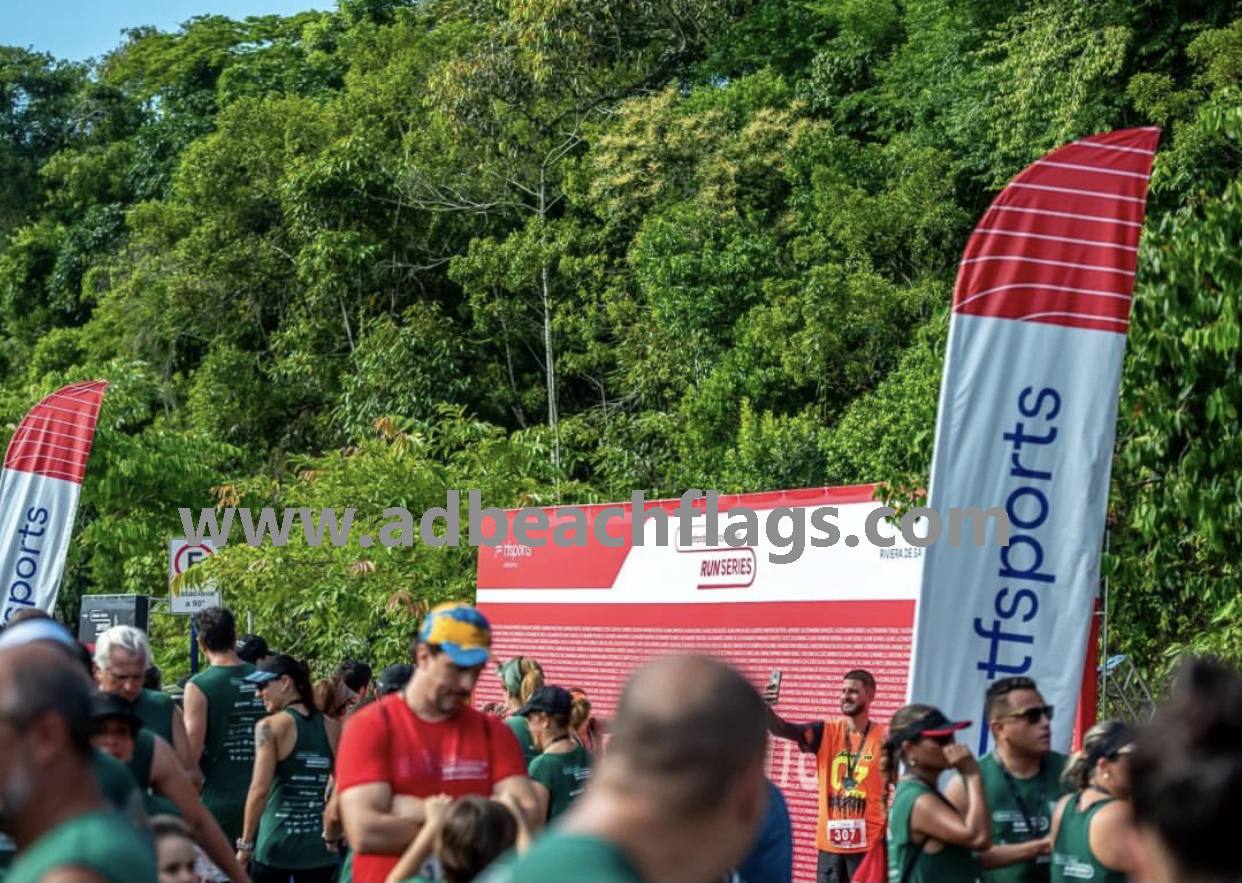
School event flags solve a problem every school office knows: the calendar is full of outdoor moments that need colour and direction, and the budget is written once a year. Sports day in June in Britain, field day in spring across the United States, the sports carnival in Australian term four, open day for prospective families, graduation week, the parent association fete. Each event is one morning or one weekend, and buying something new for each one is how school signage budgets disappear.
The budget answer is a kit, not a collection. Buy the hardware once: two or three tall flags for the entrance, a set of smaller station flags for the field, bases matched to your grounds, and a bag per kit. Then rotate printed skins across the year, because a skin is the cheap part and the hardware is the part worth protecting. This guide walks the whole thing the way a site manager would: what schools actually use, what a field layout looks like, what the safety rules are around children, how the budget maths work, and what happens to the kit between terms.
The numbers in this guide come from published school planning guides, supplier guides and our own factory practice, with the sources listed at the end. Prices are left out on purpose; school budgets work in terms and seasons, not till receipts.
The same product runs under three names and a region map. Schools in Britain call it sports day, usually staged in the last weeks of the summer term. Schools in the United States call it field day, typically a spring event built around activity stations. Schools in Australia and New Zealand run a sports carnival or athletics carnival, and in the Gulf and across international school networks the calendar borrows from all three. Suppliers serving schools use the same word cluster: sports day equipment lists, field day checklists and carnival programs are all describing events that need markers families can see from the car park.
That is what school event flags are: the tall, narrow printed flags that mark a station from across a field, name the entrance, and carry the school crest in school colours. They are not the classroom sort of flag, and they are not the giant flagpole out front. Think of them as the wayfinding layer of the event, the piece that answers “where is the egg and spoon race?” before anyone asks.
Three reasons come up in every conversation with a school buyer. First, visibility: a field of two hundred children, forty parents and a dozen stations is unreadable without tall markers, and the published field day guides answer that with station maps and numbered rotations that assume a marker at every stop. Second, the budget shape: hardware lasts years and skins are consumables, so the spend lands once and then trickles. Third, volunteers: flags are the one piece of event equipment a parent helper can install in five minutes without tools, which is not true of PA systems, tents or generators.
There is a fourth reason that only shows up on the day. Photographs. Every school wants the gallery to look like the school, and a flag with the crest on it does more work in the background of one photo than a banner rolled out over a collapsing trestle table ever will.
| Moment | Flags that work | Where they stand |
|---|---|---|
| Sports day / field day | Station set of smaller feather or teardrop flags, one per station | Field edge and station lines, off the running lanes |
| Open day / open house | Two tall feather flags at the gate, teardrops marking parking and reception | Driveway line and visitor path |
| Graduation / awards | Tall feather flags in school colours, year group skins | Photo point and hall entrance |
| Fundraising fete | Station flags per stall, sponsor skin where the association sells spots | Stall rows and the gate queue |
| Orientation / welcome | WELCOME and WELCOME BACK skins on the standing set | Gate and first turn into campus |
| Sports carnival (AU/NZ) | House colour flags, one skin per house | House bays along the straight |
The pattern across all six rows is the same: the flag poles and bases never change, only the printed skins do. A school that buys a standing set for sports day already owns most of the kit for graduation week. That is the whole budget argument in one paragraph, and the table that follows makes it concrete.
A sports day or field day kit is small and specific. The published planning guides agree on the shape: six to twenty activity stations, a rotation map, water and shade points, and volunteers running each stop. The flag kit maps onto that layout one to one.
Two tall flags at the gate. Height is the whole point at the entrance, where the audience is arriving and looking for the way in. Tall feather flags with the school name or a single word like WELCOME do that job from the moment cars turn in, and they photograph well against the school facade.
Station flags on the field. Smaller feather or teardrop flags, one per station, numbered or colour-matched to the rotation map the PE lead already printed. Students find their next station by looking up, not by asking. On grass, each one takes a ground spike; our cross base guide covers the hard-court version where a spike has nothing to bite.
One flag at water and shade. Field day guides treat water stations and shade as infrastructure, and marking them stops the constant where-do-I-get-a-drink traffic. A single teardrop with WATER on it in the school colours pays for itself before lunch.
The finish line. One tall flag either side of the finish turns any stretch of grass into a race. It is the most photographed three metres of the year, which is why we say spend the two tallest poles here.
Safety on a school field is mostly placement. The published guidance on securing flags reduces to the same sequence we teach every buyer: correct base for the ground, added weight where the ground is hard, and an honest wind limit.
Wind. Single-sided skins should come down around 25 mph, double-sided builds around 15 to 17 mph, and 32 mph is the ceiling for any standard kit. On a sports day that decision belongs to one named adult, written on the run sheet, not to whoever happens to be nearest the flag at the time. Our wind rating guide explains the numbers.
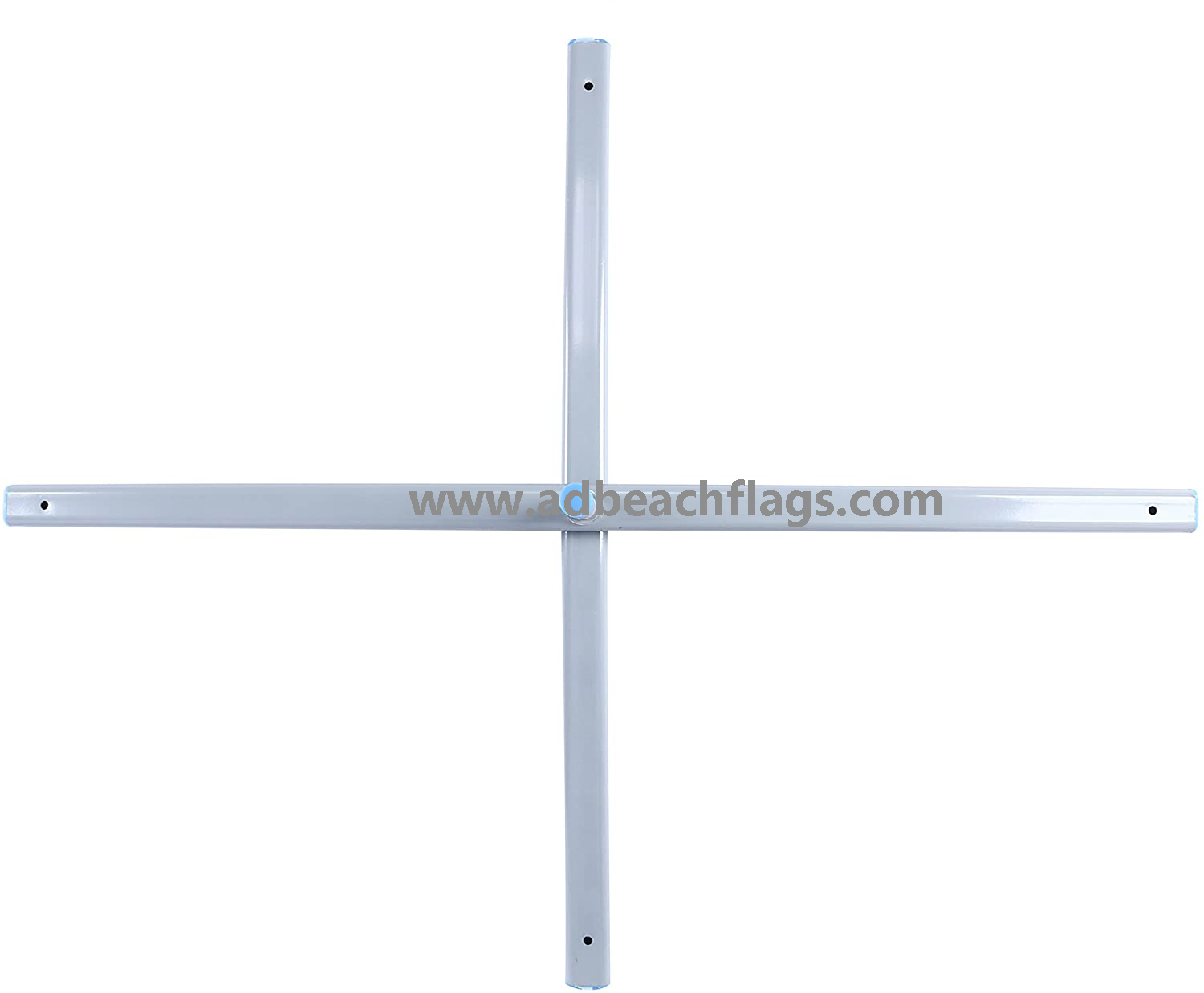
Ground and bases. A 3.2 metre flag on firm grass in light to moderate wind is held by a 300 to 400 mm ground spike, and softer ground or stronger wind calls for a longer spike. Hard courts and playground asphalt take a cross base with ballast instead; a water bag adds ten or more litres of ballast in minutes, which is the difference between a flag that stands and one that learns to walk.
Placement. No pole stands in a running lane, a throwing arc or a landing zone. No pole stands where a class will queue behind it. Flags mark the edges of activity, never the middle of it. Poles are carried, assembled and packed down by adults; student helpers are welcome to everything except the pole itself. Those are our workshop rules for school deployments, and every one of them exists because a school field is the one venue where the audience runs.
The kit maths is the part school business managers care about, so here it is without decoration. The hardware, poles, bases and bags, is bought once and lasts for years of term-time storage. The skins are consumables: flown outdoors every day they fade in six to twelve months, but event-use skins that are washed cool and rolled between bookings last two to three years. A school that flies its kit six days a year is firmly in the second row of that table.
That is why the re-skin habit is the whole trick. Fitting new skins to poles and bases you already own saves forty to sixty percent against buying a new kit, which converts year three of the signage budget from a purchase into a top-up. Institutional ceremony banners have always worked this way, with schools reusing the same applique pieces for decades of commencements. The flag kit simply applies the same logic to the outdoor calendar. When a new event appears, sports day becomes a fund-raising fete, the fete grows an open day, the answer is a set of new skins, not a search for storage for last year’s poles.
The annual plan then looks like this: one hardware purchase, a skin for each of the six moments, and a wash-and-roll routine between terms. Our school ordering calendar walks the four buying moments across a school year, and this page handles the kit those orders build.
School artwork has its own traps, and all of them are fixable in one email. Crests arrive as a bitmap lifted from the website letterhead, so ask your art or media department for the vector file; if only a bitmap exists, our studio redraws simple crests before printing. Colours should carry Pantone references next to the school’s own colour names, because “maroon” means seven things in any staff room. Text on field flags follows the one-word rule that works everywhere: WATER, WELCOME, FINISH, or the house name. Small text under a crest is fine on a banner someone will stand next to, and wasted on a flag someone reads at forty metres.
The full submission spec, five millimetres of bleed, outlined fonts, colour blocks, lives in our artwork guidelines, and the proof before production is where a wrong motto or a missing accent gets caught for free.
After enough of these conversations, a shape emerges. Most schools buy the same kit: two tall entrance flags around four to four and a half metres, four to eight station flags around two to three metres, and a cross base pair for the paved areas. Spikes cover the field, and each kit packs into a padded bag so the caretaker can stack it. International schools in the Gulf and across Europe add a house colour set for carnivals. Colleges add a graduation skin set that only comes out once a year.
Storage decides more of these orders than design does. A kit that packs into two oxford bags fits the same cupboard shelf as the sports day cones, and the bag is why the kit survives the journey between the cupboard and the field. Our carry bag guide covers what to check on a bag that will live in a school cupboard between terms.
The school year makes storage simple because the calendar does the scheduling. Skins come down at the end of each event, dry overnight, and roll into the bag with the print face out. The full off-season routine, including the humidity rules and the water base draining that frost-prone regions need, is written out step by step in our winter storage guide. Term-time storage is the short version of the same protocol: dry, rolled, labelled, off the floor of the cupboard, and away from the radiator.
Handover matters in schools more than anywhere else, because the kit outlives the staff. Label each bag with its contents and which event owns it, and keep the one-page install sheet inside the bag with the poles. In June, when the volunteers arrive, the kit explains itself and nobody hunts for instructions that left with last year’s site manager.
| Feature | Advantage | Benefit for the school |
|---|---|---|
| Hardware bought once, skins rotated | Kit serves six school moments on one budget line | Year three is a reskin at 40 to 60 percent under a new kit |
| Skins in 110 and 130 gsm polyester | Event-use skins last two to three years washed cool and rolled | Colours survive the whole school year, not one sports day |
| Zero-tool install, five minutes a flag | Volunteers and site staff can run the field without training | Setup happens in the hour before the bell, not the night before |
| Spike and cross base options | Field grass and hard courts both covered | One kit works on every surface the school owns |
| Padded oxford bags per kit | Stackable, labelled, one shelf in the cupboard | The kit outlives the staff who bought it |
| Crest redraw and Pantone match | Website bitmaps become print-ready vectors | School colours are matched, not approximated |
| Low MOQ accepted | Wholesale from 5+ pieces | A two-flag entrance set or an eight-station field set both make sense to order |
An honest guide should say where the answer is no. A single indoor assembly does not need an outdoor kit; indoor halls take cross bases and our indoor flag guide covers the ceiling and fire rules. A school with no storage space should buy fewer, taller flags rather than a full station set. And where the event is one afternoon a year on a shaded lawn, a lightweight flag kit is the right call while a full hardware fleet is not; we would rather quote the smaller kit than have a cupboard full of unused poles.
We are a flag factory in Foshan, Guangdong, supplying schools, colleges, event companies and distributors in more than 150 countries. School kits are a repeat business for us, so we build for the cupboard, the field and the volunteer in that order.
| What we do | What it means for your school |
|---|---|
| Kit specified as one system | Skin, pole, base and bag arrive matched, so install day has no surprises. |
| Written spec sheet in metric and imperial | Heights, diameters and fabric weights in writing for the budget file. |
| Crest redraw and Pantone matching | School crests print clean and colours read true in the photographs. |
| Reskin service with hem-to-hem sheet | New skins for owned poles, 40 to 60 percent under a new kit, shipped in days. |
| Low MOQ accepted | Wholesale from 5+ pieces, so a small entrance set is a real order, not a favour. |
| Reply in 1 hour, 24×7 | WhatsApp +86 135 1661 0926 or [email protected], term-time deadlines respected in writing. |
Send us the event list for your school year: which moments, which surfaces, how many stations. We will come back with the kit that covers all of them on one budget line, and the skins that rotate across the calendar.
Most schools run six to twenty activity stations, so a field kit of four to eight station flags, two tall gate flags and one water-point flag covers a typical day. Count your stations from the rotation map first; the kit is sized to the map, not the other way round.
Two to three metre flags read well as station markers on a field, and four to four and a half metre entrance flags do the gate job. Our flag size guide walks the full ladder with reading distances, and the short answer is that height buys visibility while width buys detail.
They are, under three rules. No pole stands in a running lane, throwing arc or landing zone. The base matches the ground: spikes on grass at 300 to 400 mm depth for a 3.2 metre flag, cross bases with ballast on hard courts. And flags come down around 25 mph for single-sided skins or 15 to 17 mph for double-sided, with one named adult owning that decision on the run sheet.
That is the point of the kit. Poles and bases are multi-season hardware; skins are consumables that last two to three years with event-only use, cool washes and rolling between bookings. Rotate skins for sports day, open day, graduation and the fete on the same hardware, and reorder skins at forty to sixty percent under a new kit.
The crest as a vector file with Pantone colour references, and the text for each skin kept to one or two words that read at distance. If only a bitmap exists, our studio redraws simple crests before printing. The full spec, bleed, outlined fonts and colour blocks, is in our artwork guidelines, and every order gets a proof to approve first.
Dry the skins overnight after each event, roll them print face outward into the bag, and store the bags off the cupboard floor, away from radiators and daylight. Drain any water-filled bases before a frost and store the caps in the bag. Label each bag with its contents and event so June’s volunteers inherit a kit that explains itself.
School event flags are a budget instrument before they are a decoration. Buy the hardware once, two gate flags, a set of station markers, bases that match your grounds, a bag per kit, and let the printed skins rotate through sports day, field day, the carnival, open day, graduation and the fete. Keep poles out of running lanes, put one named adult in charge of the wind call, roll the skins dry between terms, and reorder skins rather than kits. A school that runs that loop spends its signage money on new messages instead of duplicate metal, and every event on the calendar inherits the same colour, the same crest and the same five-minute setup.
Tell us the flag sizes, the quantities, single or double-sided, and the ground the flags will stand on. Our export team replies within 1 hour, 24×7, with a proof and a factory price. Low MOQ accepted.
Prefer a form? Fill in the details below and we will come back with a proof and a price within 1 hour, 24×7.
Related reading: Custom flags for schools: the four-moment ordering calendar | Beach flag size guide | Cross base sizes explained: 60, 72, 80 cm | Flag safety in wind: when to take them down | Flag winter storage: the off-season step-by-step | Oxford carry bags: denier, coating, printing | Indoor flag displays for malls and centres | Custom feather flags | Custom teardrop flags | Cross bases | Portable oxford bags | Full fibreglass poles
| Item | Detail |
|---|---|
| Product | Feather and teardrop flag kits specified for school sports days, field days, carnivals and campus events |
| Also searched as | School event flags, sports day flags, field day flags, school sports day banner, school feather flags |
| Manufacturer | BESDA Advertising Flags, Foshan, Guangdong, China |
| Naming map | Sports day in Britain, field day in the United States, sports or athletics carnival in Australia and New Zealand |
| Field kit | Two tall gate flags, four to eight station flags sized 2 to 3 m, one water-point flag, sized to the station rotation map |
| Station planning | Published field day guides run 6 to 20 stations with a numbered rotation map and a marker at each stop |
| Spike depth | 3.2 m flag on firm grass in light to moderate wind: 300 to 400 mm spike; longer spike for soft ground or stronger wind |
| Hard courts | Cross base plus ballast on asphalt and paved yards; water bags add 10+ litres of ballast in minutes |
| Wind rules | Single-sided take-down near 25 mph, double-sided 15 to 17 mph, 32 mph ceiling for standard kits; one named adult owns the call |
| Kit economics | Hardware bought once serves six school moments; reskinning saves 40 to 60 percent against a new kit |
| Skin lifespan | 6 to 12 months flown outdoors daily; 2 to 3 or more years for event-only use with cool washes and rolling |
| Storage | Skins rolled print face outward in padded oxford bags, off the floor, away from radiators; water bases drained before frost |